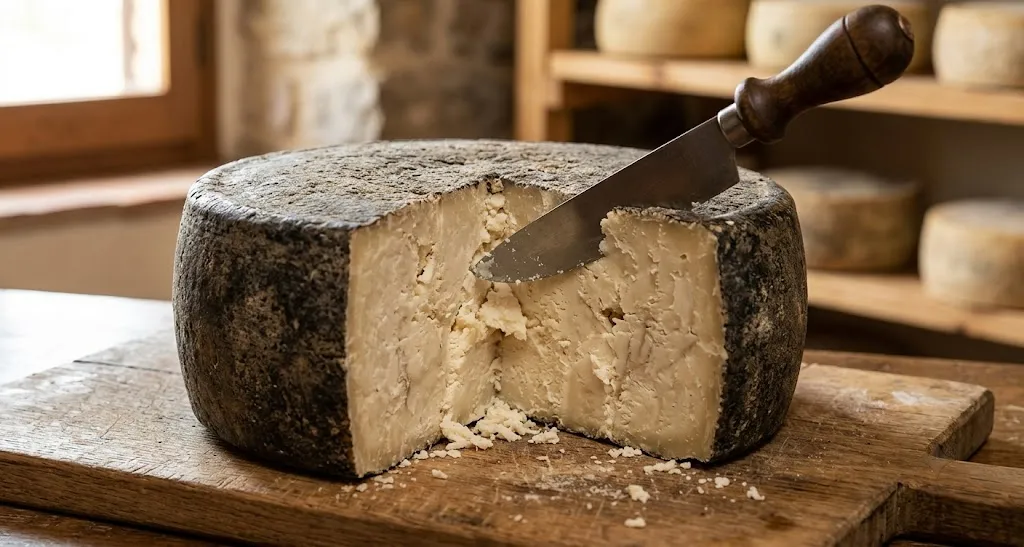
Bread is older than farming. That single fact undoes the tidy story most people carry around about how civilization began. The standard version goes: humans learned to farm, farming produced grain, grain became bread. Archaeological evidence recovered from a fireplace in the Jordanian desert shows something closer to the reverse. Hunter-gatherers were baking flatbread from wild grains roughly 14,400 years ago, four thousand years before anyone planted a domesticated crop. Bread did not follow civilization. In a very real sense, it may have helped start it.
What the Evidence Actually Shows in 60 Seconds
- Charred flatbread fragments found at Shubayqa 1 in northeastern Jordan date to roughly 14,400 years before present, making them the oldest confirmed bread on record
- The bread’s makers were Natufian hunter-gatherers, a semi-sedentary Levantine culture that lived thousands of years before agriculture was established
- Leavened bread, made with yeast that ferments naturally in any rested dough, appears in Mesopotamian sources by around 6,000 BCE
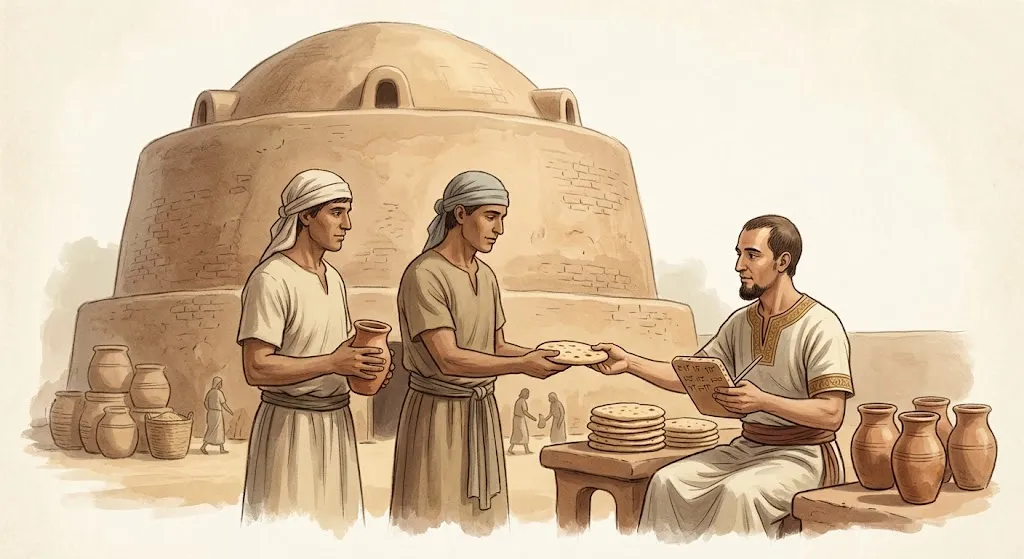
- The earliest Sumerian writing, from roughly 3200 BCE, consists almost entirely of numerical records tracking grain, bread, and beer rations
- Ancient Egyptian and Mesopotamian workers, including the laborers who built the pyramids, were paid primarily in bread and beer rather than currency
Why a Food This Basic Could Reshape Entire Societies
Bread only becomes historically significant once you understand what grain surplus actually enables. A society that can grow more grain than it needs to survive can, for the first time, support people who do not farm.
That surplus is what allowed priests, scribes, soldiers, and craftsmen to exist as full-time roles rather than side activities squeezed in between subsistence tasks. Cereal grains stored well, transported reasonably easily, and could be measured, taxed, and redistributed in a way that fresh meat or foraged plants never could.
Bread specifically, rather than raw grain, mattered because it was the standardized end product administrators could actually distribute. A worker did not receive a sack of undifferentiated barley. They received a set number of loaves and a set volume of beer, both derived from the same grain accounting system, which is precisely the kind of measurable unit an emerging bureaucracy needs to function.
Where Bread Actually Appears First in the Historical Record
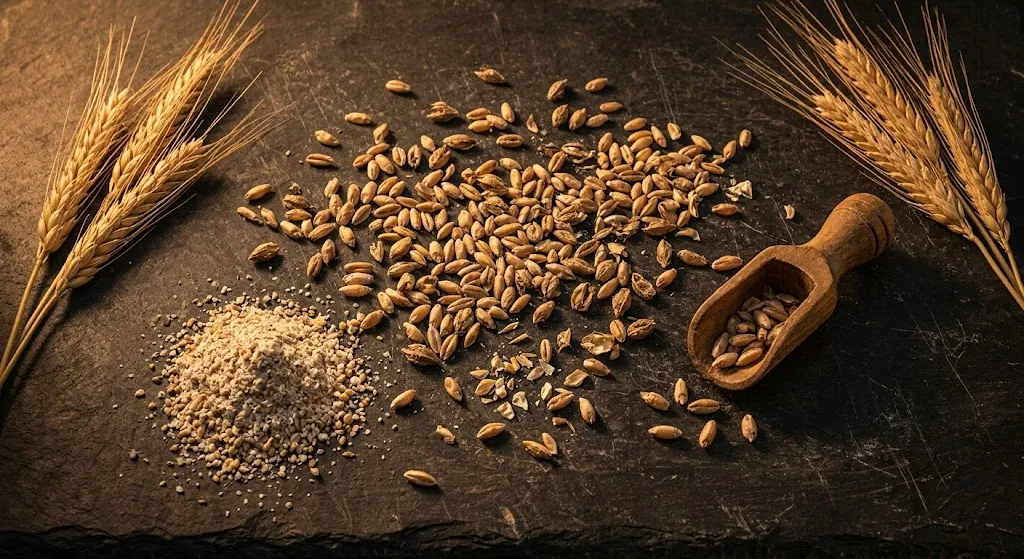
The most credible account of bread’s earliest production comes from archaeobotanical analysis of charred food remains at Shubayqa 1, a Natufian site in Jordan’s Black Desert excavated between 2012 and 2015. Researchers from the University of Copenhagen, University College London, and the University of Cambridge identified twenty-four fragments in ancient fireplaces that had been ground, sieved, kneaded, and cooked from wild ancestors of barley, einkorn, and oat.
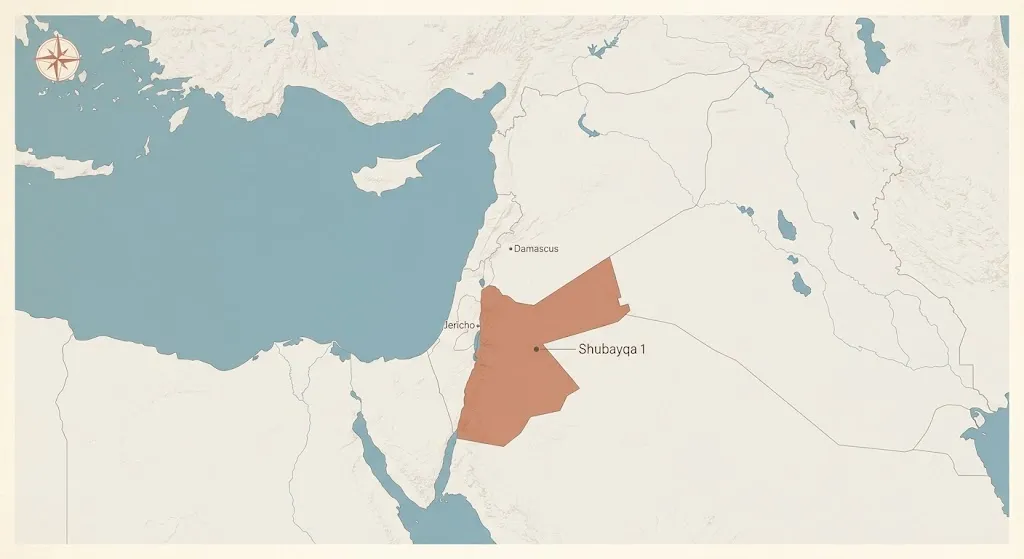
This is a different type of evidence than a written recipe or a traveler’s account. It is direct microscopic and archaeobotanical analysis, published in the Proceedings of the National Academy of Sciences and covered in detail by Smithsonian Magazine’s report on the discovery, which described the Natufians grinding cereals and starchy club-rush tubers into flour, mixing it with water, and baking the dough in hot ashes or on a heated flatstone.
The resulting bread would have looked more like a modern flatbread or wrap than a leavened loaf. There is no evidence this was a daily staple. The labor cost of grinding wild grain by hand was high enough that researchers believe it was closer to an occasional or ceremonial food than routine sustenance, at least until cereal domestication made grain more abundant roughly four thousand years later.
The anti-hallucination distinction matters here. This is the earliest bread with direct physical evidence, not necessarily the very first bread ever made by any human group. Absence of earlier evidence is not evidence of absence, and it is entirely possible earlier bread-like foods existed without leaving remains that survived to be excavated.
Did Bread Actually Cause Agriculture, or Just Follow It
The dominant assumption for most of the twentieth century was straightforward: agriculture came first, and bread was one of its products. The Shubayqa 1 findings complicate that sequence in a way the archaeological community is still actively working through.
The researchers who published the findings suggested something more provocative than simple sequencing. Bread production using wild, undomesticated cereals may have given hunter-gatherers a direct incentive to start cultivating those same cereals deliberately, rather than the other way around. If a food is valuable enough to be worth the extreme labor of grinding wild grain by hand, that value creates pressure to grow more of the plant that produces it.
This does not mean farming was invented purely to make more bread. Climate shifts, population pressure, and the depletion of wild food sources all played documented roles in the transition to agriculture across the Fertile Crescent. What the Natufian evidence does establish is that bread-making predates farming by thousands of years, which rules out the simplest version of the old assumption.
Once cereal domestication did take hold around 10,000 BCE, the relationship between bread and social organization accelerated dramatically. Leavened bread, made possible because airborne yeast naturally ferments any dough left to rest, is documented in southern Mesopotamia by around 6,000 BCE, a technique historians believe the Sumerians eventually passed to Egypt.
The honest position here is that bread did not single-handedly cause the agricultural revolution, but the sequence of Shubayqa 1 predating farming by four millennia means bread’s origin story cannot be told as a simple downstream consequence of agriculture. It was present at the beginning of the process that led there, not merely a result of it.
Before You Read This, You Probably Assumed Farming Came First
If you came into this thinking humans farmed grain and bread was simply what people eventually figured out to do with it, that is the standard sequence taught in most world history overviews, and it is not an unreasonable assumption given how the story is usually told.
The archaeological record from Jordan flips part of that sequence. Bread-like food existed among people who were still hunting and foraging for the majority of their diet, thousands of years before anyone had domesticated a single stalk of wheat or barley. The plant cultivation that we call the birth of agriculture may have partly been chasing a food product that already existed.
How Grain Rations Turned Into the World’s First Bureaucracies
Once cereal farming was established in Mesopotamia and Egypt, the amount of surplus grain a well-organized society could produce created an entirely new administrative problem: how do you track who grew it, who owes tribute from it, and who is entitled to a share of it.
Temples in early Mesopotamia functioned as major economic institutions, not just religious sites. They owned large tracts of farmland, employed thousands of workers, and collected barley as tithes, and the sheer scale of that operation required a way to record transactions that oral memory could not reliably handle.
The earliest known Sumerian writing, dated to roughly 3200 BCE, is not literature, law, or religious text. It consists of numerical, pictographic tablets recording quantities of grain, cattle, and beer moving between fields, storehouses, breweries, and workers, a detail confirmed by Wikipedia’s overview of bread’s early history, which notes leavened bread’s appearance in Mesopotamia by 6,000 BCE and its likely transmission to Egypt around 3,000 BCE.
The connection between grain accounting and writing was not incidental. Managing barley tithes, wages, and rations at scale created the specific administrative pressure that produced cuneiform script, and by extension, the record-keeping mathematics needed to calculate the volume of grain stored in cylindrical and rectangular granaries.
Egypt developed a parallel system built on the same logic. Workers were commonly paid in bread and beer rather than currency, since Egypt operated as a largely cashless, barter-based economy until the Persian period around 525 BCE, and grain functioned as both food and the unit that underpinned taxation, trade, and wages simultaneously.
The Bread Economy Across Early Civilizations
| Civilization | Period | Grain Used | What It Enabled | Legacy |
|---|---|---|---|---|
| Natufian culture, Levant | c. 14,400 years ago | Wild barley, einkorn, oat | Earliest confirmed bread production, predating farming | Reframed assumptions about the origin of agriculture |
| Early Neolithic, Fertile Crescent | c. 10,000 BCE | Domesticated wheat and barley | Widespread cereal cultivation and routine bread-making | Foundation of settled agricultural life |
| Sumer, Mesopotamia | c. 3200 BCE | Barley | Grain accounting drove the invention of writing and mathematics | Cuneiform script, the first bureaucratic record-keeping systems |
| Old Kingdom Egypt | c. 3000 to 2000 BCE | Emmer wheat and barley | Bread and beer used as standard worker wages and tax units | Centralized taxation and large-scale state labor projects, including pyramid construction |
What Most People Get Wrong About Bread and Farming
The most persistent myth is that agriculture is what made bread possible, full stop, with no room for the reverse relationship. The Shubayqa 1 evidence directly complicates this, since bread-making by hunter-gatherers predates domesticated crops by roughly four thousand years.
A second common assumption is that bread was always the affordable, humble food it is often treated as today. In Natufian society, the labor required to hand-grind wild grain likely made bread closer to a special-occasion food than a daily one, and the same social status distinctions eventually followed grain further into recorded history when finer bread became associated with wealthier households.
A third misconception treats the invention of writing as a purely intellectual or literary achievement. The earliest Sumerian texts were not stories or laws. They were inventories of barley, bread, and beer, meaning writing’s origin is tied directly to the practical demands of a grain-based food economy rather than to abstract communication needs.
These myths persist because the cleaner story, agriculture leads neatly to bread leads neatly to civilization, is easier to teach and repeat than the messier, better-supported version where bread, grain accounting, and the earliest bureaucracies developed in overlapping and mutually reinforcing ways.
Why This History Still Matters Today
The relationship between grain, bread, and state power did not end in the ancient world. Modern food security policy, agricultural subsidy debates, and even bread price controls in countries prone to political unrest all trace back to the same basic reality the Sumerians and Egyptians understood: a society’s stability is tied directly to its grain supply.
Bread riots have triggered political upheaval repeatedly across history precisely because bread has never stopped functioning as a basic measure of whether a state is meeting its most fundamental obligation to its people. That thread connects directly to the same flatbread lineage still visible today in dishes like the Neapolitan flatbread that eventually became modern pizza, and in bread-centered food cultures where French baking built an entire culinary identity around grain and technique.
The Bottom Line
The evidence most strongly supports bread as a food that predates organized agriculture, and one whose surplus-driven economics directly shaped the earliest systems of taxation, rationing, and writing in Sumer and Egypt. What remains genuinely uncertain is how large a causal role bread-making played in motivating the shift to deliberate cereal cultivation, since climate change and population pressure were also significant factors researchers continue to weigh.
TasteHavenDaily’s read on this is that bread deserves credit not as the single cause of civilization, but as the food that happened to be measurable, storable, and distributable in exactly the way an emerging state needed something to be. The same logic that shaped grain economies in the Fertile Crescent still echoes in staple-grain civilizations built around rice-based dishes like biryani that developed their own surplus economies, and in the bread and pastry traditions that grew from disputed origins like the country that likely did not actually invent the croissant. The next loaf you slice into carries roughly fourteen thousand years of humans figuring out how to turn ground grain into the currency that built the first governments, a lineage that also runs through how an entire continent’s food diversity grew out of surplus grain economies.
People Also Ask
Did bread exist before farming was invented?
Yes. Charred flatbread fragments found at the Shubayqa 1 site in Jordan date to roughly 14,400 years ago, made by Natufian hunter-gatherers using wild, undomesticated grains. This predates the earliest confirmed agriculture by approximately four thousand years.
Who invented bread first?
No single inventor or culture can be credited with inventing bread. The earliest confirmed evidence comes from Natufian hunter-gatherers in the Levant, but bread-like foods likely emerged independently or through gradual, undocumented experimentation across multiple early human groups.
How did bread lead to the invention of writing?
The earliest Sumerian writing, dating to around 3200 BCE, consists of numerical records tracking grain, bread, and beer moving through temple economies. The administrative need to record these transactions accurately is considered a direct driver behind the development of cuneiform script.
Why were ancient workers paid in bread and beer instead of money?
Ancient Egypt and Mesopotamia operated largely cashless, barter-based economies where grain was the fundamental unit of value. Bread and beer, both made from the same grain rations, functioned as standardized, distributable wages that a centralized administration could measure and control.
Was ancient bread the same as bread today?
Not exactly. The earliest confirmed bread was unleavened flatbread made from hand-ground wild grains, closer to a modern flatbread or wrap. Leavened bread using naturally occurring yeast appears later in the historical record, documented in Mesopotamia by around 6,000 BCE.
Did bread cause the agricultural revolution?
Bread likely played a contributing role rather than being the sole cause. Researchers suggest that the value of bread made from wild grains may have created an incentive to cultivate those grains deliberately, though climate change and population pressure were also significant factors in the shift to farming.