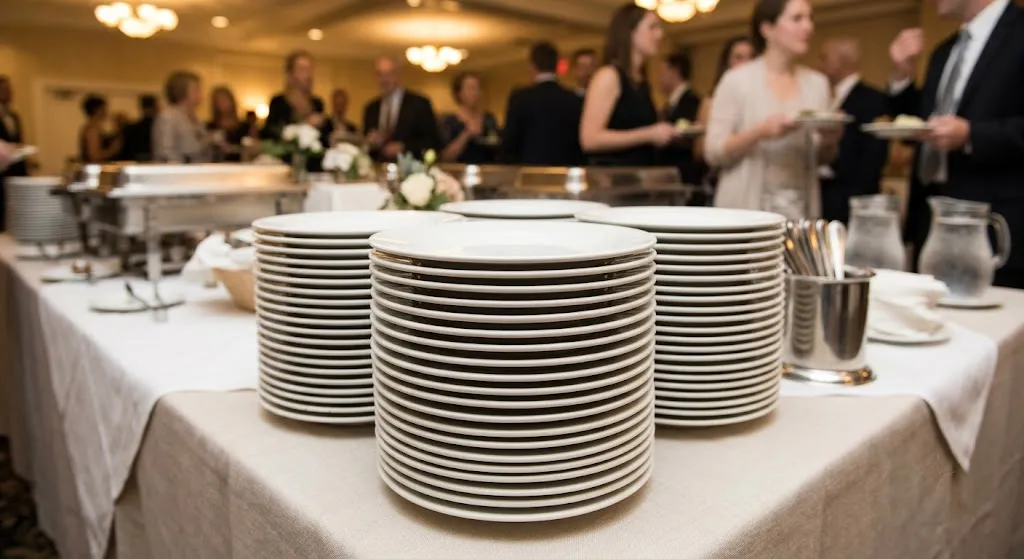
I noticed it at a friend’s wedding reception, of all places. Every single plate on that buffet line was round. Not one square edge anywhere. And I remember thinking that was strange, because I distinctly remembered a phase, maybe ten years back, where every half-decent restaurant I walked into was serving food on sharp-cornered square plates like it was some kind of design law. I went home and started digging through my own kitchen cabinet. Not a single square plate in it either. So I went looking for why an entire industry seemed to quietly walk away from something it was obsessed with not that long ago.
The Square Plate Era Was Real, and It Was Everywhere
You probably remember it even if you never thought about it directly.
Somewhere around the mid-2000s through the early 2010s, square and rectangular plates showed up in restaurants at a scale that now feels almost aggressive. Fine dining led it, casual dining copied it, and for a while it felt like round plates were something only your grandmother’s dinner set still used.
The reasoning at the time was mostly about presentation. A square plate gave chefs a different canvas. Corners created negative space that a circular plate does not naturally offer, and plating on a square surface photographed differently, which mattered a lot right as food photography and early food blogging were taking off.
That aesthetic trend is largely the reason square plates existed at all. It was never really about function. And that distinction is exactly why the trend faded once the practical costs became impossible to ignore.
What I Actually Found When I Looked Into the Reasons
I want to be honest here. I did not run a six-month test with square and round plates side by side in my own kitchen for this one. This is not that kind of article. What follows is what I found digging through restaurant supply forums, talking to a couple of people who have worked in commercial kitchens, and reading through hospitality trade sources on why the industry backed away from square plateware.
Corners Chip First, and Chipped Plates Get Thrown Out
A round plate has no weak point. The rim takes an even amount of stress no matter where it gets knocked against a counter, a dish rack, or another plate.
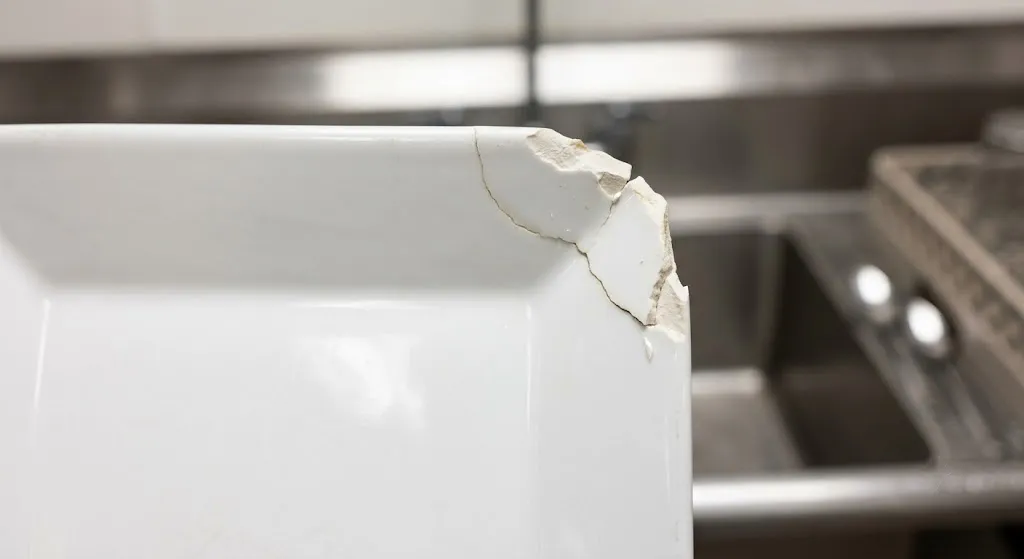
A square plate has four vulnerable points sitting right at the corners. Every restaurant worker I read accounts from mentioned the same thing: corners are what chip, crack, or snap off first, usually within months of regular use in a busy kitchen.
Once a plate chips, health codes in most places require it to be pulled from service immediately. A restaurant replacing square plates every few months versus round plates lasting years is not a small cost difference when you are buying in the hundreds.
Square Plates Do Not Stack the Way Kitchens Need Them To
This is the one that actually surprised me the most, because it seems obvious in hindsight and I had never once thought about it.
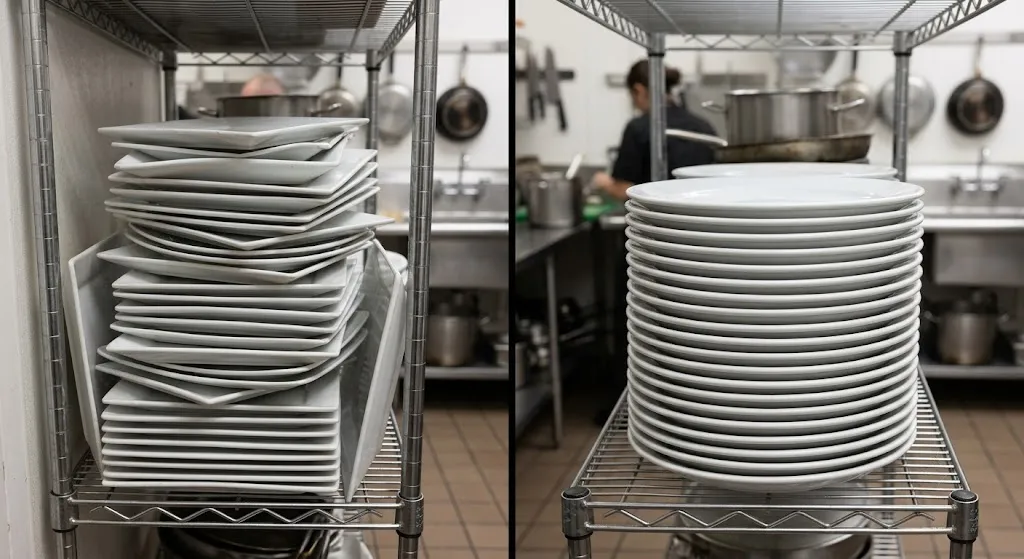
Round plates nest into each other cleanly no matter how they are rotated. You can stack fifty of them in a tight column and they sit flush every time.
Square plates only stack cleanly if every single plate in the stack is rotated to the exact same orientation. In a kitchen with servers grabbing plates fast, restocking under pressure during a rush, and stacking however is quickest in the moment, that alignment falls apart constantly. Misaligned square plates in a stack are unstable, take up more vertical space than they should, and are genuinely easier to knock over.
A kitchen line during a Friday night rush is not a place where a plate needs to demand careful handling. Round plates simply ask less of the person carrying them.
Dishwashing Racks Were Built Around Round Plates
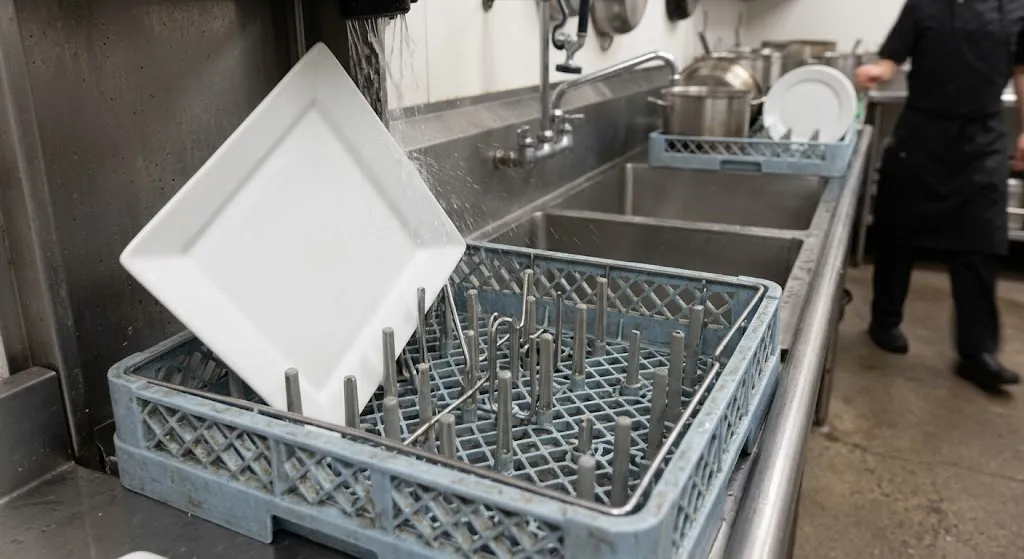
Commercial dishwasher racks, the kind used in nearly every restaurant, were designed decades before the square plate trend existed. Those racks are built around round geometry.
Square plates jammed into round-designed racks often do not get fully cleaned in the corners, where water jets are calibrated to hit a circular sweep. A few kitchen staff I read accounts from specifically mentioned corner residue as a recurring complaint during the square plate years.
I am not a commercial dishwasher engineer, so I will not pretend to know the exact spray mechanics involved. But the pattern showed up often enough across independent sources that I trust it as a real, practical issue rather than a coincidence.
Square Plates Actually Give You Less Usable Plating Space
This one is counterintuitive because a square looks like it should have more surface area than a circle of a similar size.
But food is almost always plated in a rounded arrangement, whether that is a scoop, a mound, a swirl, or a circular sauce smear. A round plate’s usable space matches that shape perfectly. A square plate wastes its corner space entirely, since chefs are not plating food into sharp ninety-degree corners.
So chefs got a plate that was harder to store, more fragile, and did not even give them more room to actually put food on. That is a rough trade once the initial aesthetic appeal wore off.
The Aesthetic Trend Itself Faded
Trends in restaurant presentation move the same way trends move everywhere else. Minimalist, softer plating became more fashionable again, closer to the kind of restraint you see in traditional Japanese plating philosophy, where the plate is meant to disappear behind the food rather than announce itself.
Once the visual reason for square plates weakened, none of the practical downsides had anything left to outweigh them.
So Why Don’t Restaurants Serve Square Plates Anymore
The honest, one-sentence answer is that square plates cost more to maintain, store worse, clean worse, and were only ever popular for a look that eventually went out of style.
Round plates survived because they were never trying to make a statement. They stack efficiently, survive years of abuse, clean properly in equipment built around them, and give a chef the exact shape of usable space that most plated food actually needs. None of that is exciting to talk about, which is probably why nobody wrote about it while the square plate trend was happening. Function rarely gets the same attention as presentation, right up until the presentation stops paying for itself.
There are still restaurants that use square plates deliberately, usually higher-end places serving a specific number of covers a night, where breakage and storage volume matter far less than they do for a restaurant turning tables all evening. That is the exception that proves the rule. The places using square plates today are almost always the places that can afford the inefficiency.
What I Wish I Had Known Before Looking Into This
I genuinely expected the answer to be something dramatic, like a health code change or a lawsuit somewhere. It was not. It was a slow accumulation of small, boring, practical costs that eventually outweighed a look that had already started fading anyway.
If you are buying plates for your own kitchen and you are drawn to square ones because you have seen them plated beautifully online, know that the same chipping and stacking problems apply at home too, just at a smaller scale. It is the same reason a lot of home cooks who buy a carbon steel pan after seeing it online eventually go back to whatever handles daily use with the least fuss.
The Bottom Line
Square plates never lost a fight over taste. They lost a much quieter fight against chipped corners, awkward stacking, dishwasher racks that were never built for them, and a trend that ran its course. Restaurants did not abandon square plates because they stopped looking good. They abandoned them because looking good was the only thing square plates were ever actually good at.
People Also Ask
Are square plates coming back into style?
Trends in tableware do cycle, so it is possible, but there is no strong current signal that square plates are returning to mainstream restaurant use. The practical downsides that pushed the industry away from them, like breakage and poor stacking, have not changed, which makes a full return less likely than a passing aesthetic revival.
Do square plates actually break more than round plates?
Yes, based on the pattern across restaurant supply and hospitality sources. The corners on a square plate absorb impact at a single vulnerable point, while a round plate’s rim distributes impact evenly, which is why round plates tend to survive daily commercial use far longer.
Why did restaurants use square plates in the first place?
It was largely about presentation. Square plates offered chefs a different visual frame during a period when food photography and plating style were becoming a bigger part of a restaurant’s identity, especially through the mid-2000s and early 2010s.
Is it worth buying square plates for home use?
If you mostly want them for how a dish photographs occasionally, the aesthetic upside might be worth it. For everyday cooking and regular dishwasher use, round plates will almost certainly hold up better and store more easily over time.
What shape of plate do most restaurants use today?
The overwhelming majority use round plates, largely because of how they stack, survive daily handling, and clean fully in standard commercial dishwashing equipment.