The croissant is not Austrian. It is not a symbol of victory over the Ottoman Empire. It was almost certainly not brought to France by Marie Antoinette, and the crescent shape was probably not chosen to mock a defeated enemy. The origin story that gets repeated everywhere — in travel guides, food documentaries, and Wikipedia summaries — is a compelling piece of mythology with almost no reliable historical foundation.
The actual croissant origin story involves a real Austrian baker who opened a shop in Paris, French patissiers who transformed what he sold into something technically new, and a specific laminated dough technique that wasn’t applied to croissants until the early 20th century. It is messier, more interesting, and far more honest than the version most people know.
What the Evidence Actually Shows
- The kipferl, a crescent-shaped Austrian pastry, predates the croissant by centuries — but it is a different food, made from a different dough, with a different texture and result.
- The first documented recipe for a croissant using laminated dough — the defining technique of the modern pastry — appears in French culinary sources in the early 20th century, not the 19th.
- The most credible account of how Viennese baking influenced Parisian pastry centres on August Zang, an Austrian artillery officer who opened a Viennese bakery in Paris in 1838 or 1839 — though his shop sold kipferl and Viennese breads, not laminated croissants as we know them.
- The Siege of Vienna story — in which a baker allegedly heard Ottoman tunnelers and sounded the alarm — is first recorded in writing nearly ninety years after the siege. Food historians who have examined the primary sources have found no contemporary documentation connecting the event to the kipferl’s shape.
- France is the most credible origin for the croissant specifically: French bakers took inspiration from Viennese pastry traditions and developed the laminated technique that creates the croissant’s defining flaky, layered structure.
A Pastry This Global Has a Murkier Past Than Its Menu Price Suggests
The croissant is now one of the most produced pastries on earth. It sits in airport lounges in Seoul, petrol station fridges in rural England, and on the counters of boulangeries in Hanoi. In France, approximately 1.2 billion croissants are consumed every year. It is the default symbol of French breakfast culture so thoroughly that no one questions whether France invented it.
That assumption is where the origin story gets complicated.
The question isn’t simply “did France invent it” versus “did Austria invent it.” It’s a subtler problem: Austria contributed an ancestor, a cultural impulse, and a pivotal commercial moment. France contributed the technique that made the thing actually taste like a croissant. The pastry that sits in your hand — laminated, layered, shattering at the first bite — is not what Vienna was making. Understanding that distinction changes how the origin dispute looks entirely.
It also matters because food origin claims carry national identity freight. France’s claim to the croissant is now so culturally embedded that questioning it feels vaguely provocative. Austria’s claim to an ancestral version is real but frequently overstated in ways that have more to do with historical romanticism than documentary evidence.
This pattern — a dish’s origin becoming mythologized in proportion to its cultural importance — is not unique to the croissant. The history of biryani shows the same dynamic at work: multiple communities with genuine but partial claims, a mythology that flattens complexity into a single satisfying narrative, and documentary evidence that is considerably messier than the popular version.
Where the Croissant Actually Appears in the Historical Record
The earliest credible evidence for the croissant as a distinct laminated pastry comes from France in the early 20th century — not the 19th, as is sometimes claimed.
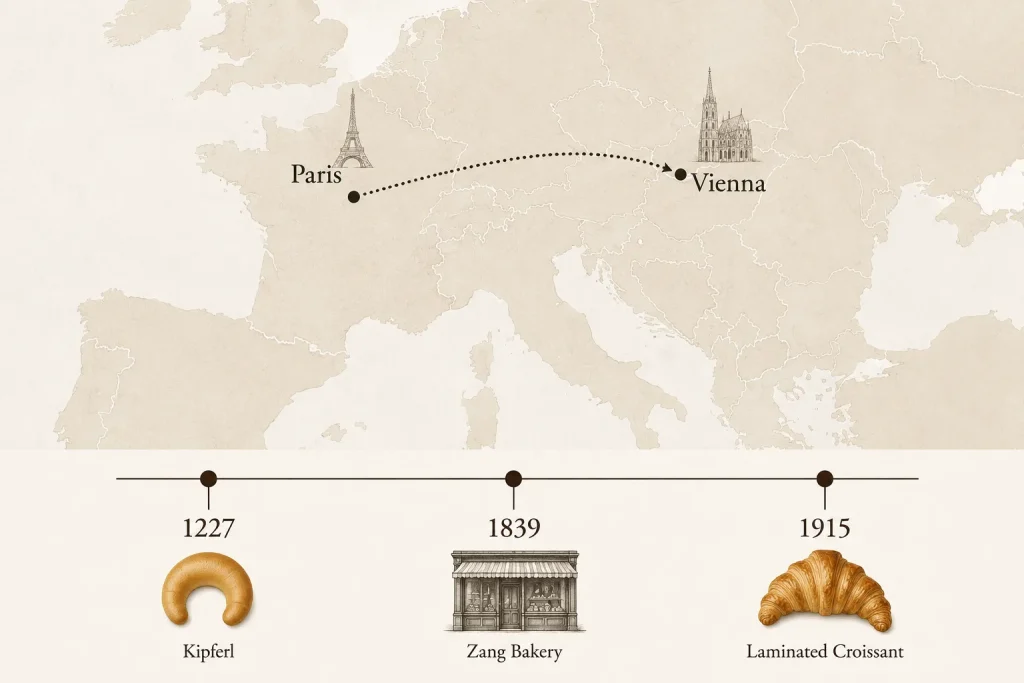
The word “croissant” does appear in French sources earlier. The name appears among “fantasy or luxury breads” in 1853, and at least one reference to croissants as an established French bread appeared as early as 1850. But these early uses describe crescent-shaped bread rolls, not laminated pastries. The first documented recipe specifically using laminated yeast dough — the defining technique of the modern croissant — was published in 1915 by French baker Sylvain Claudius Goy. Instead of the brioche-style dough used in Viennese kipferl, Goy introduced laminated yeast dough: a process in which butter is folded repeatedly into dough to create thin layers.
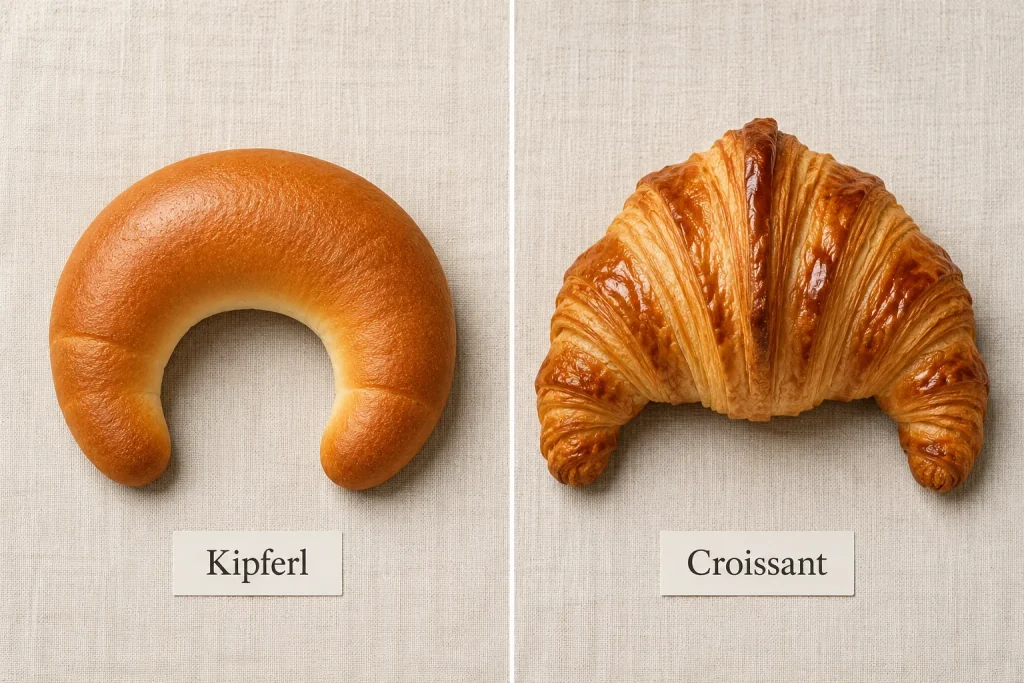
What complicates the picture is the kipferl. The crescent-shaped Austrian pastry is genuinely old. A poem mentions it as one of the Christmas treats that Viennese bakers presented to Duke Leopold in 1227. The kipferl is a real thing, with a real history stretching back to medieval Central Europe.
But the kipferl is not laminated. It is made from a dough closer to brioche, and when baked it produces a denser, more uniform crumb. The defining quality of the modern croissant — the hundreds of thin, flaky layers produced by folding butter into the dough repeatedly — is a French pastry technique called laminage. That technique is what the historical record credits French bakers with developing and codifying in the early 1900s.
The social and economic context matters here. 19th-century Parisian pastry culture was intensely competitive and technically ambitious. French patissiers were already experimenting with laminated doughs for other products — puff pastry (pâte feuilletée) had been documented in French culinary writing since the 17th century. The lamination technique was applied to the crescent shape, borrowed from Viennese tradition, to produce something genuinely new. The croissant is not a French dish that emerged from nowhere. But it is genuinely French in the form that anyone alive today would recognize.
The Siege of Vienna Story, August Zang, and Why One of These Accounts Holds Up Far Better Than the Other
The most famous croissant origin story works like this: in 1683, Ottoman forces laid siege to Vienna. A Viennese baker working through the night heard the sound of Ottoman soldiers tunneling beneath the city walls, raised the alarm, and helped save the city. As a reward, bakers were granted the privilege of making pastries in the shape of the Ottoman crescent — the symbol on the enemy’s flag — so that Viennese citizens could symbolically devour their defeated foe.
This story is enormously satisfying. It has a hero, a historical crisis, symbolic resonance, and a culinary punchline. It also has almost no documentary support.
The story seems to owe its origin, or at least its wide diffusion, to Alfred Gottschalk, who wrote about the croissant for the first edition of the Larousse Gastronomique (1938). Crucially, this means the first known written version of the story appears more than two and a half centuries after the siege it describes — a significant red flag for historians. There are no contemporary sources for any of these stories.
As food historian Jim Chevallier notes in his detailed examination of the documentary record, origin stories connecting the 1683 siege to the birth of the kipferl are not supported by any contemporaneous account. The pattern is also suspicious in a broader sense: origin stories for both the bagel and the yeasted Kugelhopf cake also mention the 1683 Ottoman siege of Vienna as the moment of invention — a multiplication of origin stories that suggests the one around the croissant’s invention is partly or wholly untrustworthy.
The Marie Antoinette connection — the claim that the Austrian princess brought the croissant to France when she married Louis XVI in 1770 — has similar problems. While the story is widely repeated, historians have found little evidence to support it. The laminated croissant that defines the modern pastry appears in French culinary sources after her death, not before or during her time at Versailles.
August Zang is a more defensible historical figure. August Zang became an artillery officer before he went to Paris, probably in 1837, to establish a bakery, Boulangerie Viennoise, which opened in 1838 or 1839. The bakery was quickly imitated, and its Austrian kipfel became the French croissant. Contemporary French accounts describe his shop at 92, rue de Richelieu as a novelty, selling Viennese-style breads and pastries that Parisians found unfamiliar and compelling. Zang is a real person with a verifiable later career — in 1848, when censorship was lifted in Austria, he returned to Vienna and founded Die Presse, a daily newspaper that still exists today.
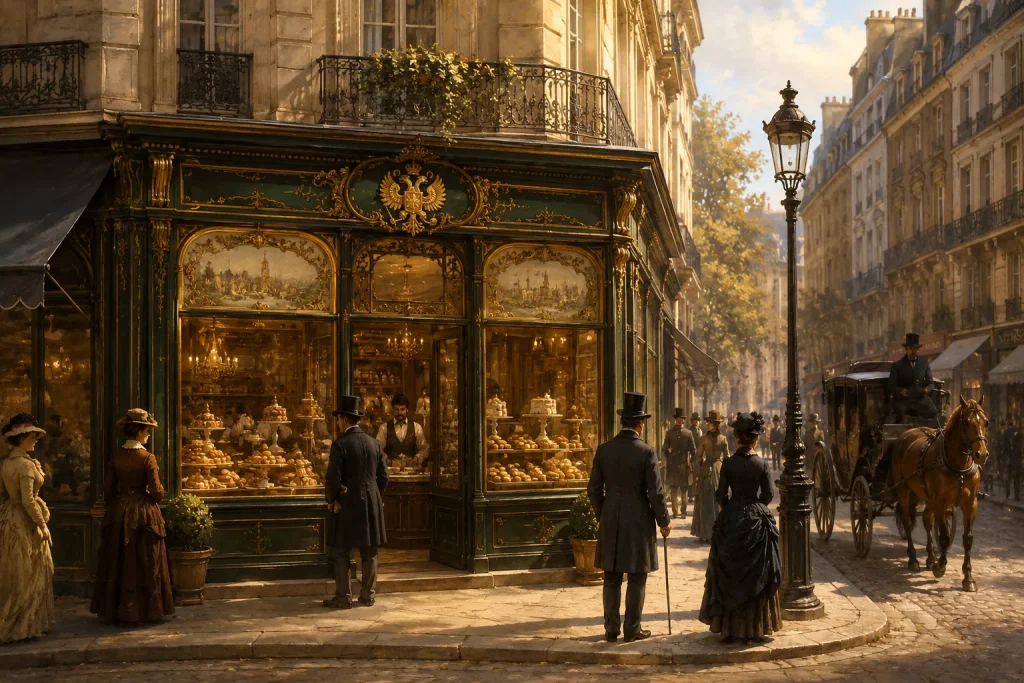
What Zang did not sell, as far as the historical record shows, was the laminated croissant. It was not until the first decade of the 20th century that bakers started using puff pastry (pâte feuilletée) to assemble their croissants, adding yeast to create the laminated dough that changed the texture and mouthfeel of the croissant significantly.
The honest assessment: the Siege of Vienna story is almost certainly a myth. August Zang’s shop is real and his influence on Parisian baking culture is well-documented. France’s development of the laminated dough technique is the most technically significant and historically supported part of the croissant’s story — and it happened later than most accounts suggest.
From Paris to the Planet: How the Croissant Crossed Every Border It Encountered
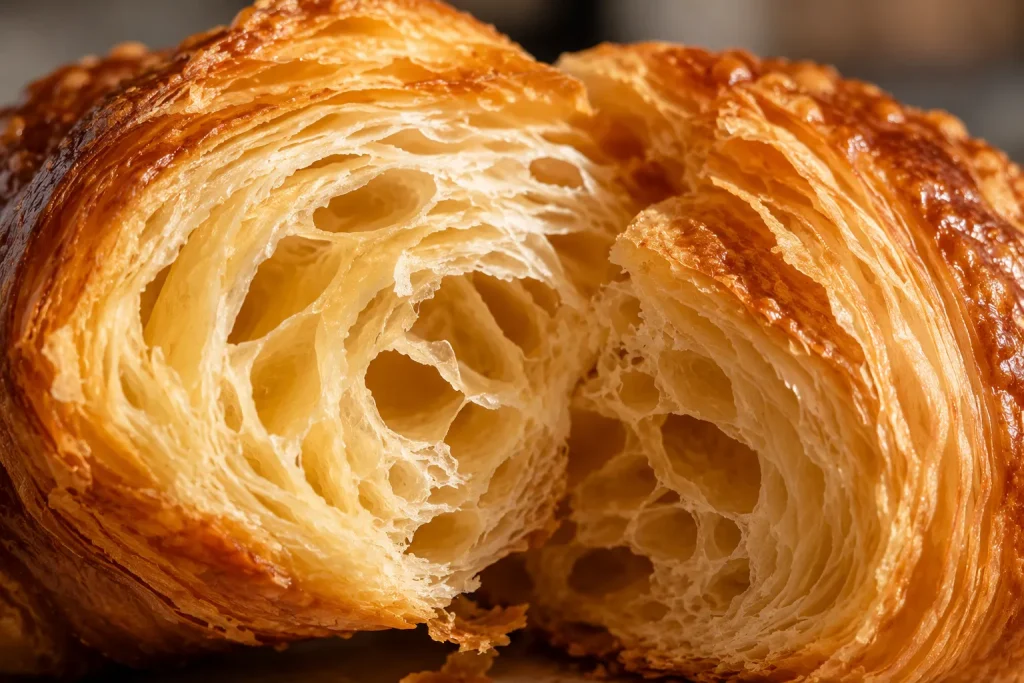
The croissant’s global spread is a story in two distinct phases: the French codification of the pastry in the early 20th century, and the explosion of international croissant consumption in the second half of the 20th century driven by industrial production.
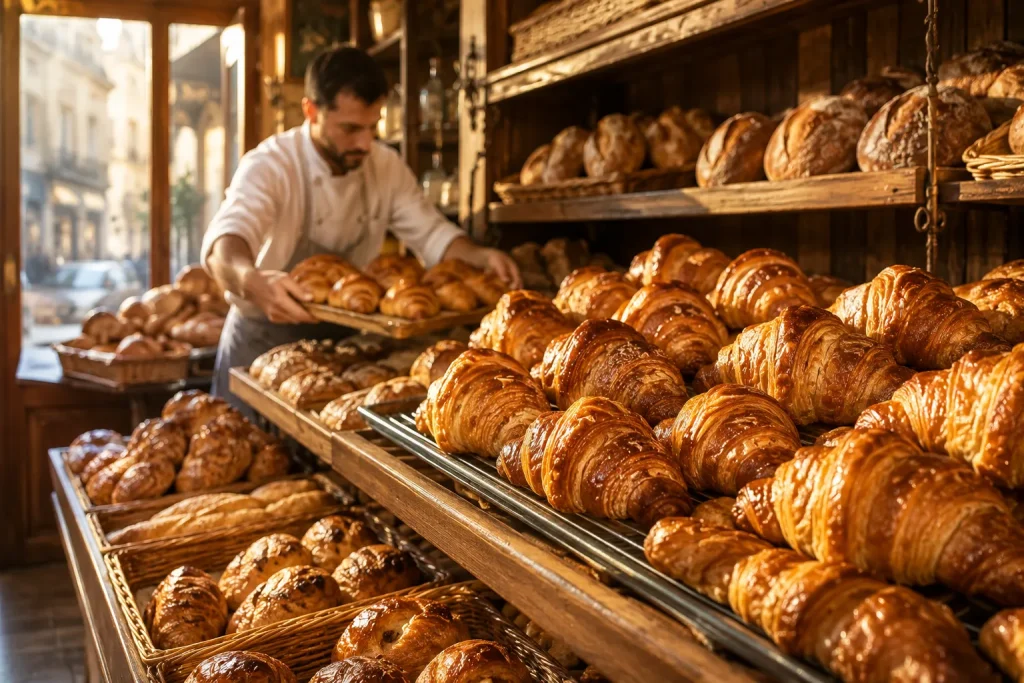
Within France, the croissant’s status was solidified by its codification in professional pastry training. The croissant became an essential part of French breakfast culture during the 20th century, particularly with the rise of cafés and patisseries, and was officially recognised as a national product by the French government in 1920. The boulangerie system — with its regulated production and trade traditions — made the croissant a fixture of French daily life within a generation.
The international spread came primarily through two channels. The first was French culinary influence on professional kitchens globally: French pastry training was the default standard for serious culinary education across Europe and North America through much of the 20th century, and apprentice pastry chefs trained in French technique carried the croissant with them when they returned home.
The second, and larger, channel was industrial production. In the late 1970s, the development of factory-made, frozen, preformed but unbaked dough made croissants a fast food that could be freshly baked by unskilled labour. As of 2008, 30–40% of the croissants sold in French bakeries and patisseries were baked from frozen dough. A hotel breakfast buffet in Bangkok, a supermarket in suburban Ohio, and a chain café in São Paulo could all offer croissants without a trained patissier on staff. This industrial version is a different product from the artisan boulangerie croissant — less flaky, less buttery, more uniform — but it is what most people on earth have eaten.
Japan represents a particularly interesting stop on the croissant’s migration. Japanese bakeries, influenced by French culinary culture from the Meiji era onward, developed a significant artisan croissant tradition that some food writers now consider among the finest outside France. The Japanese approach to the laminated technique — with the precision and ingredient quality that characterizes Japanese food craft more broadly — has produced a regional variation that has circled back to influence French bakers. This pattern of a technique traveling, being adopted with extraordinary care, and then returning in refined form is something Japanese cuisine has done repeatedly with borrowed culinary traditions.
The same migratory logic that carried the croissant globally is visible in other food stories. How curry traveled from South Asia across the world through colonial and commercial routes follows a structurally identical pattern: a dish departs its origin culture, is transformed by the kitchens that adopt it, and ends up so embedded in its adopted countries that the origin debate becomes almost irrelevant to daily life.
Croissant Origin: Timeline and Claims
| Period | Location | Development | Evidence Quality | Significance |
|---|---|---|---|---|
| 13th century onward | Austria / Central Europe | Crescent-shaped kipferl exists as enriched bread dough pastry | Documentary references in German-language sources | Establishes crescent shape tradition; not a laminated pastry |
| 1683 | Vienna | Supposed siege story — baker hears tunneling, crescent shape adopted in celebration | First written account appears c.1938 in Larousse Gastronomique, nearly 250 years later | Almost certainly mythologized; no contemporary documentation |
| c.1770 | France | Marie Antoinette purportedly brings kipferl to France | No documentary evidence found in French culinary records | Not credible; laminated croissant appears after her death |
| 1838–1839 | Paris | August Zang opens Viennese bakery on Rue de Richelieu | Contemporary French accounts; Zang’s later career documented | Real and plausible; introduces Viennese pastry tradition to Parisian consumers |
| 1850–1853 | France | Word “croissant” appears in French culinary records as a crescent-shaped bread | French dictionaries and trade literature | Name established; laminated technique not yet applied |
| 1905–1915 | France | Laminated croissant recipe first documented; Goy’s definitive recipe published 1915 | French culinary publications; Goy’s La Cuisine Anglo-Américaine | Most credible origin point for the modern croissant as eaten today |
| Early 20th century | France | Croissant codified in French professional pastry tradition; officially recognised as national product 1920 | Professional culinary curricula; trade literature | Establishes croissant as definitively French in its modern form |
| 1970s onward | Global | Industrial frozen dough enables mass global production | Commercial production records; widespread availability | Defines the croissant most people on earth have encountered |
Three Things That Are Widely Believed About Croissant History That Are Not Accurate
The crescent shape commemorates the Siege of Vienna.
This is the most pervasive croissant myth and it does not hold up. The Siege of Vienna in 1683 is a real historical event, and the Ottomans did use a crescent symbol. But the story connecting the kipferl’s crescent shape to that siege does not appear in any written source until the 1930s — more than 250 years after the event it claims to describe. Historians examining primary sources from 1683 and the following decades have found no documentation of this connection. The kipferl existed long before the Ottoman siege of Vienna — a poem mentions it as one of the Christmas treats that Viennese bakers presented to Duke Leopold in 1227. The siege story is a later invention, appealing precisely because it provides a symbolic origin that links shape to history in a satisfying way.
Austria and France are roughly equal claimants to the croissant.
This framing is common in diplomatic food writing and it misrepresents the situation. Austria has a legitimate claim to an ancestor — the kipferl is real, old, and crescent-shaped. But the croissant is specifically a laminated pastry, and that technique is French. Saying Austria and France share equal claim to the croissant is a bit like saying Hungary and France share equal claim to foie gras because Hungary produces excellent duck liver: the ingredient relationship is real but the specific product is not the same thing.
The industrial frozen croissant is a degraded version of a consistent original.
The artisan laminated croissant of the early 20th-century Parisian boulangerie was never universally consistent. Regional and shop-by-shop variation was substantial. The idea of a single authentic original that the frozen supermarket version degrades is romantic but not historically grounded. What the industrial version lacks is the specific quality achievable by skilled hand lamination with high-fat butter — not fidelity to some fixed original.
What the Croissant Origin Dispute Reveals About Food and National Identity
The croissant’s origin story matters today primarily because it demonstrates how thoroughly food myths can displace documented history when the myth is sufficiently satisfying.
The Siege of Vienna story circulates because it gives the croissant a dramatic historical moment and a political dimension — the edible defeat of an enemy, a baker as hero. That kind of story is almost irresistible. It gets repeated in documentaries, travel writing, and food journalism without fact-checking because it sounds true and because questioning it seems almost churlish.
France’s claim to the croissant, meanwhile, is so culturally cemented that it rarely gets challenged from the other direction. French culinary hegemony in the 19th and early 20th centuries was real, and it shaped how food history was written — with France at the centre. The Viennese contribution to the croissant’s development gets minimized in French accounts in ways that are not entirely accurate either.
This politics of culinary credit is not unique to croissants. The debate over who owns falafel is a more politically charged version of the same contest: multiple communities with genuine but partial historical claims, a popular origin story that vastly oversimplifies what actually happened, and a dish that has become so culturally embedded in multiple places simultaneously that assigning singular ownership misrepresents the history.
The UNESCO designation question is not currently a live dispute for the croissant. But the broader question of who owns a food — who gets to define its authentic form, who benefits commercially from its global recognition — is increasingly contested in food culture, and the croissant’s tangled origin illustrates why those disputes are rarely simple.
The Bottom Line
The evidence most strongly supports this: the croissant as a laminated pastry is a French creation, developed in the early 20th century, built on inspiration from the Viennese baking tradition that August Zang helped introduce to Parisian consumers in the late 1830s. The kipferl is a genuine Austrian ancestor but a different food. The Siege of Vienna story is almost certainly mythology. Marie Antoinette did not bring the croissant to France.
What remains genuinely uncertain is the exact creative moment — which French baker first applied the lamination technique to a crescent shape, when precisely, and in what kitchen. The historical record is specific enough to establish the technique as French and early 20th century; it is thin on the individual behind it.
The honest verdict: Austria gave the croissant its shape and some of its spirit. France gave it its soul, in the form of the technique that makes it what it is. The version worth eating — the one that shatters when you bite it and leaves a constellation of flakes on your shirt — is French. Knowing that makes every good croissant slightly more interesting, not because France’s claim is pure, but because the truth is that the best foods rarely belong to anyone entirely.
People Also Ask
Where did the croissant originally come from?
The croissant in its modern form — a flaky, laminated pastry — originated in France in the early 20th century, developed by French patissiers who were influenced by Viennese baking traditions. The crescent shape has roots in Austrian and Central European bread-making, particularly the kipferl, but the laminated dough technique that defines the croissant as a distinct pastry is a French development. The first documented recipe using this technique was published by French baker Sylvain Claudius Goy in 1915.
Did Austria really invent the croissant?
Austria’s claim is to the kipferl, a crescent-shaped pastry with a documented history in Central Europe dating to at least the 13th century. The kipferl is a genuine ancestor of the croissant in terms of shape and cultural tradition, but it is made from a denser enriched dough without the lamination technique that creates the croissant’s characteristic flaky layers. The modern croissant as a specific product is more credibly attributed to French bakers, though Viennese influence on Parisian pastry culture through August Zang’s bakery in 1838–1839 was real and significant.
Is the story about the Siege of Vienna true?
Almost certainly not, or at least not in the way it is usually told. The story that a Viennese baker heard Ottoman tunnelers during the 1683 siege and was rewarded with the right to make crescent-shaped pastries does not appear in any written form until the 1930s — nearly 250 years after the event it describes. Food historians examining contemporary accounts from 1683 have found no documentation connecting the kipferl’s shape to the siege. Crucially, the kipferl predates the siege by at least 450 years, appearing in written records as early as 1227.
Did Marie Antoinette bring the croissant to France?
There is no credible documentary evidence for this claim. Marie Antoinette was Austrian and married into the French royal family in 1770, which gives the story a plausible surface logic. But the laminated croissant that defines the modern pastry appears in French culinary sources in the early 20th century — well after her death in 1793. The claim does not appear in contemporary accounts of her household or food customs and is most likely a story invented after the fact to provide the croissant with a romantic royal origin.
Who actually invented the croissant?
No single inventor is credibly documented. The most historically plausible account involves August Zang, an Austrian who opened a Viennese-style bakery in Paris in 1838 or 1839 and introduced Parisian consumers and bakers to Viennese pastry traditions including the kipferl. French patissiers subsequently developed the laminated version, with French baker Sylvain Claudius Goy publishing the first definitive laminated croissant recipe in 1915. The croissant was almost certainly an evolution rather than an invention — no single moment, no single baker.
Why does France get credit for a pastry with Austrian roots?
Because the specific technique that makes a croissant a croissant — the lamination of butter into dough to create flaky layers — was developed by French bakers, and the first documented recipes for this specific preparation appear in French culinary sources in the early 20th century. The crescent shape came from Central European tradition. The pastry that resulted from applying French lamination technique to that shape is a distinct product, and it was French bakers who developed and codified it. France’s credit is for the technique and the finished form, not the shape.
Is the croissant actually French or is that just cultural assumption?
It is substantially accurate, though not a clean story. The crescent-shaped pastry tradition is older and has Austrian roots. The modern croissant specifically — defined by laminated dough — is most credibly attributed to French development in the early 20th century, with acknowledged influence from Viennese baking culture through August Zang’s Paris bakery. The claim is not purely cultural assumption, but it does benefit from the general dominance of French culinary tradition in food history writing, which has tended to centre French contributions and understate influences from elsewhere.
Sources and References
Chevallier, Jim. (2022). August Zang and the French Croissant: How Viennoiserie Came to France (3rd ed.). Chez Jim Books. The most detailed English-language examination of the documented record on Zang and the croissant’s French origins. Chevallier has been cited in The New Yorker, The Smithsonian, Le Monde, and Le Figaro. A third edition superseding all previous editions was published in January 2025.
Institute of Culinary Education. “A Brief History of the Croissant: From Austrian Kipferl to Layered French Luxury.” Documents the transition from kipferl to laminated croissant and confirms the 1915 Goy recipe as the first French laminated croissant recipe.
Wikipedia. “August Zang.” Documents Zang’s life, his Boulangerie Viennoise on the rue de Richelieu, and his subsequent career founding Die Presse in Vienna.
Wikipedia. “Croissant.” Comprehensive sourced overview of the croissant’s history, including the Larousse Gastronomique origin of the siege story and the timeline of laminated dough recipes.
Wikipedia. “Sylvain Claudius Goy.” Confirms Goy’s 1915 La Cuisine Anglo-Américaine as the first documented recipe for the modern laminated croissant.
Europeana. “The History of the Croissant.” European digital library summary confirming the 1920 French national recognition and early 20th-century codification.
Euronews. “National Croissant Day: How the flaky French pastry evolved from kipferl to cronut.” Confirms the 1920 French government recognition and the role of the frozen dough industry in global spread.
Pastry Arts Magazine. “Viennoiserie Origins.” Academic-style review of laminated dough history, confirming Goy’s 1915 recipe as the basis for all modern croissants.
Paris Unlocked. “Curious History of the Croissant.” Covers the Zang bakery and the transition to laminated dough with reference to Chevallier’s research.
Davidson, Alan. (1999). The Oxford Companion to Food. Oxford University Press. Treats the Siege of Vienna story skeptically and notes the absence of contemporary documentation. Available through academic libraries.
Kaplan, Steven Laurence. (2006). Good Bread Is Back: A Contemporary History of French Bread, the Way It Is Made, and the People Who Make It. Duke University Press. Provides documented context on French boulangerie tradition and the professional codification of pastry technique.