French cuisine’s reputation for depth and richness is usually credited to technique. The more accurate explanation is fat specifically, how fat behaves as a solvent for flavor compounds that water-based cooking cannot hold onto. The reason a classic French pan sauce tastes the way it does is partly chemistry: fat-soluble aromatic compounds that would evaporate or dilute in a water-based liquid instead remain concentrated, layered, and present on your palate long after you have swallowed.
That is why French food tastes the way it does. Not because French chefs are more skilled (though the training is rigorous). Because the cuisine is systematically built around a physical property of fat that most other culinary traditions discovered only partially.
The Science in 60 Seconds
- Fat acts as a flavor reservoir. Lipophilic (fat-loving) aroma compounds dissolve into fat during cooking and are released slowly on the palate, creating depth and persistence that water cannot provide.
- The Maillard reaction is French cuisine’s engine. When proteins and sugars brown under heat in a sear, a roast, a browned butter they create hundreds of new flavor compounds. French technique is largely a system for maximizing and then capturing those compounds.
- Fond is concentrated Maillard product. Those brown bits stuck to the pan after searing meat are not residue. They are hundreds of flavor compounds waiting to be dissolved back into a sauce through deglazing.
- Butter is an emulsion that French cooking weaponizes. Butter is roughly 80% fat, 15–18% water, and 1–2% milk proteins. That milk protein is what undergoes the Maillard reaction when butter browns. The fat carries and holds flavor. The water helps with heat transfer. French cooking uses all three properties simultaneously.
- French sauces are built on reduction and emulsification. Reducing a liquid concentrates flavor. Emulsification suspending fat droplets in a water-based liquid creates a texture and flavor delivery that neither fat nor water achieves alone.
How the French Landscape Made Butter Inevitable
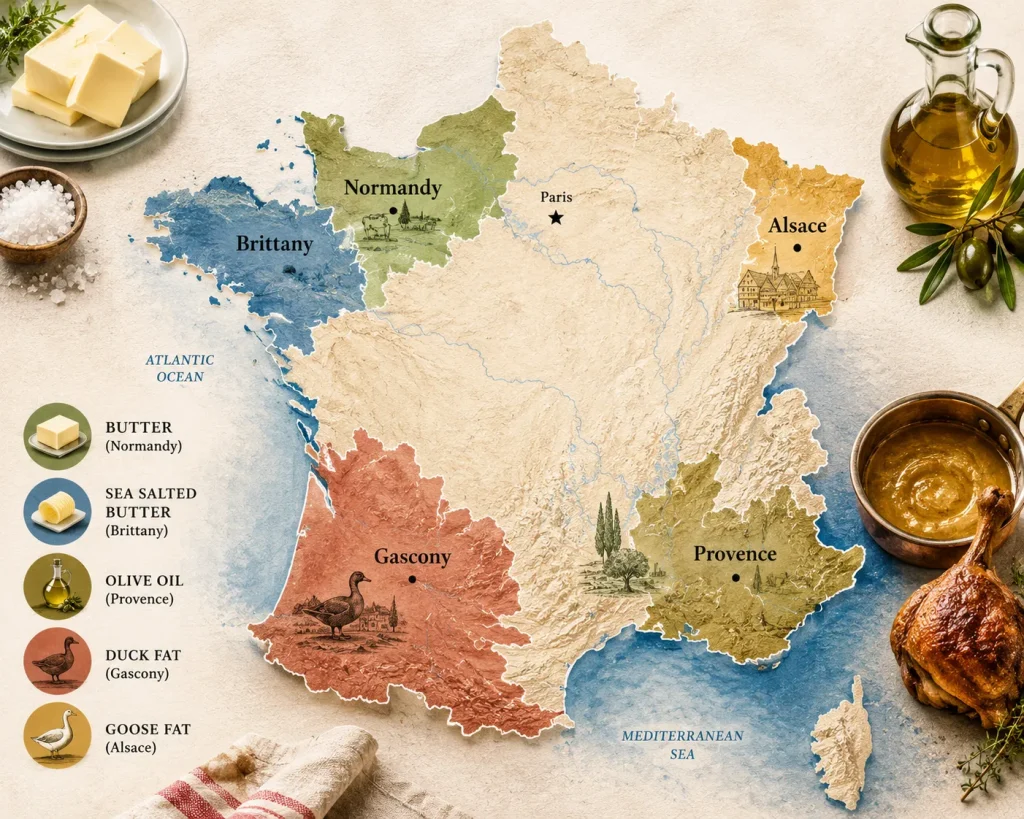
France’s northern and western regions Normandy, Brittany, Pays de la Loire sit in a cool, Atlantic-influenced climate with some of the most fertile grasslands in Europe. The Norman cow (vache normande) produces milk that is exceptionally high in fat, yielding butter and cream of a quality that shaped northern French cooking for centuries.
This is not coincidence. It is geography. Before refrigeration and modern transport, you cooked with what was abundant and stable in your region. In the north and west, that meant dairy. In the Mediterranean south (Provence, Languedoc), dairy was less available and less shelf-stable in the heat, so cooking shifted to olive oil. This is why Provençal cooking bears almost no resemblance to Norman cooking in terms of fat use they are the product of entirely different landscapes.

The historian Patrick Rambourg, who specializes in French gastronomy, has noted that by the Enlightenment period, butter and animal fat had become the dominant cooking fats in French cuisine outside of the Mediterranean regions, far outpacing the use of olive oil in the kitchens of the Grand Siècle. This geographic division is the origin of the north-south split that still defines French regional cooking today.
The crystallizing moment for French cuisine as a system came later in the 19th century, when chefs like Marie-Antoine Carême and, subsequently, Auguste Escoffier codified the techniques of sauce-making, stock-building, and fat-based cooking into a formal culinary language. Escoffier’s system effectively took what northern French cooks had been doing empirically for centuries and turned it into a replicable methodology. The geography came first. The technique followed.
What Butter and Fat Are Actually Doing in a French Sauce
Fat is a solvent. Specifically, it is a solvent for lipophilic (fat-soluble) aroma compounds — the flavor and fragrance molecules in herbs, garlic, shallots, meat, and wine that simply do not dissolve into water the way salt or acid do.
When you sauté aromatics in butter or sweat them in fat, the fat draws out and holds those compounds in a way water-based cooking cannot replicate. Research published in the Journal of Agricultural and Food Chemistry and summarized by food scientists confirms that lipophilic aroma compounds are more stable and persistent in fat than in water they release more slowly on the palate, which is why fat-finished sauces have that lingering quality.
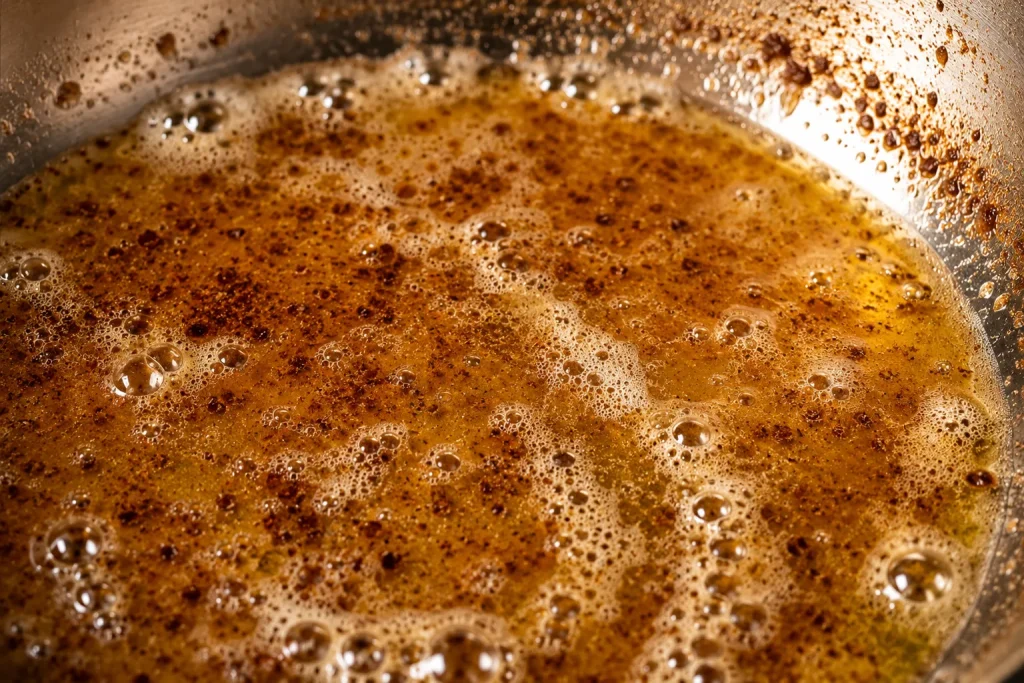
There is a second mechanism at work in butter specifically. Butter is an emulsion fat droplets suspended in water and when it heats up, the water evaporates, the milk solids toast, and the Maillard reaction (the chemical reaction between amino acids and reducing sugars that creates hundreds of new flavor compounds) begins. This is beurre noisette, or browned butter and it is not just regular butter with color. It is chemically different, containing new nutty, toffee-like, and savory compounds that did not exist before the heat was applied.
America’s Test Kitchen describes browned butter accurately: the process starts when heat breaks the emulsion, the water evaporates, and the milk solids which contain sugars and amino acids undergo the Maillard reaction, creating a dark-speckled, savory-sweet result.
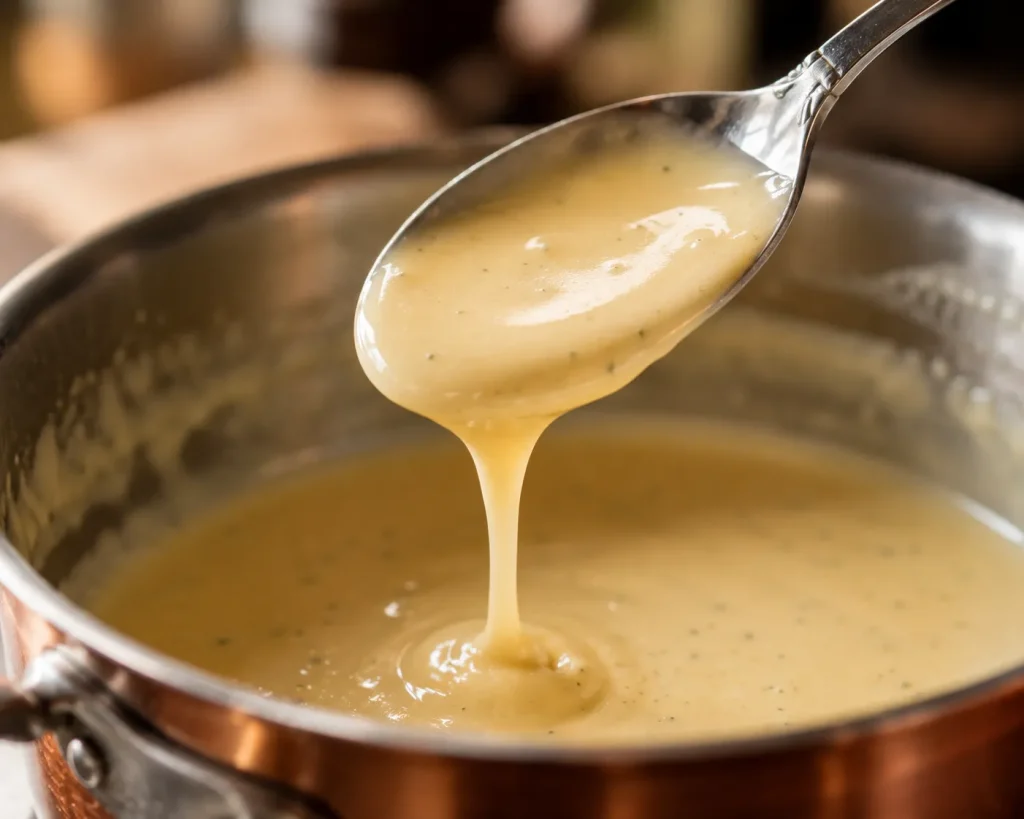
Then there is emulsification the third fat mechanism French cooking exploits. An emulsion is a stable mixture of two liquids that do not naturally combine, held together by an emulsifying agent. Egg yolk does it in hollandaise. The milk proteins in butter do it in a beurre blanc. This creates a texture — that glossy, coating quality of a good French sauce that carries flavor compounds and delivers them across the entire surface of your tongue simultaneously. That is why French sauces do not just taste rich. They feel complete.
The Techniques and Ingredients That Carry French Flavor
Fond: The Most Underrated Flavor Compound in Your Kitchen
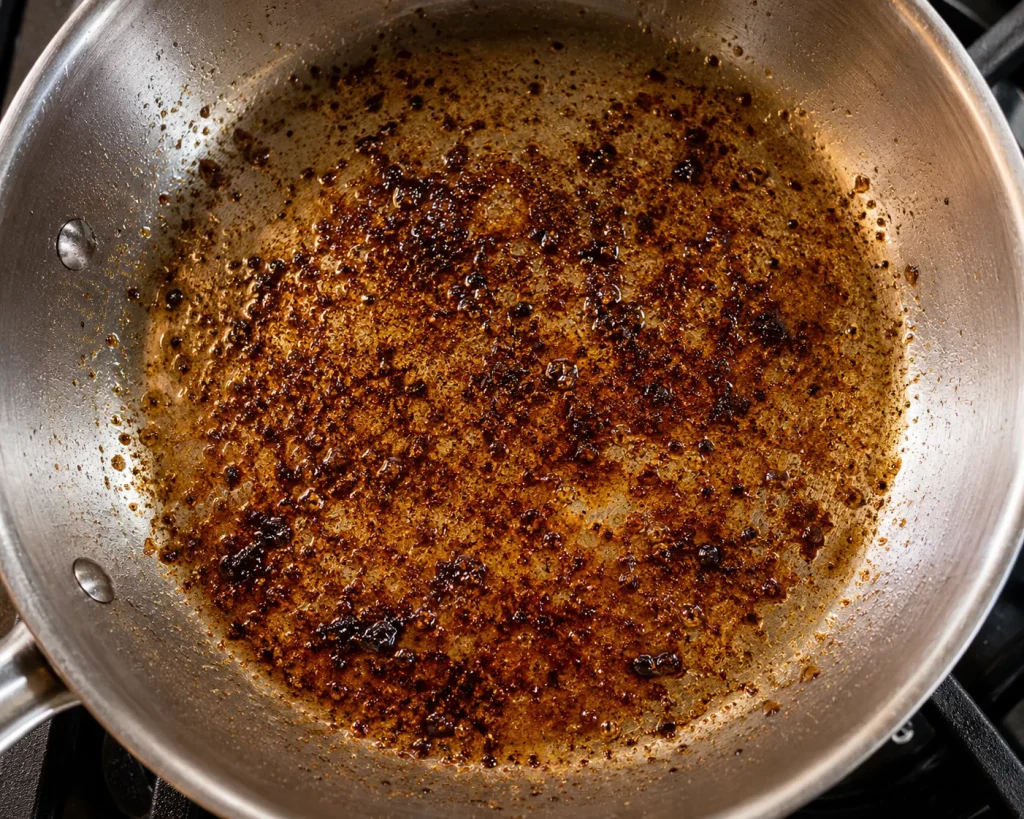
Fond is the layer of browned proteins and caramelized sugars that sticks to the pan after high-heat cooking the direct, concentrated result of the Maillard reaction happening on your cooking surface. The word is French for “base” or “foundation,” which is exactly what it is.
When you sear a duck breast or brown shallots and see dark patches on a stainless steel pan, those patches are not burnt food. They are hundreds of flavor compounds locked into a dry, concentrated form. The technique of deglazing adding wine, stock, or another liquid to a hot pan and scraping up the fond dissolves those compounds back into solution, where they become the base of a pan sauce. Food Network describes this accurately: when you deglaze a fond, it adds depth and complexity to sauces that no bottled substitute can replicate.
The specific observation that most articles skip: fond develops best on stainless steel or cast iron, not nonstick. The chemical reaction that creates it requires direct contact between the food and an uncoated hot surface. A nonstick coating physically interrupts the Maillard reaction. If you have been cooking French dishes in a nonstick pan and wondering why the sauce never tastes quite right, that is the answer.
Butter: Three Roles, One Ingredient
Butter is doing three jobs simultaneously in French cooking, and most people only think about one of them.
The first is flavor carrying fat-soluble aromatics from herbs, garlic, and wine dissolve into the butterfat and are held there, releasing slowly. The second is texture creation through emulsification finishing a sauce with cold butter off heat (a technique called monter au beurre) creates a glossy, coating texture by re-emulsifying the sauce. The third is Maillard browning the milk proteins in butter brown when heated, generating new flavor compounds through the same reaction that gives seared meat its crust.
As the Science of Cooking notes, butter contains approximately 80% fat, 15% water, and 1–2% milk protein, with the Maillard reaction occurring specifically in those milk proteins which contain the amino acid lysine and the reducing sugar lactose that the reaction requires. Understanding this is why French cooks treat browned butter as a distinct ingredient, not just heated butter.
Stock (Fond de Cuisine): Patience as a Technique
Classical French stock is essentially a system for extracting gelatin and flavor compounds from bones, aromatics, and vegetables over several hours of low simmering.
Gelatin extracted from collagen in bones and connective tissue is what gives a properly made French stock or finished sauce that lip-coating quality. It is not fat. It is a protein that creates a physical structure in the liquid, trapping flavor compounds and creating body that water alone cannot achieve. A sauce made from real stock reduces differently, coats differently, and tastes different from one made with commercial stock cubes, because the gelatin structure is absent in the latter.
The classical French mirepoix diced onion, carrot, and celery is not just aromatics. Those vegetables contain sugars that caramelize during initial cooking, adding a layer of Maillard and caramelization products to the stock before the long simmer even begins.
The Roux: Thickening as Flavor Development
A roux is equal parts fat and flour cooked together, and its primary purpose is thickening sauces and soups. But the flavor contribution changes dramatically depending on how long you cook it.
A white roux (cooked briefly, used in béchamel) has a neutral, slightly starchy flavor. A blonde roux (cooked longer to a golden color) begins to develop nutty notes from the Maillard reaction in the flour proteins. A dark roux (the foundation of Cajun gumbo, which inherited the technique from French colonists) has a deep, complex, almost chocolate-like flavor from extended Maillard browning and correspondingly less thickening power, since the starch granules break down with prolonged heat.
The roux demonstrates something central to French cooking: technique decisions that look like they are about texture are also always decisions about flavor. Nothing is single-purpose.
Wine as Acid and Flavor Concentrate
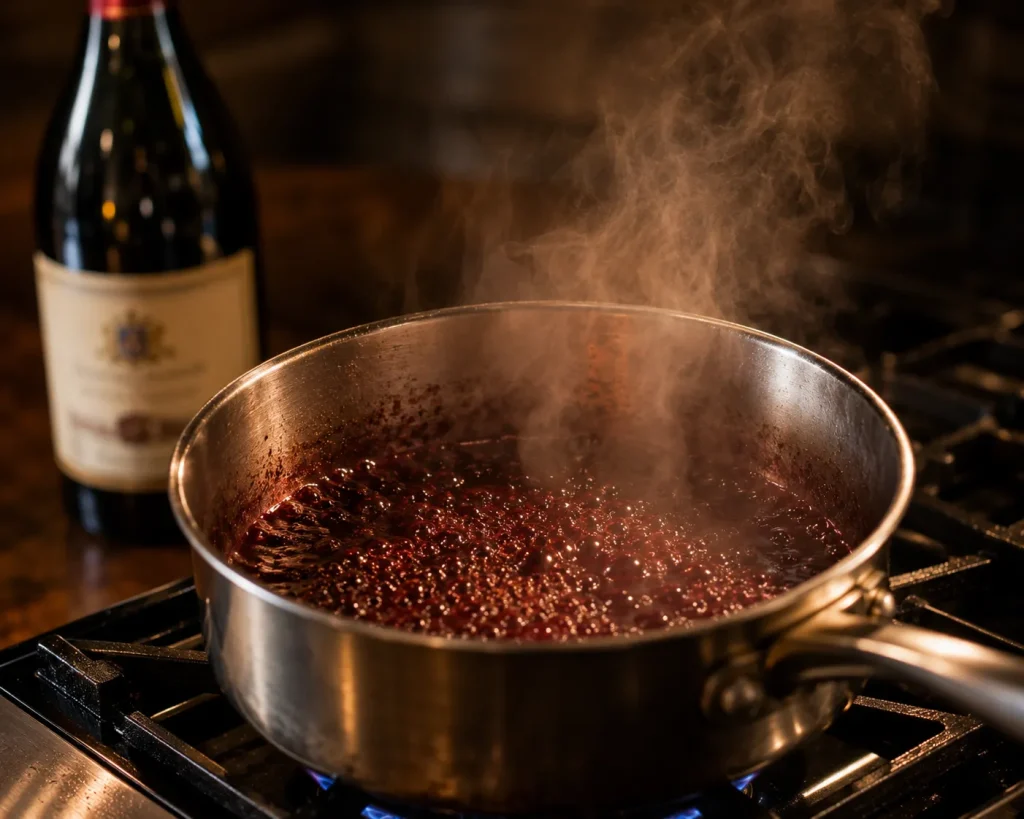
French cooking uses wine at almost every stage deglazing, braising, sauce-finishing and the reason is both chemical and practical.
Wine provides acidity that balances fat and cuts richness on the palate. It provides flavor compounds (including fruit esters and phenolic compounds from grape skins) that water cannot provide. And when wine is reduced, its alcohol evaporates, concentrating those compounds while the acidity mellows. The French wine regions that surround French cuisine are not coincidental geography. The wine that grew locally was what cooks reduced into sauces for centuries, and regional French cuisine still reflects those pairings Burgundy wine in boeuf bourguignon, Riesling in Alsatian braises, Muscadet in Loire seafood preparations.
French Fat Techniques at a Glance
| Technique | What It Does | Key Flavor Mechanism | Classic Application | Difficulty |
|---|---|---|---|---|
| Searing + deglazing | Builds and captures fond | Maillard reaction; fond dissolves into sauce | Pan sauces, steak au poivre | Medium |
| Beurre noisette | Browns milk proteins in butter | Maillard in milk solids; new nutty compounds | Meunière, pasta, vegetables | Low |
| Monter au beurre | Cold butter whisked into hot sauce off heat | Emulsification; fat coats palate | Finishing red wine sauces, pan sauces | Medium |
| Roux | Fat + flour cooked together as thickener | Starch gelatinization; Maillard at blonde/dark stages | Béchamel, velouté, gumbo | Low-Medium |
| Stock reduction | Long simmer extracts gelatin and flavor | Concentration; gelatin body | All classical sauces | High (time) |
| Confit | Long slow cook submerged in fat | Fat-soluble flavor extraction; gentle protein cooking | Duck confit, garlic confit | Medium |
How Other Cuisines Handle Fat and Why French Cooking Is Distinct
The insight that fat carries flavor compounds is not exclusive to French cuisine. Other traditions arrived at similar conclusions through different paths.
Italian cuisine uses olive oil in a structurally similar way as a fat-soluble flavor carrier for garlic, herbs, and aromatics but olive oil’s phenolic compounds give it a distinctly different flavor profile from butter, and Italian technique tends toward the soffritto (slow-cooked aromatic base in oil) rather than the French reduction-and-emulsification approach.
Chinese cuisine uses rendered lard and, increasingly, neutral oils to carry aromatics in the wok at extremely high heat a technique called stir-frying that maximizes Maillard reaction speed rather than the slow concentration of French methods. The flavor result is intense and immediate rather than layered and persistent.
Spanish cuisine uses olive oil across most regions, with a sofrito base (tomato, onion, garlic slowly cooked in oil) that is conceptually close to a French aromatic base but built around tomato’s acidity and concentrated sweetness rather than butter’s milk-solid complexity.
What makes French cooking distinct is the systematization. The five classical French mother sauces béchamel, velouté, espagnole, sauce tomat, hollandaise are not just recipes. They are a logical system for building flavor through fat, stock, and emulsification in combinations that cover every major sauce category. No other cuisine produced an equivalent codified framework that formal culinary training still teaches worldwide.
What Understanding This Changes in Your Kitchen
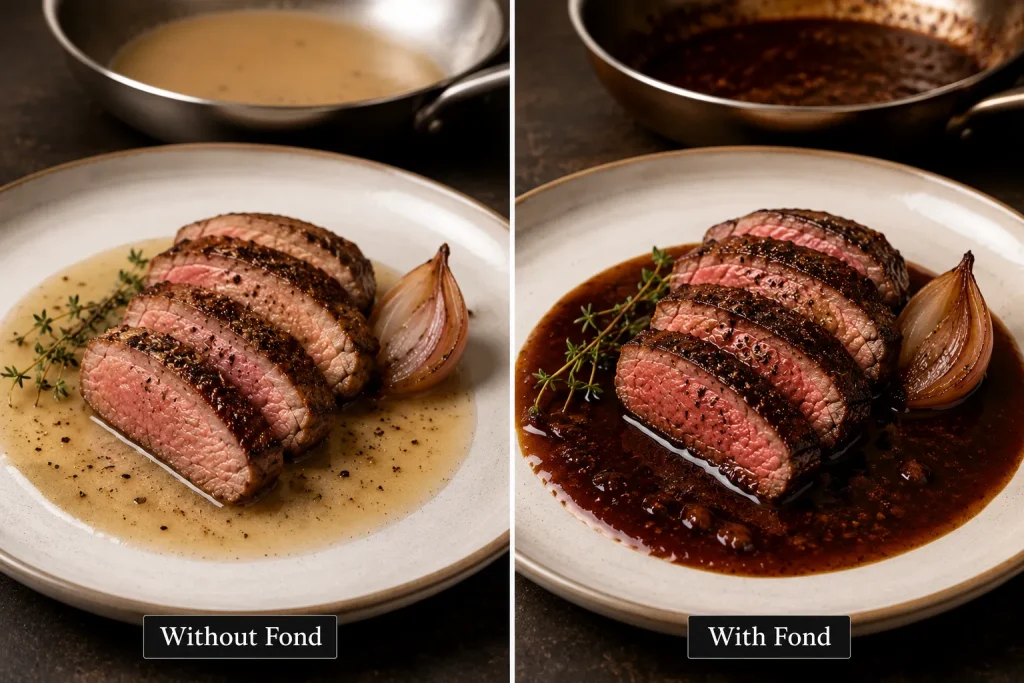
Knowing the science changes three specific behaviors.
First: stop washing the pan between steps. The fond at the bottom of your pan is the beginning of your sauce, not a cleaning problem. If you are making chicken in a cast iron pan and immediately rinsing it out before adding more ingredients, you are discarding the most flavorful part of the cooking process.
Second: finish sauces with cold butter off heat. This is the monter au beurre technique, and it takes 30 seconds. After a sauce has reduced, pull it off the burner and whisk in a knob of cold butter. The emulsion it creates coats the palate differently from a non-buttered sauce. The cold temperature matters — hot sauce plus melted butter does not emulsify the same way.
Third: use fat to bloom aromatics before adding liquid. Garlic sautéed in butter or olive oil before wine or stock is added will contribute more flavor than garlic added directly to a water-based liquid. The fat-soluble compounds in garlic dissolve into the fat first, then get distributed through the sauce. This is why garlic in a French sauce tastes different more present, more integrated than garlic in a broth-based soup where it was never sautéed in fat.
Next time you eat a classic French dish a poulet rôti, a steak au poivre, a sole meunière taste specifically for persistence. Does the flavor linger after you have swallowed, coating the palate for several seconds? That is the fat-soluble aromatic system at work. It is impossible to untaste once you know what you are tasting for.
The Regional Exceptions That Complicate the Story
The “French cuisine = butter and cream” summary is true of northern France and of haute cuisine. It becomes progressively less accurate as you move south.
Provençal cooking is almost entirely olive oil-based. Traditional recipes from Provence contain no butter and minimal cream. The foundational Provençal flavor base is the sofrito of tomato, garlic, and onion cooked in olive oil structurally a different fat system, carrying different fat-soluble compounds, delivering a completely different flavor result. The heat of the Mediterranean south meant dairy would not keep; olive trees thrived there instead.
Alsatian cooking reflects Germany as much as France lard and goose fat are the traditional cooking fats, and the cuisine leans toward fermentation (choucroute, pickled vegetables) in a way that bears almost no resemblance to Parisian haute cuisine.
Southwestern cooking (Gascony, Périgord) uses duck fat and goose fat as its primary fats richer in unsaturated fatty acids than butter, with a savory depth that is distinct from the dairy-cream richness of Normandy. Duck confit cooked in duck fat is not the same flavor experience as the same duck cooked in butter, even though both are fat-based techniques.
The principle holds across all these regions: fat carries flavor. What changes is which fat, and which flavor compounds it is carrying.
The Bottom Line
French food tastes the way it does because French cuisine through centuries of geography, necessity, and eventually systematic codification figured out how to use fat as a complete flavor delivery system. Not just for richness. Not just for texture. For capturing, concentrating, and releasing the aromatic compounds that give food its depth.
The next time a French sauce lingers on your palate longer than you expect, that persistence is the fat-soluble aroma system working exactly as designed. It is not indulgence. It is chemistry that was empirically discovered in the dairy farms of Normandy and then given a formal grammar by Escoffier.
Eat a duck confit, a sole meunière, a simple pan sauce built from fond and finished with butter and taste the persistence. It is the most honest way to understand what French cooking is actually doing.
People Also Ask
Why does French food taste so rich compared to other cuisines?
French food tastes rich primarily because it is built around fat as a flavor carrier rather than just a cooking medium. Fat-soluble aromatic compounds the flavor molecules in herbs, wine, garlic, and browned meat — dissolve into butter and cream during cooking and release slowly on the palate. Water-based cooking cannot trap and hold those compounds in the same way, which is why a dish cooked in butter tastes different from the same dish cooked in broth. The technique of finishing sauces with cold butter (monter au beurre) adds an emulsification layer that coats the palate and extends that richness further.
What is fond in French cooking and why does it matter?
Fond is the layer of browned, caramelized proteins and sugars that sticks to the pan during high-heat cooking. It forms through the Maillard reaction the chemical interaction between amino acids and reducing sugars at high temperatures and represents hundreds of concentrated flavor compounds in dry form. When a cook deglazes the pan by adding wine or stock and scraping up the fond, those compounds dissolve into the liquid and become the flavor base of a pan sauce. It is not residue or burnt food. It is the most concentrated flavor element in many French dishes.
Does French food always use butter and cream?
No. The butter-and-cream profile belongs primarily to northern and central France Normandy, Brittany, Burgundy, Paris. Southern France tells a different story. Provençal cooking is almost entirely olive-oil based, with no traditional use of butter or cream in its foundational recipes. Alsace uses lard and goose fat. The Southwest uses duck fat. What unifies French cuisine is not a single fat but a systematic approach to using whatever fat is available to carry and concentrate flavor the specific fat changes with the geography.
Why does French food taste better at restaurants than at home?
The most common reason is fond management. Restaurant kitchens make pan sauces from scratch, building fond deliberately, deglazing carefully, and finishing with butter. Home cooks frequently use nonstick pans (which prevent fond development), skip the deglaze step, and do not finish sauces with fat off heat. A second factor is real stock gelatinous, homemade stock reduces into a different sauce than commercial stock concentrate, because gelatin creates body and a coating texture that water-based stock lacks. The techniques are not difficult, but they require knowing what you are trying to build and why.
What is the most important technique in French cooking?
This depends on what you mean by “important,” but the technique with the broadest application is probably the pan sauce built from fond. It appears in every category of French cooking meat, fish, poultry, vegetables and encapsulates the core principles: Maillard reaction to build flavor, deglazing to capture it, reduction to concentrate it, and butter finishing to emulsify and deliver it. Understanding this one technique means understanding the logic of French sauce-making at a fundamental level.
Why is French cuisine taught as the foundation of professional cooking?
French cuisine became the global foundation of professional kitchen training largely because of Auguste Escoffier, who in the late 19th and early 20th centuries codified a complete system of technique, sauce structure, and kitchen organization that was teachable and replicable. The five mother sauces, the brigade system, the classical preparations these gave culinary education a formal grammar. Other cuisines may be equally sophisticated, but they were not codified into a training framework that spread through professional kitchens worldwide in the same way. The influence is more institutional than culinary at this point though the techniques themselves are genuinely foundational to understanding flavor development.
What is the secret to French cooking at home?
The single change that brings home cooking closest to French results is using stainless steel or cast iron instead of nonstick for any cooking that involves browning. Nonstick prevents the Maillard reaction from producing fond. No fond means no real pan sauce. Beyond that: sauté aromatics in fat before adding liquid (not after), reduce your sauces further than feels comfortable, and finish with cold butter off heat. These three habits represent the core of French flavor-building and require no specialized equipment or hard-to-find ingredients.
Sources and References
This article’s food science claims are grounded in well-established culinary chemistry. Key sources:
- Maillard, L.C. (1912). Original description of the amino acid–reducing sugar reaction that now bears his name. For accessible coverage, see Wikipedia: Maillard Reaction.
- America’s Test Kitchen — How to Make Browned Butter. Accurate description of the physical and chemical process of beurre noisette. americastestkitchen.com
- National Institutes of Health / MDPI — Role of Lipids in Food Flavor Generation (2022). Peer-reviewed overview of how fat-soluble compounds carry and release aroma. ncbi.nlm.nih.gov/pmc/articles/PMC9370143
- Dairy Products of France — The Great History of Butter. Covers Patrick Rambourg’s historical research on fat use in French cuisine through the Enlightenment period. dairy-products-from-france.com
- Escoffier Online — The Science of Cooking. Overview of Maillard reaction, emulsification, and fat in culinary technique. escoffier.edu
- Food Network — What Is Fond? Accurate culinary description of fond formation and deglazing. foodnetwork.com