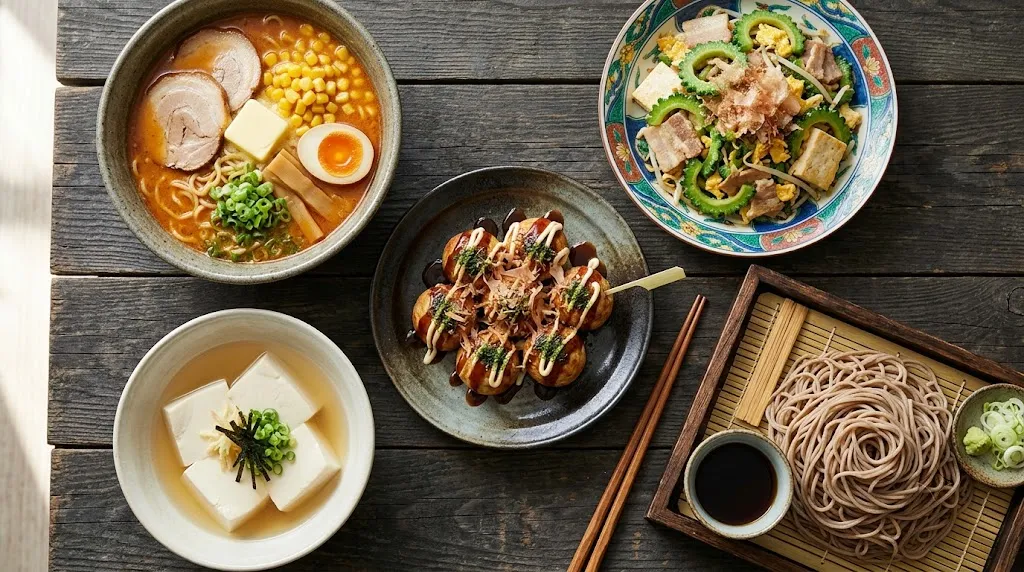
Most people who think they know Japanese food are really thinking of Tokyo food, or worse, a narrow slice of it: sushi, ramen, maybe tempura. What gets lost is that Japan’s food culture was built region by region, shaped by cold northern seas, volcanic soil, isolated mountain valleys, and centuries of trade with Korea, China, and eventually Portugal. A bowl of soup in Hokkaido and a bowl of soup in Okinawa can look like they come from entirely different countries, because in a food sense, they almost do.
This is a region-by-region look at the dishes that actually define local Japanese cooking, not the export version most people know first.
The Short Version of a Long Answer
- Japan’s regional food culture is called kyodo ryori (郷土料理), meaning “local cuisine,” and it exists specifically because ingredients, climate, and history differ sharply between regions.
- Hokkaido, Japan’s coldest and northernmost island, built its food identity around dairy, potatoes, and cold-water seafood like salmon and scallops.
- Kansai, home to Kyoto and Osaka, produced two opposite food philosophies: Kyoto’s refined kaiseki and Osaka’s street-food culture of takoyaki and okonomiyaki.
- Kyushu, in the south, developed some of Japan’s most distinct regional identities, including fugu in Yamaguchi and tonkotsu-style broths further south.
- Okinawa has a food culture closer to Southeast Asia than mainland Japan, built around pork, bitter melon, and tropical ingredients unavailable elsewhere in the country.
Why Japan’s Food Map Looks Nothing Like Its Political Map
Japan is a chain of islands stretched across a huge range of latitude, from the subarctic conditions of Hokkaido to the subtropical climate of Okinawa. That range alone explains a large part of why regional food developed so differently, since what grows or swims off the coast in one prefecture simply does not exist in another.
History did the rest. Kyoto spent centuries as the imperial capital, which shaped its cuisine around refinement, seasonal presentation, and Buddhist vegetarian influence. Osaka, only 50 kilometers away, developed as a merchant city, and its food culture reflects that directly: cheap, fast, shareable, and built for street stalls rather than formal dining. Nagasaki was one of the only Japanese ports open to foreign trade for over two centuries, which is why the region still shows Portuguese and Chinese influence in dishes unlike anything found elsewhere in the country.
The same pattern of geography and trade shaping an entire cuisine’s identity is not unique to Japan. It is part of why Japanese food built its whole flavor identity around umami rather than the fat-forward or spice-forward approaches other cuisines took, and it is also why Japanese food generally reads as simple on the plate even when the underlying technique is not simple at all.
Hokkaido: Dairy, Cold-Water Seafood, and a Borrowed Mongolian Name
Hokkaido is Japan’s northernmost and coldest major island, and its food culture reflects that directly. The region produces the majority of Japan’s dairy, along with potatoes, corn, and cold-water seafood that does not thrive further south.
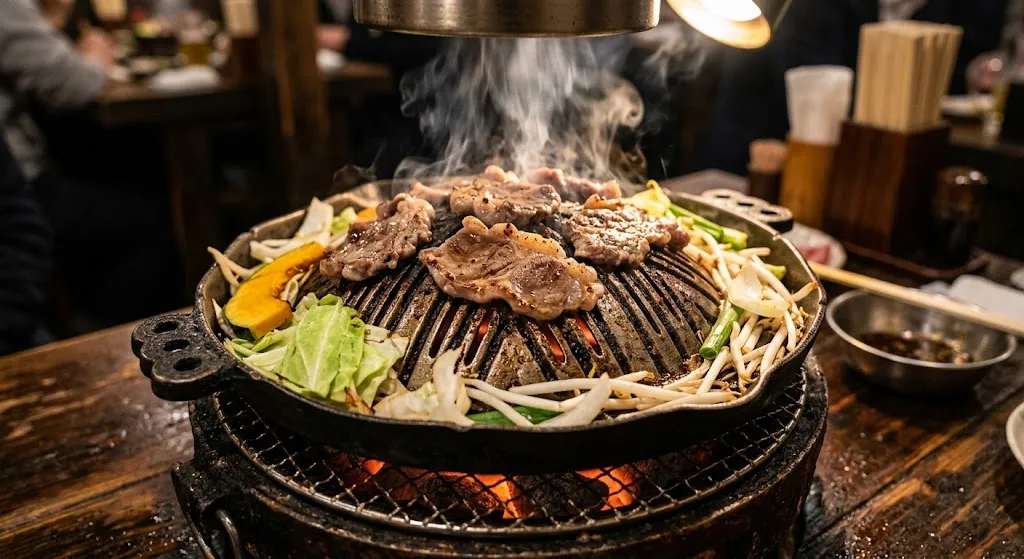
Jingisukan, named after Genghis Khan, is a grilled lamb dish cooked on a raised, dome-shaped skillet alongside vegetables like cabbage and kabocha squash. Sheep farming took hold in Hokkaido to supply wool for the military, and after the war, the meat itself became the point rather than a byproduct.
Ishikari-nabe is a salmon hot pot built on a miso-based broth with vegetables and konnyaku, named for the Ishikari River where salmon runs have historically been strong. Soup curry, a Sapporo invention, is a thinner, more heavily spiced relative of standard Japanese curry, served as a soup rather than poured over rice.
Tohoku: Cold Winters and Food Built to Last Through Them
Tohoku, the northern region of Honshu, has a food culture shaped almost entirely by long, harsh winters, which historically meant preservation and hearty, warming dishes took priority over delicate presentation.
Kiritanpo, from Akita Prefecture, is pounded rice shaped into tubes around a skewer, grilled, then often simmered in a chicken and vegetable hot pot with miso. Wanko soba, from Iwate, turns a simple noodle dish into a social event, with small bowls of soba served one after another, often as an eating challenge among friends.
Zunda mochi, from Miyagi, coats mochi in a sweet paste made from mashed edamame, a distinctly regional use of soybeans that does not appear in most other parts of the country.
Kanto: Tokyo’s Neighborhood and the Rest of the Capital Region
Kanto includes Tokyo itself along with Chiba, Kanagawa, and several surrounding prefectures, and its food culture has a reputation for being more direct and less refined than Kansai’s, with roots in working-class Edo-period Tokyo.
Monjayaki, a looser, batter-heavy relative of okonomiyaki, is a Tokyo specialty cooked and eaten directly off a hot griddle. Fukagawa meshi is a bowl of rice topped with clams, leeks, and miso, a dish tied to Tokyo’s old fishing districts before the city became the capital it is today.
Yokohama’s Chinatown, in Kanagawa, developed its own shumai tradition after the port opened to foreign trade in the 19th century, producing dumplings that are smaller and more delicate than their Chinese originals.
Chubu: Mountains, Buckwheat, and Japan’s Best Known Beef
Chubu sits in central Honshu and covers a huge range of terrain, from the mountains around Nagano to the coastline of Shizuoka, which is why its food culture varies more within the region than most others.
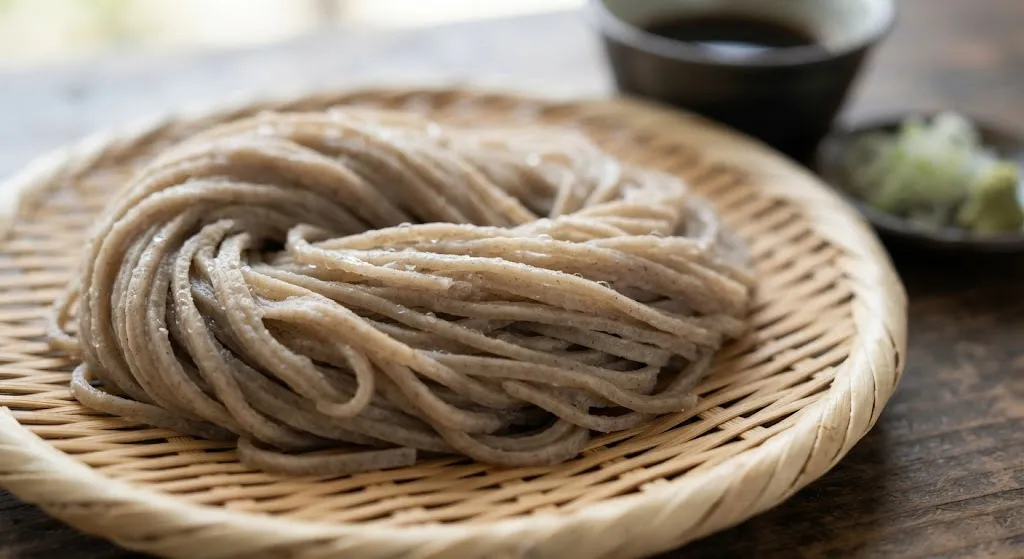
Nagano’s soba is considered some of the best in the country, a direct result of the region’s cool mountain water and buckwheat-friendly climate, which never suited rice farming as well as other parts of Japan. Hoto, a thick udon-like noodle dish simmered with vegetables in a miso broth, is common in the mountainous parts of the region where a hearty one-pot meal made more sense than delicate presentation.
Aichi Prefecture is known for misokatsu, a fried pork cutlet finished with a thick miso-based sauce, a direct regional variation on the katsu found across the rest of the country.
Kansai: Kyoto’s Refinement and Osaka’s Street Food, Side by Side
Kansai produced two of Japan’s most influential and most opposite food cultures within the same region. Kyoto spent centuries as the imperial capital, and its cuisine reflects that history through kaiseki, a multi-course meal built around seasonal ingredients, minimal seasoning, and precise presentation. Yudofu, simmered tofu served with light condiments, developed specifically around Kyoto’s Buddhist temples and remains tied to that tradition today.
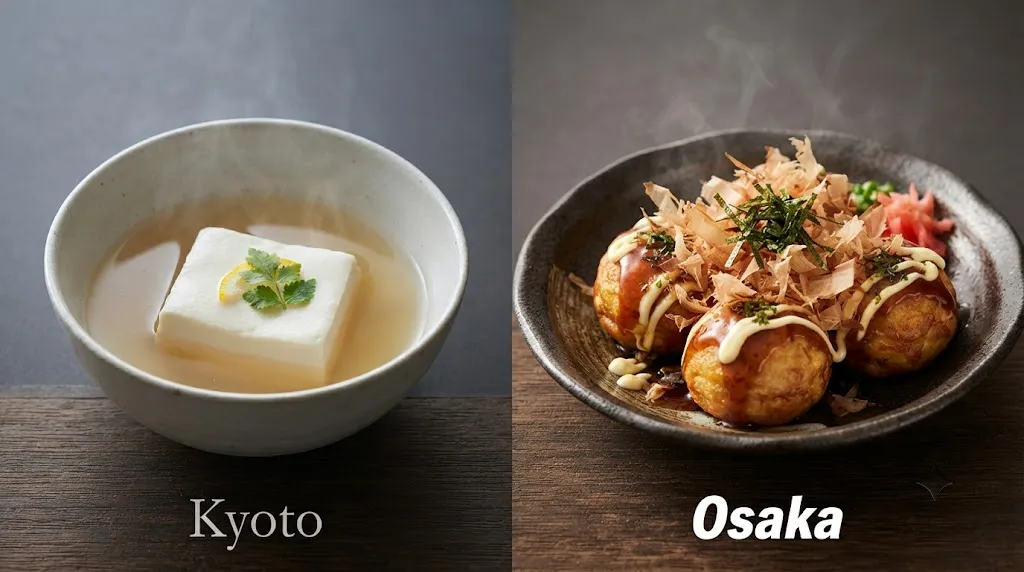
Osaka, less than an hour away by train, built its food identity as a merchant city where cheap, fast, and shareable food mattered more than presentation. Takoyaki, battered octopus balls, and okonomiyaki, a savory pancake mixed with cabbage and toppings before grilling, both come from that same Osaka street-food tradition.
Chugoku and Shikoku: Oysters, Fugu, and Japan’s Most Serious Udon
The Chugoku region, on the western end of Honshu, is best known for two very different specialties. Hiroshima produces the majority of Japan’s oysters and has its own thinner-batter style of okonomiyaki, distinct from Osaka’s. Yamaguchi Prefecture is the center of Japan’s fugu (pufferfish) culture, a dish that requires specially licensed chefs because of the fish’s lethal toxin if improperly prepared.
Shikoku, the smallest of Japan’s four main islands, is dominated by Sanuki udon from Kagawa Prefecture, made from locally grown wheat and traditionally kneaded by foot, producing a firmer, chewier noodle than most other regional udon styles.
Kyushu and Okinawa: Where Japanese Food Starts to Look Like Somewhere Else Entirely
Kyushu, Japan’s southernmost main island, developed some of the country’s most distinct regional food identities, shaped by both geography and historical contact with the outside world. Nagasaki, one of the only Japanese ports open to foreign trade for over two centuries, still shows Portuguese influence in dishes like castella, a sponge cake introduced in the 16th century that is now sold nationwide. Motsunabe, a hot pot built on beef or pork offal, noodles, and cabbage, is a northern Kyushu specialty tied to the region’s history as an industrial, working-class food culture.
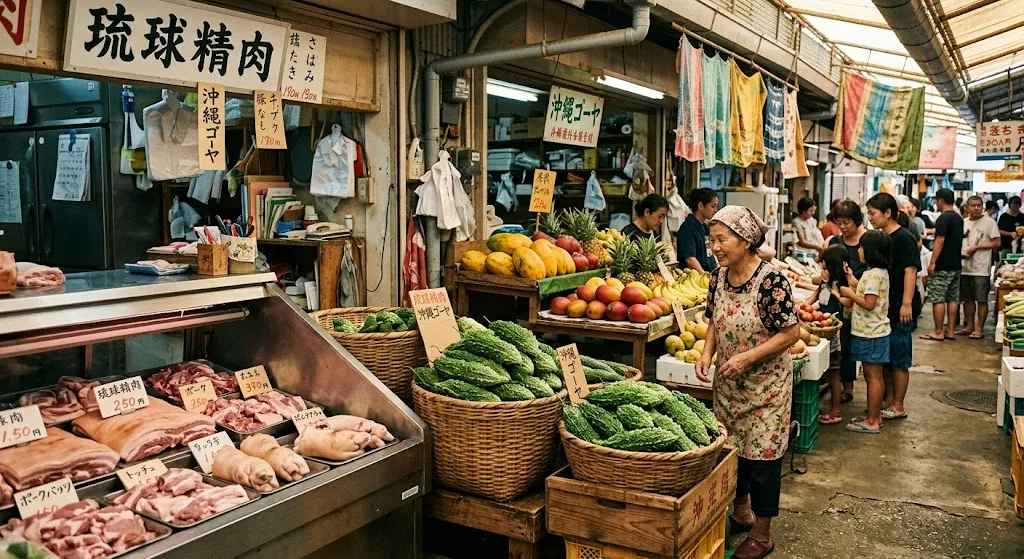
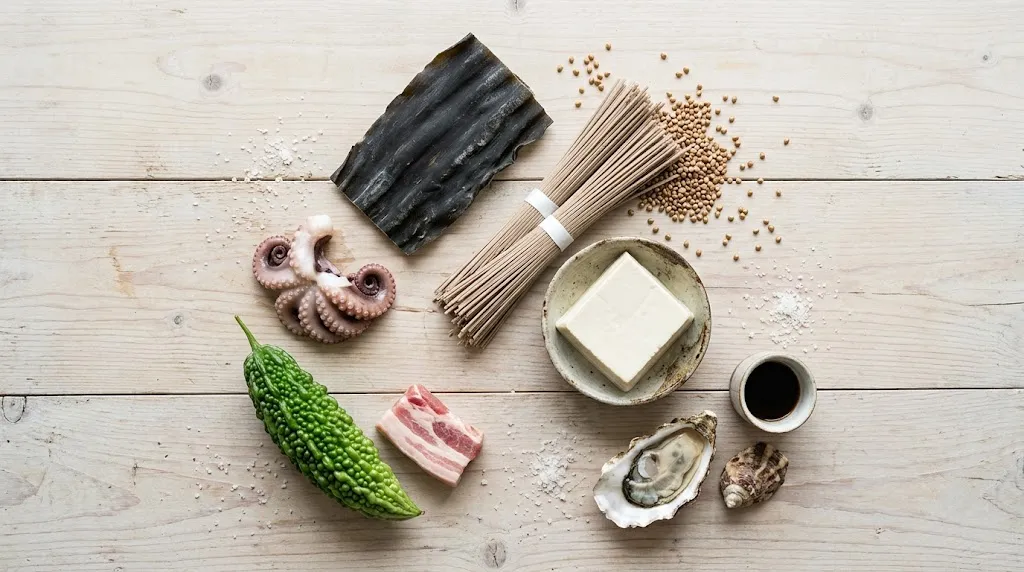
Okinawa, Japan’s subtropical southernmost prefecture, has a food culture that is arguably its own cuisine rather than a regional variation on mainland Japanese food. Goya champuru, a stir-fry built around bitter melon, tofu, and pork, reflects both the tropical produce available in Okinawa and a longer historical connection to Southeast Asian and Chinese trade than the rest of Japan ever had.
Regional Foods of Japan at a Glance
| Region | Signature Dish | Key Ingredient | Historical or Geographic Driver |
|---|---|---|---|
| Hokkaido | Jingisukan (grilled lamb) | Lamb, dairy, cold-water seafood | Postwar sheep farming, subarctic climate |
| Tohoku | Kiritanpo (rice skewers in hot pot) | Rice, chicken, root vegetables | Harsh winters requiring preservation and heartiness |
| Kanto | Monjayaki | Batter, cabbage, seafood | Working-class Edo-period Tokyo food culture |
| Chubu | Nagano soba | Buckwheat, mountain water | Terrain unsuited to rice farming |
| Kansai (Kyoto) | Kaiseki, yudofu | Tofu, seasonal vegetables | Centuries as imperial capital, Buddhist influence |
| Kansai (Osaka) | Takoyaki, okonomiyaki | Octopus, cabbage, batter | Merchant-city street food culture |
| Chugoku | Hiroshima oysters, fugu | Oysters, pufferfish | Coastal aquaculture, specialized licensing traditions |
| Shikoku | Sanuki udon | Locally grown wheat | Climate suited to wheat over rice |
| Kyushu | Motsunabe, castella | Offal, sugar, egg | Industrial port history, Portuguese trade contact |
| Okinawa | Goya champuru | Bitter melon, pork, tofu | Subtropical climate, Southeast Asian trade history |
How Japan’s Regional Food Culture Compares to Other Large Countries
Japan is a relatively small country by land area, which makes the degree of regional food variation more surprising than it first appears. Part of the explanation is the same pattern seen in how China built the world’s most geographically diverse single cuisine: a large range of climate and terrain packed into one country’s borders produces distinct local food cultures almost automatically, whether that country is large like China or comparatively compact like Japan.
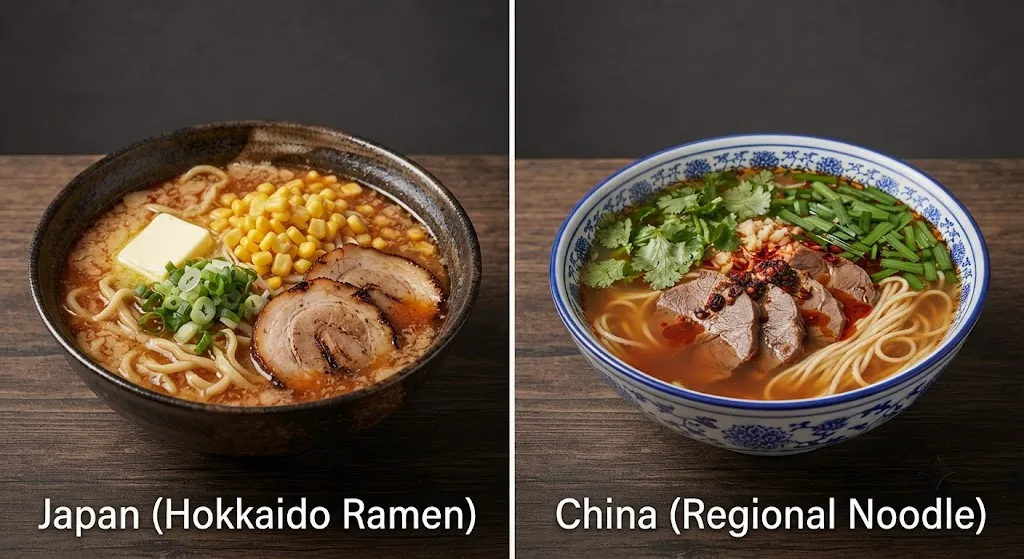
Ramen is a useful case study inside Japan itself, since nearly every region has developed its own broth style, from Hokkaido’s miso ramen to Kyushu’s tonkotsu. That local divergence is part of ramen’s often overlooked Chinese origins, since the dish was adapted and regionalized so thoroughly after arriving in Japan that most people no longer think of it as a borrowed food at all.
What This Means Next Time You Eat Japanese Food
If you have only eaten Japanese food at a general-purpose restaurant outside Japan, there is a good chance you have never tasted a genuinely regional dish at all, since most menus outside the country default to a narrow, nationally exported version of the cuisine.
One practical takeaway: when a menu names a specific region, prefecture, or city alongside a dish, that is usually a signal the dish is being made closer to its original form rather than a generic version. If you are curious what that level of specificity actually tastes like at home, a 72-hour tonkotsu broth built entirely from scratch is a good place to see how far a single regional specialty can be taken outside Japan.
People Also Ask
What is considered Japan’s most regionally diverse food?
Ramen is often cited as the most regionally diverse Japanese dish, since nearly every major region has developed its own broth base, from miso in Hokkaido to tonkotsu in Kyushu. Few other dishes show as much regional variation while still being recognized as the same basic food nationwide.
Is Okinawan food really considered Japanese food?
Okinawa is politically part of Japan, but its food culture developed with much closer historical ties to Southeast Asia and China than the rest of the country, which is why dishes like goya champuru look and taste noticeably different from mainland Japanese cooking.
Why does Kyoto food taste so different from Osaka food?
Kyoto spent centuries as Japan’s imperial capital, which shaped its cuisine around refinement, seasonal presentation, and Buddhist vegetarian tradition. Osaka developed as a merchant city instead, producing a food culture built around cheap, fast, shareable street food.
What is kyodo ryori?
Kyodo ryori translates to “local cuisine” and refers specifically to dishes tied to a particular Japanese region’s ingredients, climate, and history, as opposed to nationally standardized dishes found across the whole country.
Do all Japanese regions eat mostly seafood?
No. Coastal regions like Hokkaido and Hiroshima are built heavily around seafood, but mountainous inland regions like Nagano and Yamanashi historically relied far more on buckwheat, root vegetables, and preserved foods due to limited access to fresh fish.
The Bottom Line
Japanese food is not one cuisine wearing 47 regional costumes. It is closer to 47 separate food cultures that happen to share a language, a set of core techniques, and a national border. Once you start looking for the region behind a dish rather than just the dish itself, a bowl of ramen or a plate of okonomiyaki stops being generic Japanese food and starts being a very specific answer to a very specific place.