I ruined a jar of cabbage on purpose last month.
That is not a typo. I packed salt and shredded cabbage into a jar, weighed it down under brine, and left it on my counter for eleven days, watching it bubble and turn cloudy and smell more aggressive every single day. My kitchen genuinely smelled like a science experiment gone slightly wrong. And somewhere around day nine, while I was standing there sniffing a jar of what looked like swamp water, it hit me. Someone did this by accident, thousands of years before anyone knew what bacteria were, and decided the result was worth eating again.

That is the question that actually pulled me into this. Not “what is fermentation,” which you can get from any textbook. But why would a hungry, cautious human look at spoiled milk or bubbling grain mush and think, this is fine, I will eat this again tomorrow. That decision, repeated across almost every culture on earth, independently, without anyone sharing the recipe, is one of the strangest and most important things humans ever did with food.
It Probably Started as an Accident, Not an Idea
Nobody sat down ten thousand years ago and invented fermentation on purpose. The honest answer is that it found humans before humans found it.
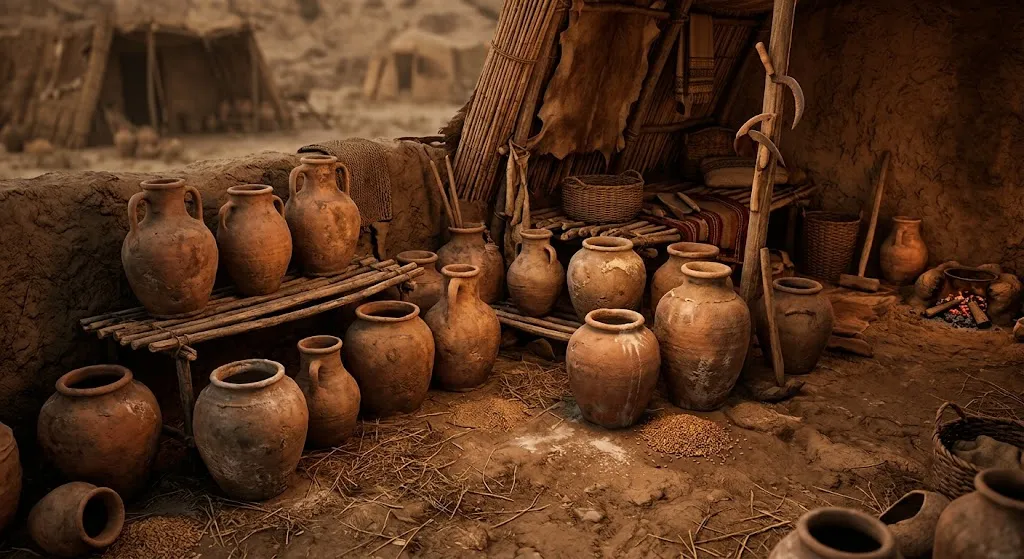
Grain left in a damp storage pit picks up wild yeast. Milk left in a warm clay pot curdles on its own. Fruit left too long in a container starts to fizz. These things happened constantly, long before anyone understood why, simply because wild yeasts and bacteria are everywhere in the air, on plants, on unwashed hands and unwashed pots.
The real discovery was not the chemistry. It was the observation that the changed food did not always make people sick, and sometimes it tasted better, lasted longer, or made a picky stomach feel calmer than the raw version did. Someone, somewhere, ate the weird bubbling thing instead of throwing it out, survived, and told someone else. That is the entire origin story, repeated with variations across roughly every inhabited continent.

The Three Reasons It Actually Stuck Around
I kept expecting to find one clean answer for why fermentation spread everywhere. There is not one. There are three, and they reinforced each other.
Food was going to spoil anyway, so controlled spoiling was a survival skill. Before refrigeration, a harvest of milk or vegetables or fish had a short window before it rotted into something dangerous. Fermentation is, at its core, a way of letting the “safe” bacteria win the race against the dangerous ones. Lactic acid bacteria drop the pH of food fast enough that the organisms that actually cause food poisoning cannot get a foothold. People did not know the mechanism. They knew that fermented cabbage lasted through a winter and fresh cabbage did not.
It made food that was otherwise hard to digest actually digestible. Raw soybeans are borderline unpleasant for a human digestive system. Fermented into miso or natto, they become something the body can actually break down and absorb. Milk is a similar story for the huge percentage of the adult population that cannot properly digest lactose. Turn that same milk into yogurt or aged cheese, and most of the lactose gets consumed by the bacteria doing the fermenting, before it ever reaches your gut.
It made food taste better, and that is not a small detail. This is the part I underestimated before I started reading into this. Fermentation breaks proteins down into amino acids, including glutamate, which is the compound responsible for umami. That savory, mouth-filling depth in soy sauce, aged cheese, or a good fish sauce is not an accident of flavor. It is literally amino acids released by fermentation. If you have ever wondered <a href=”https://tastehavendaily.com/why-is-umami-so-important-in-japanese-cooking/”>why umami carries so much weight in Japanese cooking</a>, fermented soy and fish products are a huge part of that answer.
Survival, digestibility, and flavor rarely align that cleanly for any other food process. That combination is probably why fermentation was not just tolerated but actively developed, refined, and passed down, in places that had no contact with each other at all.

Different Continents, Same Discovery, No Shared Notes
This is the detail that actually got me a little obsessed with the topic.
Grape and grain fermentation into alcohol shows up independently in the Near East, in China, and in Mesoamerica, on timelines that do not overlap enough for anyone to have taught anyone else. Dairy fermentation into yogurt and cheese develops across Central Asia and the Middle East, tied closely to the domestication of milk-producing animals. Soybean fermentation develops separately in East Asia, producing everything from miso to soy sauce to natto. Fish and vegetable fermentation shows up from Scandinavia to Southeast Asia, in climates that could not be more different from each other.
Nobody was copying anybody. The conditions were just universal enough, and the payoff was reliable enough, that human groups kept arriving at the same basic idea from completely different starting points. If you want a sense of how differently this played out region by region, the reasons <a href=”https://tastehavendaily.com/why-does-indian-food-taste-so-complex/”>Indian food ends up tasting so layered</a> and the reasons a place like Korea builds its cuisine around deep, aged flavor are both rooted in fermentation traditions that developed almost entirely on their own terms.
Bread and Alcohol Might Be the Same Discovery
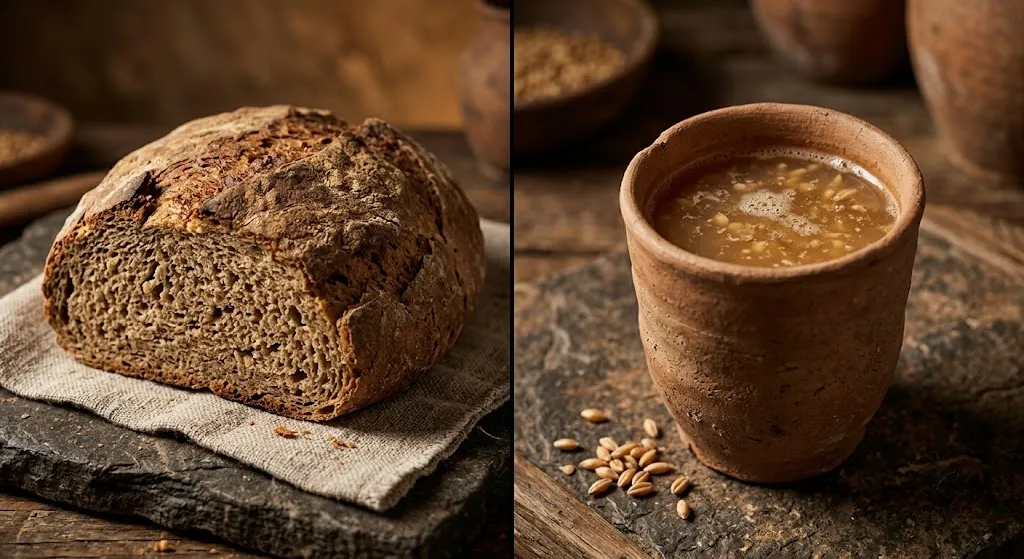
Here is a claim I was skeptical of until I actually looked into the archaeology. Some researchers argue that the desire for beer, not bread, may have been part of what pushed early humans toward deliberately cultivating grain in the first place. Wild yeast fermenting a grain and water mixture produces something mildly alcoholic and calorie-dense, and there is evidence of fermented grain beverages that predate confirmed bread-baking in some regions.
I am not going to pretend that debate is settled, because archaeologists genuinely argue about it and the evidence is messy. But the fact that the argument exists at all tells you something. Bread and beer both come from the same starting point, which is grain, water, and wild yeast left to do their thing. One path got baked. One path got left to bubble. If you want the fuller version of how grain cultivation reshaped early human settlements once people committed to it, I got into that in a separate piece on <a href=”https://tastehavendaily.com/why-did-bread-shape-civilization/”>why bread ended up shaping civilization</a> the way it did.
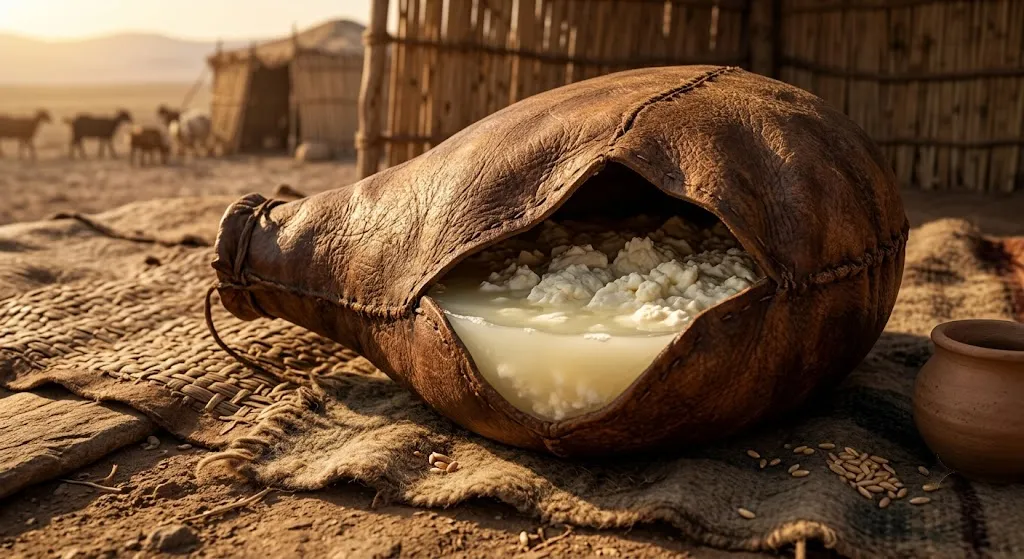
Cheese Might Be the Most Accidental Discovery of All
The origin story for cheese that gets repeated most often involves a nomadic herder carrying milk in a container made from an animal’s stomach, which still contained rennet. The natural enzymes in the stomach lining curdled the milk during transport, separating it into curds and whey by the time it was opened again. Whether that exact story is literally true or a tidy legend built around a real pattern, the underlying mechanism checks out. Rennet curdles milk. Someone carrying milk in the wrong container, at the wrong temperature, for long enough, was going to find that out eventually.
What is genuinely remarkable is not that cheese was discovered once. It is that once discovered, the basic idea of curdling and aging milk got reinvented and refined constantly, in enough different regions that some of those early techniques are still recognizable in cheeses made today. I wrote separately about <a href=”https://tastehavendaily.com/the-oldest-cheeses-still-produced-today-and-why-they-have-survived-this-long/”>the oldest cheeses still being produced using methods that have barely changed</a>, and the throughline is the same one that shows up everywhere in this topic. Once a fermentation technique worked, communities protected it, refined it, and treated it like inherited knowledge, not a recipe.

East Asia ran the same experiment on soy instead of milk, and you can taste the results in something as familiar as a bowl of ramen. The fermented soy base underneath a lot of modern ramen broth traces back further than most people assume, and I got into that history in a piece on <a href=”https://tastehavendaily.com/the-forgotten-chinese-roots-of-modern-ramen/”>the forgotten Chinese roots of modern ramen</a>. Same accidental logic, completely different starting ingredient.

So Why Does It Matter Now
I think the honest answer is that fermentation was never really about flavor, even though flavor is the part we talk about most today. It was a survival technology first. It let humans store a harvest through a season it would not have otherwise survived. It let people digest foods their bodies were not naturally built to process. It turned risk into something closer to a controlled, repeatable outcome, long before anyone had a word for bacteria.
The flavor we chase now, in a good kimchi or a properly aged cheese or a soy sauce with real depth, is basically a side effect of humans solving a much more urgent problem thousands of years earlier. I did not expect a jar of ugly, smelly cabbage on my counter to make that click for me, but it did.
The Bottom Line
Humans did not set out to invent fermentation. It found them first, through spoiled milk and bubbling grain and fish left too long in the wrong container, and it stuck around because it solved three problems at once: it kept food safe longer, it made hard-to-digest ingredients usable, and it happened to taste incredible. That is not a small accident. That might be one of the most important accidents in the entire history of food.
People Also Ask
Is fermentation the same thing as food going bad?
No, and this is the distinction that actually matters. Spoilage is uncontrolled bacterial growth that makes food unsafe. Fermentation is a controlled process where a specific type of bacteria or yeast, usually lactic acid bacteria or wild yeast, is allowed to dominate in a way that actually prevents the harmful organisms from taking over. The smell and appearance can look similarly alarming to someone unfamiliar with it, which is exactly why it took real trial and error for early humans to tell the difference reliably.
What was the first fermented food humans ever made?
Nobody can point to a single confirmed “first,” because fermentation likely happened independently in multiple places before anyone was recording it. The strongest archaeological evidence points to fermented grain beverages and dairy products among the earliest, dating back roughly 7,000 to 10,000 years, but that is almost certainly not capturing every accidental discovery that came before it.
Why does fermented food taste better than the same ingredient unfermented?
Fermentation breaks proteins down into amino acids, including glutamate, which is directly responsible for umami flavor. It also produces acids and other compounds that add tang, depth, and complexity that the raw ingredient simply does not have on its own. That is why a fermented soy sauce or an aged cheese tastes far more complex than raw soybeans or fresh milk.
Did every culture in the world develop fermentation on its own?
Independently, and in strikingly similar ways, yes. Dairy fermentation, grain fermentation, and vegetable or fish fermentation all show up across continents that had no meaningful contact with each other at the time. The conditions that make fermentation useful, meaning the need to preserve food and the presence of wild yeast and bacteria, were universal enough that human groups kept arriving at it independently.
Is fermented food actually good for gut health?
Many fermented foods contain live bacterial cultures that can support gut health, though the effect varies a lot by food, how it is made, and whether it is pasteurized afterward, since pasteurization kills the live cultures. This is a genuinely active area of research, and I would treat any absolute claim about fermented food curing something specific with some skepticism.