In April 2001, Britain’s Foreign Secretary stood before a think tank in London and declared that Chicken Tikka Masala was “a true British national dish.” He was not talking about fish and chips. He was talking about a tomato-cream curry built by South Asian immigrants, in diaspora kitchens, for British customers who wanted their meat served in gravy. That declaration — political, deliberate, and still contested — tells you more about the history of Chicken Tikka Masala than most origin stories do.
The history of Chicken Tikka Masala is not simply a story about a dish. It is a story about who gets credit when a migrant community transforms something in an adopted country, and what it means to call that transformation your own — the same question that runs through the entire surprising journey of curry across continents and cultures.
What We Actually Know
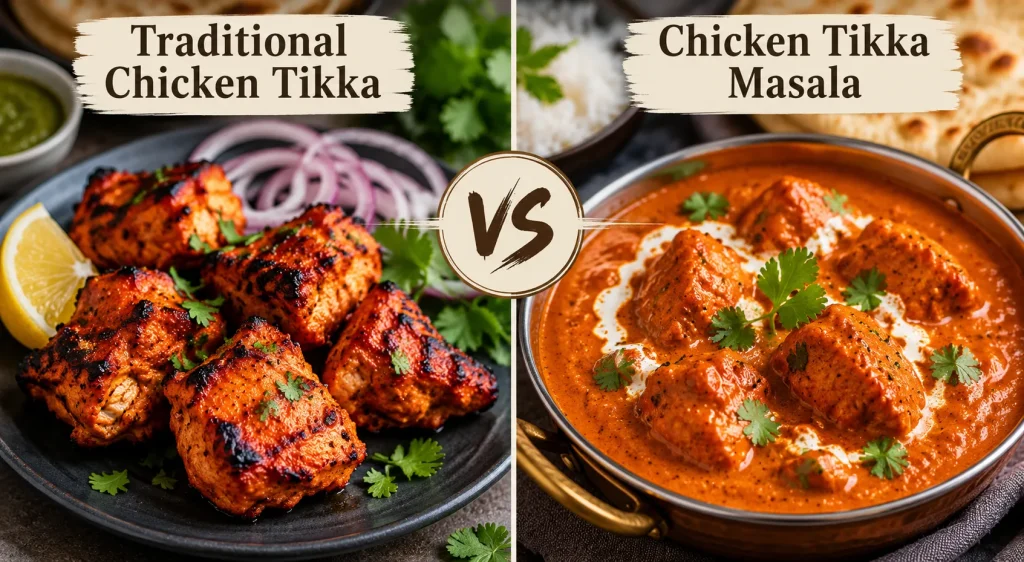
- Chicken Tikka Masala consists of pieces of marinated, tandoor-grilled chicken served in a spiced tomato-and-cream sauce — neither the chicken tikka nor the masala sauce is a recent invention, but their specific combination as a restaurant staple appears to have emerged in Britain in the 1970s.
- The most widely documented origin story credits Ali Ahmed Aslam, a Pakistani-Scottish chef and owner of Shish Mahal restaurant in Glasgow, who reportedly created the sauce around 1971–1972 in response to a customer who found chicken tikka too dry.
- Food historians Peter and Colleen Grove, writing in their book Flavours of History, identified a recipe for “Shahi Chicken Masala” in Mrs Balbir Singh’s Indian Cookery (published in London in 1961) as a credible precursor — a decade before the Glasgow account.
- In 2009, Glasgow formally campaigned for EU Protected Geographical Indication status for the dish; the bid was rejected after multiple British establishments claimed separate origins.
- The origin remains genuinely unresolved: the dish almost certainly has South Asian culinary roots and a British point of popularisation, but no single inventor or date can be confirmed from documentary evidence alone.
Why a Dish This Ubiquitous Has Such a Disputed Past
Chicken Tikka Masala is estimated to be one of the most ordered dishes in the United Kingdom, with around 23 million portions sold in British restaurants annually. It appears on menus across North America, Australia, and Western Europe. That kind of global reach is unusual for a dish whose origin cannot be nailed to a single country, kitchen, or year.
The dispute matters today for reasons that go beyond food history. When Foreign Secretary Robin Cook made his 2001 speech to the Social Market Foundation, his point was explicitly political: the dish represented what he called Britain’s capacity to absorb and adapt external influences. What Cook framed as a celebration of multiculturalism struck some South Asian commentators as something more complicated — a British government claiming cultural credit for a dish that immigrants had made, while those same immigrant communities remained economically and socially marginal.
That tension has never fully resolved. Knowing where Chicken Tikka Masala comes from forces a more honest conversation about how Britain’s relationship with South Asian food has always been easier than its relationship with South Asian people.
The Most Credible Account of How Chicken Tikka Masala Was Created
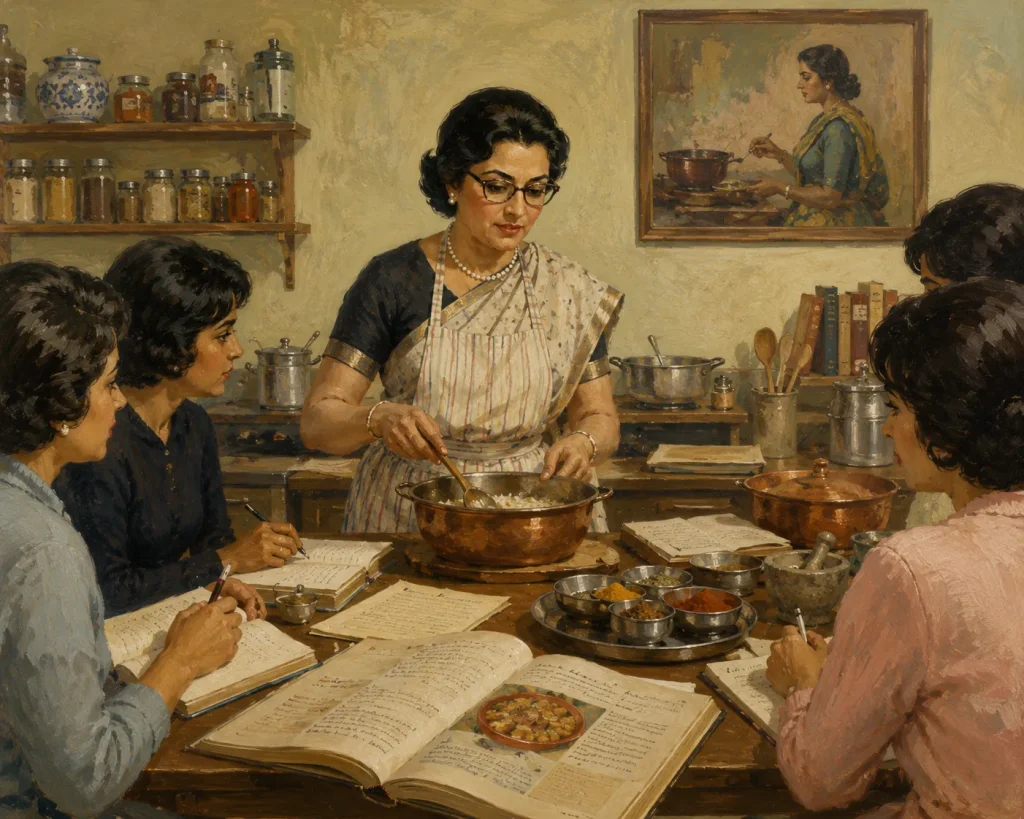
The earliest documented candidate for a recipe resembling modern Chicken Tikka Masala appears in Mrs Balbir Singh’s Indian Cookery, first published in London in 1961. Singh, a Punjabi cooking teacher born in 1912 and widely described as a pioneer of Indian culinary writing in English, included a recipe for Shahi Chicken Masala — a spiced tomato-cream preparation with recognisable structural similarities to what would become CTM. Food historians Peter and Colleen Grove, in their research into the dish’s origins, concluded that this recipe represented what they called the “shape of things to come.”
The recipe pre-dates every British restaurant claim by at least a decade. It was written by an Indian woman, drawing on North Indian and Mughal culinary tradition — the same layered spice logic that makes Indian food taste so distinct from any other cuisine — and published for an English-speaking audience. That context matters: Singh was not adapting Indian food for British palates. She was documenting it.
Whether the specific modern version — grilled chicken tikka folded into a restaurant-scale masala sauce — developed independently in Britain or evolved from knowledge of dishes like Singh’s is not documented. What the evidence does suggest is that the flavour logic of the dish, tomato, cream, warming spice applied to chicken, was already codified in Indian culinary writing before any Glasgow restaurant existed.
The Shish Mahal account adds the specific combination of tandoor-grilled chicken tikka with a quickly assembled sauce. That combination, in a British curry-house context, is the form the dish took globally. Both things can be true: the precursor logic is South Asian, and the popularised format is British.
The Dispute That Has Never Been Resolved — And Probably Never Will Be
The Glasgow claim rests on the testimony of Ali Ahmed Aslam, who opened Shish Mahal in Glasgow’s West End in 1964 after immigrating from Pakistan as a child. In his account, a customer — often described as an off-duty bus driver — complained one evening in the early 1970s that his chicken tikka was too dry. Aslam went to the kitchen and improvised a sauce using spices, cream, and a can of Campbell’s condensed tomato soup that he had on hand because he ate it while recovering from a stomach ulcer. The customer was satisfied. The dish stayed on the menu. It spread.
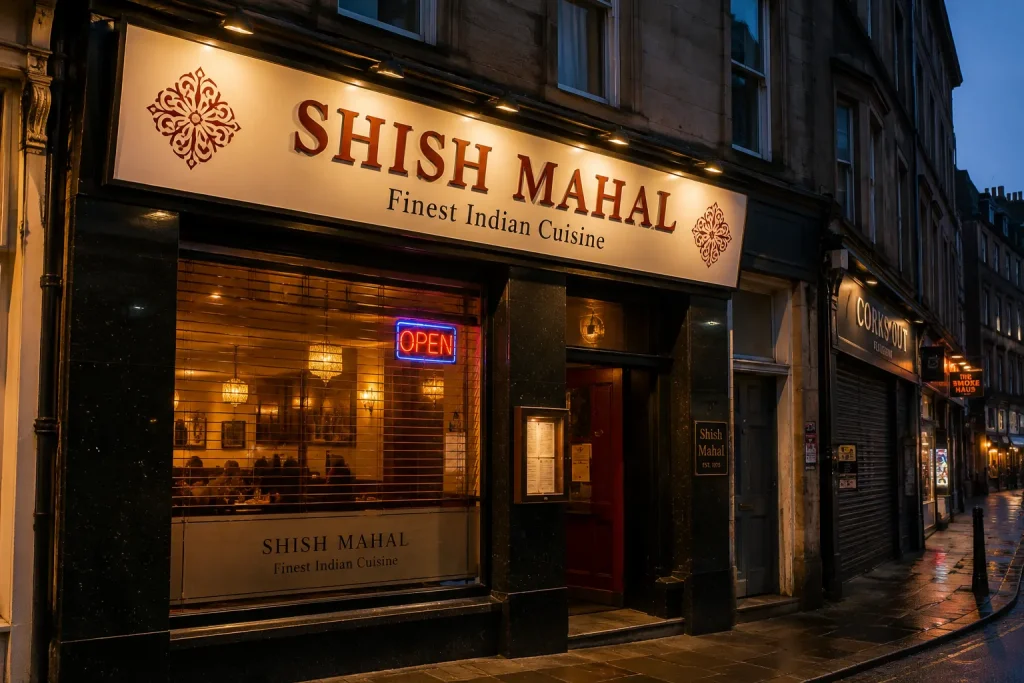
Aslam repeated this account consistently for decades, and when he died in December 2022 at age 77, the story was reported by CNN, NPR, and CBS News as the defining claim to the dish’s invention. Glasgow MP Mohammed Sarwar had previously tabled a motion in the House of Commons for the dish to be formally recognised as a Scottish invention. The 2009 EU Protected Designation bid, though ultimately unsuccessful, reflected genuine civic conviction that the city had a legitimate claim.
The case against Glasgow rests on several points. The Balbir Singh cookbook precedes it by a decade. Food critics including Rahul Verma have described Tikka Masala as fundamentally a Punjabi dish, probably no more than 50 years old and likely an accidental discovery with periodic improvements. The owner of the Moti Mahal restaurant chain in India has stated that his grandfather was serving chicken tikka masala to Indian politicians and dignitaries as early as 1947 — a claim that, if accurate, would pre-date both Singh’s cookbook and the Glasgow account. That specific Moti Mahal claim is less documented than either of the others and should be treated with corresponding caution.
Food historians Peter and Colleen Grove concluded that the dish was “most certainly invented in Britain, probably by a Bangladeshi chef” — a formulation that accepts the British origin while specifically declining to credit Glasgow or Ali Ahmed Aslam. Their reasoning is that across the curry-house boom of the 1970s and 1980s, the overwhelming majority of South Asian restaurant workers in the UK were Bangladeshi, not Pakistani or Punjabi, and that the dish likely emerged not from a single invention moment but from a broad pattern of kitchen improvisation across many establishments.
The honest assessment of the evidence: the Glasgow account is more consistently documented than any competing single-origin claim, but it is the account of one person about an event that was not recorded at the time. The Balbir Singh cookbook is a verifiable physical object that predates it. The broader food historian consensus is that the dish emerged from British curry-house culture rather than a single kitchen moment, with South Asian culinary precursors that trace back through Punjabi and Mughal cooking traditions. No single verdict holds up under scrutiny. The Glasgow story is the most famous because it is the most narratively complete — one man, one customer, one can of tomato soup — not because the documentary case for it is strongest.
How Chicken Tikka Masala Crossed Borders
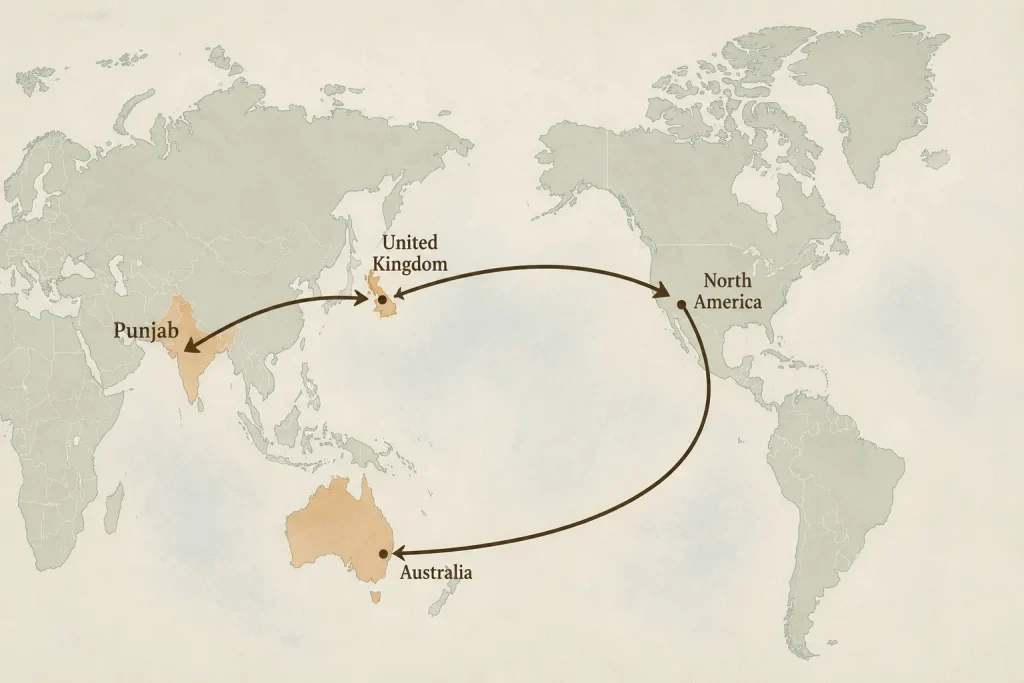
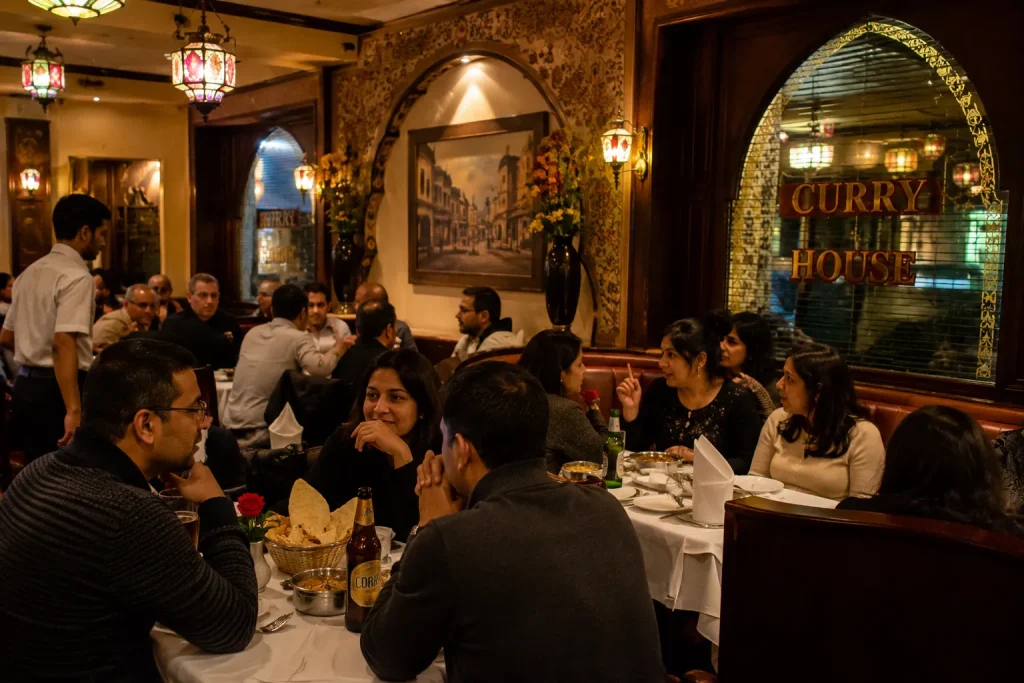
The dish did not spread through cookbooks or deliberate promotion. It spread through the British South Asian restaurant industry during a specific window: the 1970s and 1980s, when “curry houses” multiplied across the UK in the wake of post-war South Asian immigration and became embedded in British social life.
The scale of that industry is worth understanding. By the early 2000s, Britain had more Indian restaurants than France and Spain combined. The curry house had become a default British social institution — post-pub food, cheap family dining, the setting for a specific kind of Friday night. Chicken Tikka Masala fit that context precisely: mild enough for hesitant eaters, saucy enough for British palates accustomed to gravy, visually striking with its orange-red colour. It became the safe entry point for a cuisine that many British customers found unfamiliar. That is both its commercial genius and the source of its cultural ambivalence — it succeeded by being accessible, which meant it was not particularly representative of any specific regional Indian cooking tradition.
The dish reached North America through a combination of British cultural export, Indian diaspora restaurant culture, and supermarket ready meals — following a pattern of migration and adaptation remarkably similar to how biryani traveled from royal Mughal kitchens across borders and diaspora communities before becoming a global staple. In the UK, major supermarkets began producing Chicken Tikka Masala ready meals in volume through the 1990s. The dish crossed from restaurant staple to mass-market product with unusual speed. By 2001, when Robin Cook gave his speech, the dish was already a supermarket staple consumed in homes across the country with no connection to a restaurant or a curry house.
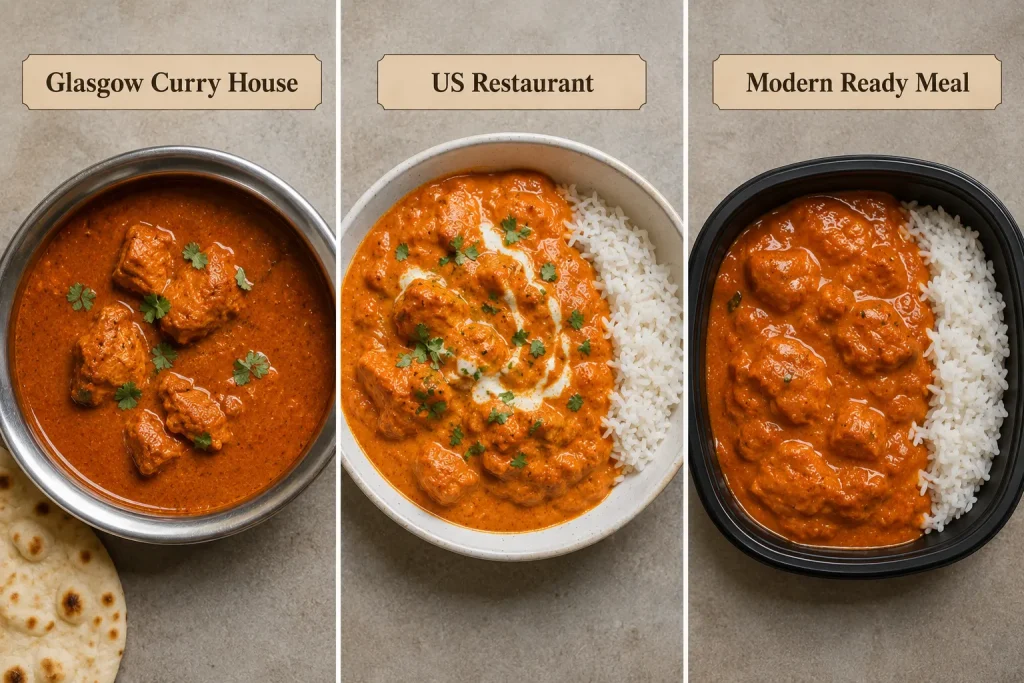
Internationally, the version served outside the UK tends to be richer and less constrained by the specific curry-house formula that shaped the British version. Indian restaurants in the United States, Canada, and Australia adapted the dish to local tastes and ingredient availability, producing variations that differ substantially from both the Glasgow original and from each other.
Origin Timeline: Key Moments in the History of Chicken Tikka Masala
| Period | Location | What Existed | Significance |
|---|---|---|---|
| Pre-1947 | Punjab / North India | Tandoor-grilled chicken tikka; spiced tomato-cream gravies in Mughal-influenced cooking | The culinary tradition from which the dish’s components are drawn |
| 1947 | Delhi, India | Moti Mahal restaurant claims to have been serving a version of chicken tikka masala to politicians and dignitaries | Disputed and less documented; included for completeness |
| 1961 | London (published) | Mrs Balbir Singh’s Indian Cookery includes recipe for Shahi Chicken Masala — tomato, cream, spices applied to chicken | Earliest verifiable published recipe with clear structural resemblance to modern CTM |
| 1964 | Glasgow, Scotland | Ali Ahmed Aslam opens Shish Mahal restaurant | The establishment associated with the most famous origin claim |
| Early 1970s | Glasgow, Scotland | Aslam claims to have created his version of the dish in response to a customer complaint, using condensed tomato soup | The specific origin story that became internationally reported |
| 1970s–1980s | Across the UK | Chicken Tikka Masala spreads through the British curry-house industry | The period of mass adoption; the dish becomes a curry-house standard |
| 1990s | UK supermarkets | CTM becomes a mass-market ready meal | Transition from restaurant dish to domestic staple |
| 2001 | London | Foreign Secretary Robin Cook declares CTM “a true British national dish” in a speech on multiculturalism | Political crystallisation of the dish’s British identity |
| 2009 | Glasgow / EU | Glasgow campaigns for EU Protected Geographical Indication status; bid rejected | Formal contestation of the origin; recognition that the dispute is unresolvable by institutional means |
| December 2022 | Glasgow | Ali Ahmed Aslam dies at age 77; death prompts global coverage and renewed debate | Final public statement on the Glasgow claim |
The Chicken Tikka Masala Origin Myth That Will Not Die
Myth 1: The dish is Indian.
This is the most persistent misclassification. Chicken tikka — marinated, tandoor-grilled chicken — is genuinely Indian, with roots in Punjabi cooking and Mughal culinary influence. The masala sauce that transforms it into Chicken Tikka Masala is almost certainly not from India in its commercial form. The specific format that became the global standard — tandoor chicken in a creamy, mildly spiced, tomato-heavy restaurant sauce — developed in the British curry house. Calling it Indian erases the specific community, the Pakistani and Bangladeshi restaurant workers of Britain, who built the dish and the industry that spread it.
Myth 2: Ali Ahmed Aslam invented it in a single moment.
The condensed tomato soup story is vivid and repeatable, which is probably why it became the dominant narrative. But the “single invention moment” model of food history is almost always false. Dishes like this evolve across many kitchens through many iterations — in exactly the same way that falafel emerged not from one cook in one moment but from a colonial environment where multiple communities contributed simultaneously. Other curry houses across Britain were likely producing similar preparations in the same period; the Glasgow story is documented because Aslam told it consistently and persistently, and because Glasgow as a city chose to champion it. That does not mean it happened exactly as described, or that it did not happen elsewhere simultaneously.
Myth 3: Robin Cook naming it the national dish in 2001 settled the question.
Cook’s speech was a political act, not a historical verdict. As the Vittles food journal noted in a 2023 analysis, Cook’s “chicken tikka multiculturalism” proved conditional within months — British-South Asian cultural representation in mainstream media declined sharply after September 2001, and the communities who had built the dish remained economically and socially marginalised. Calling the dish British was easier, and carried fewer obligations, than acknowledging the communities who made it.
What the Origin Dispute Reveals About Food and Identity
The Chicken Tikka Masala origin story is still actively discussed for reasons that have nothing to do with food history and everything to do with identity, credit, and belonging.
The Glasgow claim has always been a claim not just about a dish but about whether South Asian immigration to Britain produced something worth being proud of on British terms. The 2009 EU Protected Designation bid was explicitly framed that way: Glasgow wanted formal recognition that something of cultural value had been created there. The bid failed in part because the British curry-house industry was so geographically dispersed, and so collectively created, that no single city could plausibly hold the designation.
What persists is the question Cook raised and did not fully answer: if a migrant community creates something that becomes central to the culture of the country that received them, who owns that creation? The dish is British by adoption and South Asian by origin. Both things are true. The ongoing dispute is partly about which of those truths gets foregrounded, and by whom. The same unresolved question sits at the heart of why chicken tikka masala might not be Indian after all — and why the answer depends entirely on which part of the dish’s history you choose to start from.
The Bottom Line
The evidence most strongly supports this: Chicken Tikka Masala in its recognisable modern form emerged from the British South Asian restaurant industry in the early 1970s, drawing on culinary traditions — particularly Punjabi spiced chicken preparations and Mughal-influenced tomato-cream gravies — that significantly predate any British claim. The Balbir Singh cookbook of 1961 is the earliest verifiable published precursor. The Glasgow / Shish Mahal account is the most consistently told single-origin story, but it is a testimonial account rather than a documented one, and it describes one instance of what was almost certainly a broader pattern of kitchen improvisation across many establishments.
TasteHavenDaily’s honest reading: no single person invented Chicken Tikka Masala. What Ali Ahmed Aslam likely did was one version of something that was happening in curry houses across Britain — and he, unlike others, named it, kept it on the menu, and told the story for fifty years. That is not nothing. But it is different from invention.
The dish is more interesting for being genuinely shared: South Asian culinary tradition, British social appetite, diaspora improvisation, and political symbolism all deposited something into it. That layering is exactly what makes it worth ordering — and worth arguing about.
People Also Ask
Where did Chicken Tikka Masala originally come from?
Chicken Tikka Masala most likely developed in Britain in the early 1970s, in the South Asian restaurant industry that had grown substantially through post-war immigration. The dish draws on Punjabi and Mughal cooking traditions for its components, but the specific combination of tandoor-grilled chicken in a restaurant-scale tomato-cream masala sauce appears to have been refined and popularised in British curry houses, not in South Asia. The most famous single-origin claim places its creation at Shish Mahal in Glasgow around 1971–1972.
Who is credited with inventing Chicken Tikka Masala?
Ali Ahmed Aslam, a Pakistani-Scottish chef who owned the Shish Mahal restaurant in Glasgow, is the most widely cited individual. He claimed to have created the dish in the early 1970s after a customer complained that chicken tikka was too dry, and he improvised a sauce using spices, cream, and condensed tomato soup. Aslam told this account consistently until his death in December 2022 at age 77. Food historians have questioned whether this represents a single invention or a particularly well-documented instance of a wider pattern.
Is Chicken Tikka Masala Indian or British?
It is both, in a meaningful sense. The chicken tikka component — marinated, spiced, tandoor-grilled chicken — is genuinely rooted in Indian cooking, specifically Punjabi tradition with Mughal culinary influence. The masala sauce as applied in commercial curry-house form developed primarily in Britain. Mrs Balbir Singh’s 1961 cookbook shows that a close South Asian precursor existed before any British restaurant claim, but the global format of the dish as it is known today was shaped by the British South Asian restaurant industry. Calling it purely one or the other misrepresents the history.
What is the real history of Chicken Tikka Masala?
The real history is more distributed than the popular account suggests. South Asian cooks working in British restaurants through the 1970s and 1980s created and refined a range of dishes that adapted Indian culinary traditions for British tastes, particularly the British preference for sauced meat. Chicken Tikka Masala was one product of that process. The Shish Mahal story is the most famous documented claim. The Balbir Singh cookbook provides the earliest published precursor. Food historians generally conclude the dish emerged from British curry-house culture collectively, not from a single kitchen moment.
Why did Glasgow try to get legal protection for Chicken Tikka Masala?
In 2009, Glasgow campaigned for EU Protected Geographical Indication status for the dish, supported by local MP Mohammed Sarwar who had previously raised the issue in the House of Commons. The bid was rejected after multiple British establishments submitted competing origin claims, making it impossible to assign geographic protection to a single city. The campaign reflected genuine civic investment in the Glasgow origin story and a desire for formal recognition that the South Asian community in Glasgow had contributed something of lasting cultural value to Britain.
Did Robin Cook say Chicken Tikka Masala was Britain’s national dish?
Yes. In a speech to the Social Market Foundation in London on 19 April 2001, Foreign Secretary Robin Cook declared that Chicken Tikka Masala was “a true British national dish, not only because it is the most popular, but because it is a perfect illustration of the way Britain absorbs and adapts external influences.” The speech used the dish as a metaphor for multiculturalism and argued that British identity should be defined by shared values rather than ethnicity. Analysts have since noted that the political embrace of the dish as British did not translate into equivalent recognition for the immigrant communities who created it.
Was Chicken Tikka Masala invented before the 1970s?
The specific dish in its modern commercial form most likely was not. However, Mrs Balbir Singh’s Indian Cookery, published in London in 1961, contained a recipe for Shahi Chicken Masala — a spiced tomato-cream chicken preparation — that food historians Peter and Colleen Grove described as the “shape of things to come.” The culinary tradition behind that recipe, spiced tomato-cream gravies applied to chicken in Punjabi and Mughal cooking, is considerably older. The components existed well before the 1970s; what the 1970s produced was the specific restaurant format that globalised them.
Sources and References
NPR — “Who created chicken tikka masala? The death of a curry king is reviving a debate” (December 2022) Includes direct audio and transcript of reporting on Ali Ahmed Aslam’s death and the origin debate.
CNN — “Inventor of the UK’s ‘true national dish’ dies at 77” (December 2022) Reports Aslam’s death and summarises the documented Glasgow claim.
Britannica — Chicken tikka masala Factual overview of the dish’s composition and origin debate.
Robin Cook’s speech to the Social Market Foundation (April 2001) The full text of the speech in which Cook declared CTM a true British national dish. Published in The Guardian. Search: “Robin Cook chicken tikka masala speech 2001 Guardian” — the full text is widely reproduced across educational and news sites.
Vittles — “The Rise and Fall of the Curry House” (May 2023) Detailed cultural and political analysis of British curry-house history and the meaning of Cook’s 2001 speech for South Asian communities in Britain.
Mrs Balbir Singh’s Indian Cookery (1961) The original cookbook containing the Shahi Chicken Masala recipe identified by food historians Peter and Colleen Grove as a documented precursor to Chicken Tikka Masala. Physical copies exist in libraries and specialist book dealers. Not freely available online in full text; search WorldCat or the British Library catalogue for library access.
Peter and Colleen Grove — Flavours of History The food historians whose research identified the Balbir Singh cookbook as a key precursor and concluded the dish was “most certainly invented in Britain.” Referenced across multiple secondary sources. Search the title directly for availability.