Ramen is Japanese. But it was born Chinese.
The noodles, the alkaline water that gives them their springy texture, the very word “ramen” itself, all trace back to China. The earliest Japanese records of a dish made from almost the same recipe as modern ramen date back to the 15th century. Yet most people today think of ramen as purely Japanese. This forgetting is not an accident. It is the result of a century of cultural assimilation, war, and rebranding.
What started as a Chinese food product ended up almost a thousand years later as the emblem of modern Japanese cuisine. Ramen is a symbol of the relationship between the two major forces in East Asia. Understanding that relationship means confronting an uncomfortable truth: Japan’s most iconic dish is not originally Japanese at all — a reality that sits in sharp contrast to how Japanese culinary identity is usually presented to the outside world. What started as a Chinese food product ended up almost a thousand years later as the emblem of modern Japanese cuisine. Ramen is a symbol of the relationship between the two major forces in East Asia. Understanding that relationship means confronting an uncomfortable truth: Japan’s most iconic dish is not originally Japanese at all.
What the Evidence Actually Shows
- Ramen is a Japanese adaptation of Chinese wheat noodles. Its roots are entirely Chinese.
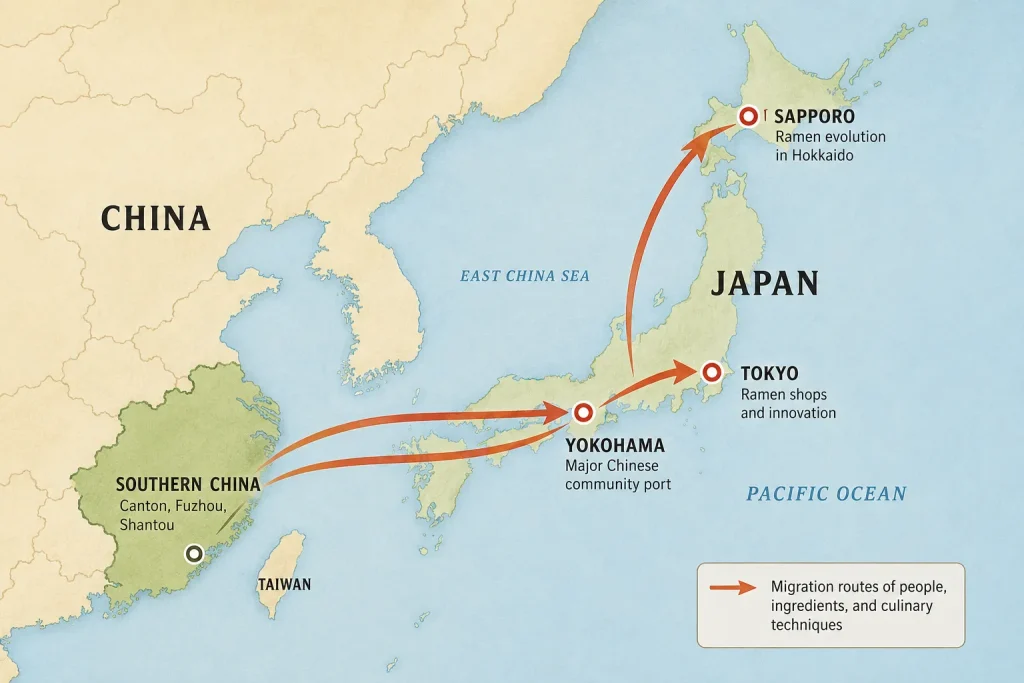
- The word “ramen” comes from the Chinese lamian, meaning “pulled noodles,” but modern ramen does not actually derive from any lamian dish. It evolved from southern Chinese noodle dishes brought by immigrants from Guangdong and Fujian.
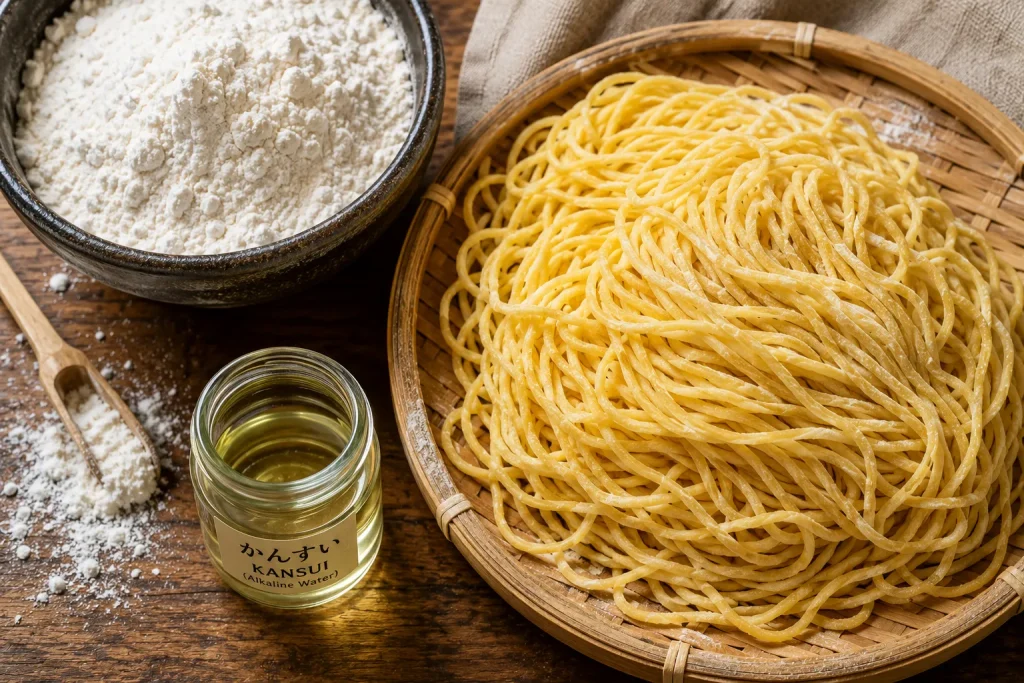
- The defining feature of ramen noodles is kansui, an alkaline mineral water of Chinese origin that gives the noodles their yellow colour, curly shape, and chewy texture.
- Ramen was first introduced to Japan on a large scale in the late 19th century, when Chinese immigrants settled in the port of Yokohama. Japanese locals referred to these noodle dishes as Nankin soba (Nanjing noodles) or Shina soba (Chinese noodles).
- In 1910, the first ramen specialty restaurant, Rairaiken, opened in Tokyo’s Asakusa district, serving a soy-sauce-based noodle soup that became the prototype for modern ramen.
How a Chinese Immigrant Dish Became Japan’s National Comfort Food
Walk into any ramen shop in Tokyo, and you are participating in a ritual that feels deeply Japanese. The slurping. The communal counters. The fierce regional loyalties. But the bowl in front of you is a direct descendant of Chinese street food.
The long evolution of ramen helps us chart how food and politics combined as a force within Sino-Japan relations. Food historian Barak Kushner, who teaches modern Japanese history at Cambridge University, has traced this relationship over the last 1,000 years. His book Slurp! A Social and Culinary History of Ramen argues that the dish is a microcosm of Japan’s historical relations with China.
Understanding ramen’s Chinese roots changes how you see the dish. It stops being a quaint cultural artifact and becomes a living record of migration, adaptation, and the complex relationship between two neighbouring powers. The dish that warms you on a cold night carries within it the history of an entire region.
The Most Credible Account of How Ramen Was Created
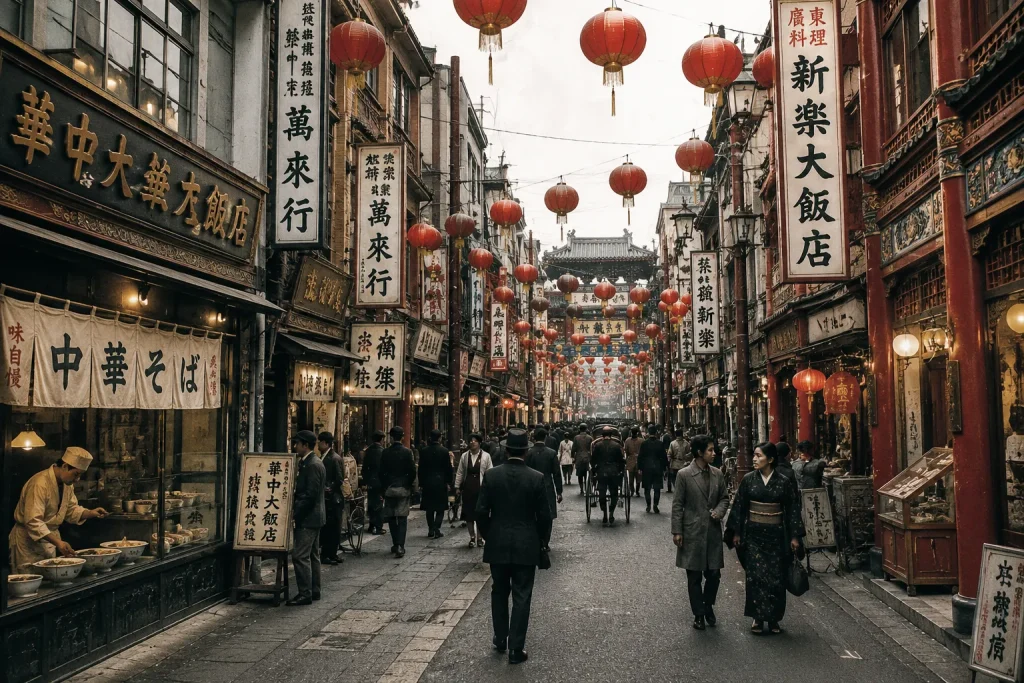
The origins of ramen can be traced back to Yokohama Chinatown in the late 19th century. After Japan ended its 200-year period of national isolation in 1858 and reopened its ports to the outside world, an influx of Chinese immigrants arrived, bringing with them the same regional culinary diversity that produced some of the world’s most varied noodle traditions. Many settled in the port city of Yokohama, where they established a Chinatown, then called Nankin-machi.
By 1887, there were about twenty Chinese restaurants in Yokohama that served noodle dishes, including soup noodles with sliced pork. Japanese locals referred to these dishes as Nankin soba (Nanjing noodles). The noodles themselves were made using kansui, an alkaline mineral water that originated in the lakes of Inner Mongolia. This ancient Chinese technique gave the noodles their distinctive yellow colour, curly shape, and springy texture.
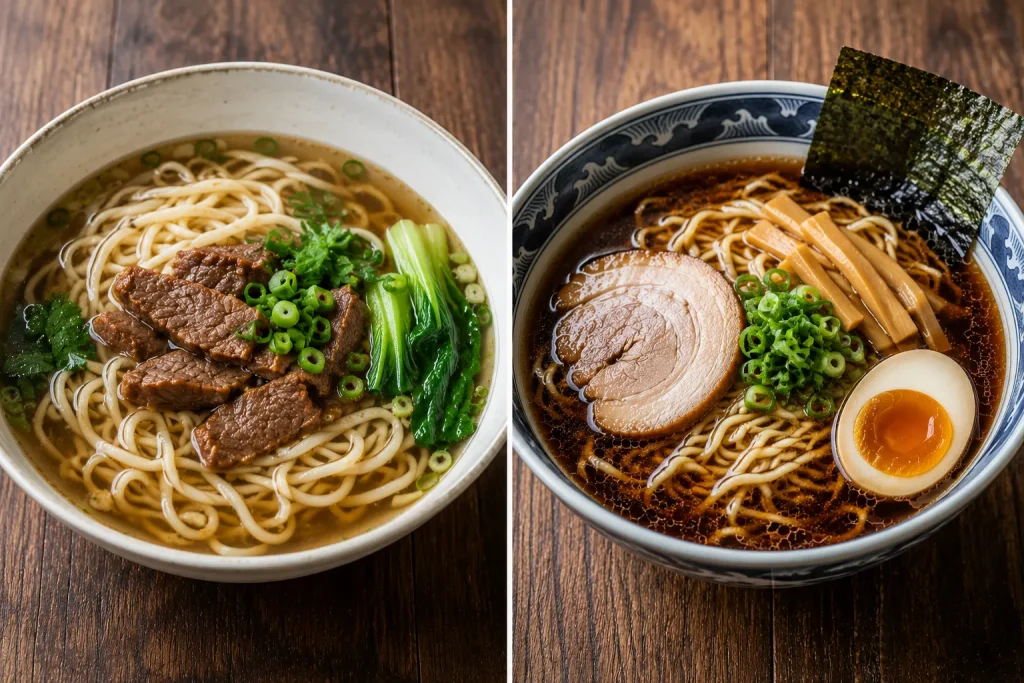
In 1910, a retired Japanese customs official named Kanichi Ozaki, who had been working in Yokohama, opened a Chinese restaurant called Rairaiken in the Asakusa neighbourhood of Tokyo. He hired Chinese cooks from Yokohama’s Chinatown and began serving a noodle dish that he called Shina soba (Chinese noodles). He added toppings of chashao (barbecued pork, which became chashu in Japanese) and memma (simmered bamboo shoots). Rairaiken was a huge success, sometimes serving as many as 3,000 customers in a single day. This is widely regarded as the birth of modern ramen.
A separate origin story comes from Sapporo, Hokkaido. In 1921, a Chinese restaurant called Takeya opened near a university. A Chinese chef created a noodle dish that became immensely popular with Chinese exchange students. Whenever a dish was ready, the cook would announce Hao le! (“It’s ready!”). That le sounded like ra to the Japanese ear, and it was from this phrase that ra was paired with the Japanese word men (noodles), giving us ra-men.
The Etymology That Reveals Everything
The name “ramen” itself is a Japanese borrowing of the Chinese word lamian (拉麵), which means “pulled noodles”. The Japanese language does not have the “L” sound, so lamian became ramen.
Until the 1950s, ramen was called shina soba (支那そば), which literally means “Chinese soba”. Shina was a neutral term for China at the time. But during and after World War II, the word acquired a pejorative connotation, and it fell out of use. It was replaced by chūka soba (中華そば), which also means “Chinese soba” but uses a more respectful term for China. Eventually, the dish became known simply as ramen, a name that obscured its Chinese origins.
This rebranding was not accidental. As historian Barak Kushner notes, “What started as a Chinese food product ended up almost 1,000 years later as the emblem of modern Japanese cuisine”. The erasure of the “Chinese” from the name was part of a broader process of assimilation, in which Japan took a foreign dish and made it its own. It is the same process by which the Thai government stripped the Chinese origins from pad Thai and rebranded it as a purely national dish — different countries, different eras, the same pattern of culinary nationalism at work.
How Ramen Spread and Transformed
Ramen might have remained a regional speciality if not for two major disasters: the Great Kanto Earthquake of 1923 and the Second World War.
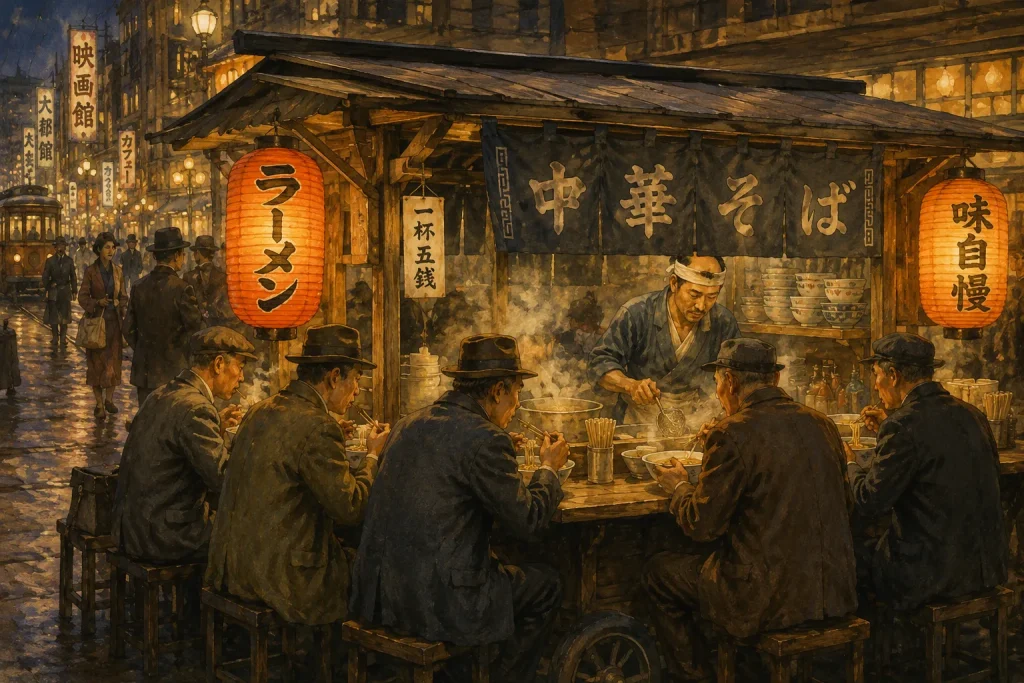
The earthquake devastated Tokyo and Yokohama, destroying many ramen shops. In the aftermath, street stalls called yatai proliferated because they were easier to set up than permanent restaurants. To simplify their menus, most yatai sold only ramen, turning it into a cheap, accessible street food.
Most ramen shops closed during the war, but another wave of yatai appeared after Japan’s defeat in 1945, as people returned from China and sought to make a living. American wheat subsidies also played a crucial role. Post-war Japan faced severe food shortages, and the United States supplied massive amounts of cheap wheat flour. This made ramen noodles affordable for the first time, fueling the dish’s rapid spread.
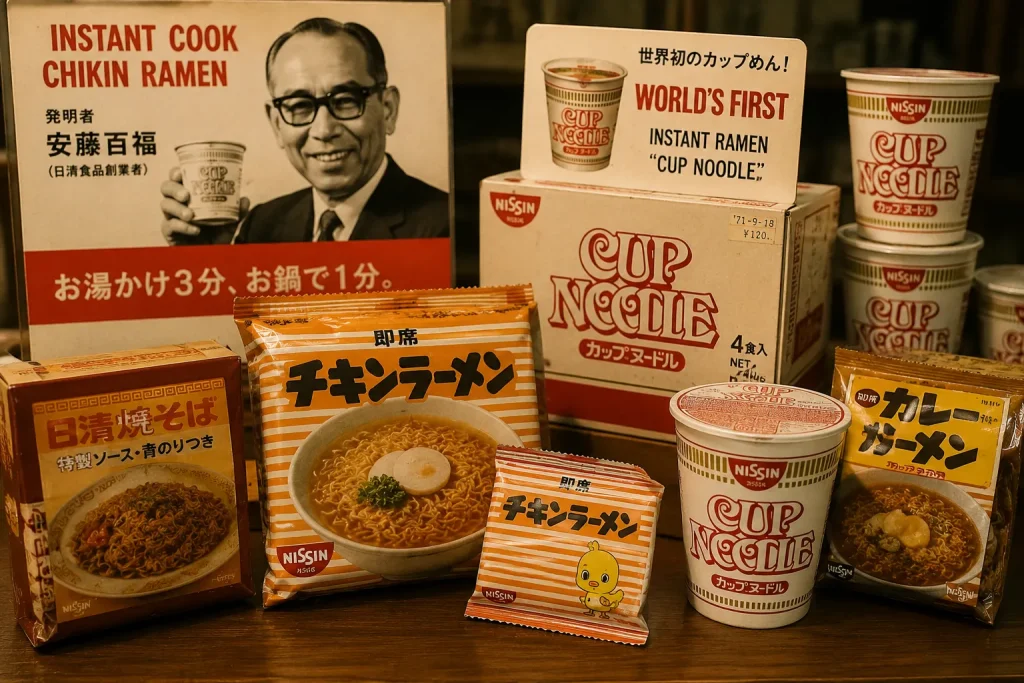
The modern ramen boom, however, can be traced to 1958, when Momofuku Ando, a Taiwanese-Japanese inventor, created the world’s first instant noodle. His “Chikin Ramen” was pre-cooked and flash-fried, allowing it to be prepared in just two minutes. Instant ramen became a sensation, and Ando’s company, Nissin, went on to create Cup Noodles in 1971. Today, instant ramen is a multi-billion-dollar global industry, with over 100 billion servings consumed annually worldwide.
Ramen Origin Timeline
The Ramen Myths That Will Not Die
Myth: Ramen is a purely Japanese invention. This is the most common belief and the most incorrect. Ramen is a Japanese adaptation of Chinese wheat noodles. Its roots are entirely Chinese, from the kansui alkaline water to the noodle-making techniques to the very name lamian.
Myth: Ramen comes from the Chinese lamian (pulled noodles). This is partially true for the name but false for the dish. While the word “ramen” is borrowed from lamian, modern ramen does not actually derive from any lamian dish. Lamian is a part of northern Chinese cuisine, whereas ramen evolved from southern Chinese noodle dishes from regions such as Guangdong and Fujian. The confusion arises because the Japanese adopted the name but not the noodle-pulling technique.
Myth: Ramen has been a Japanese staple for centuries. The 15th-century records of keitai-men show that a similar noodle existed, but it was not available to common people. The ramen we know today, with its soy sauce broth, chashu, and memma, only emerged in the early 20th century. Ramen is a modern dish, barely more than a century old.
Myth: Instant ramen was invented in Japan by a Japanese person. This is technically true, but the inventor, Momofuku Ando, was actually Taiwanese-Japanese. He was born Go Pek-Hok in Taiwan in 1910 and later became a Japanese citizen. His invention of instant ramen in 1958 was a moment of genius, but his background reflects the same transnational flows of people and ideas that created ramen in the first place.
Why the Chinese Roots of Ramen Still Matter Today
The erasure of ramen’s Chinese origins is not merely an academic curiosity. It reflects a deeper pattern in how nations construct their culinary identities. National cuisines are often presented as timeless, pure, and authentic, but they are almost always the product of migration, trade, and cultural exchange — a pattern visible in everything from the biryani dishes that developed simultaneously across multiple Indian regional courts to the fermented condiments that define Korean cuisine.
Japan’s relationship with China has been fraught for centuries, marked by war, occupation, and unresolved historical grievances. In this context, claiming ramen as purely Japanese is not just a matter of culinary pride. It is a form of cultural nationalism that obscures the debt Japan owes to its larger neighbour.
But there is another way to see it. Food historian Barak Kushner argues that ramen is “a symbol of the relationship between the two major forces in East Asia”. It is a dish that embodies both conflict and cooperation, borrowing and transformation. Understanding ramen’s Chinese roots does not diminish its Japanese identity. It enriches it.
The Shin-Yokohama Ramen Museum has led the effort to preserve this history, even recreating the original Rairaiken recipe based on research into the ingredients used by founder Kanichi Ozaki. In 2020, Rairaiken was temporarily revived at the museum, allowing a new generation to taste the dish that started it all.
The Bottom Line
What does the evidence most strongly support? Ramen originated in China and was brought to Japan by Chinese immigrants in the late 19th century. The earliest records of a noodle dish similar to ramen in Japan date back to the 15th century, but the modern dish emerged in the early 20th century, centred on Yokohama Chinatown. The first ramen specialty restaurant, Rairaiken, opened in Tokyo in 1910. The word “ramen” comes from the Chinese lamian (“pulled noodles”), although modern ramen does not derive from any lamian dish.
What remains genuinely uncertain is the exact moment of ramen’s creation. The 15th-century keitai-men records are tantalising but vague. The Sapporo origin story involving the Chinese restaurant Takeya and the phrase Hao le is charming but unverified. What is not in doubt is that ramen is a dish of Chinese origin that Japan made its own.
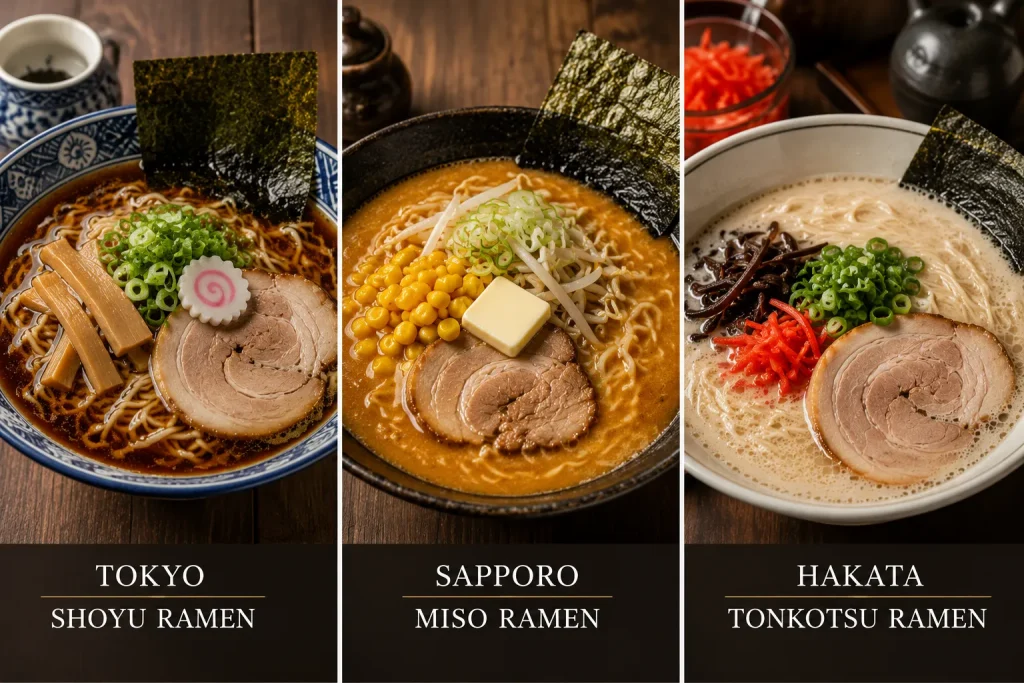
TasteHavenDaily’s conclusion: The debate over whether ramen is Chinese or Japanese is asking the wrong question. Ramen is both. It is Chinese in its genetic code: the noodles, the kansui, the techniques, the name. It is Japanese in its evolution: the soy sauce broth, the chashu, the memma, the fierce regional variations, the instant noodle revolution. Trying to assign single ownership is not only historically inaccurate but also misses the point entirely.
The next time you slurp a bowl of ramen, you are tasting history. You are tasting the movement of people from China to Japan, the adaptation of foreign ingredients to local tastes, the transformation of a street food into a national symbol, and the global spread of a dish that transcends borders in exactly the way curry, pad Thai, and falafel have done. The noodles in your bowl are Chinese. The broth is Japanese. The experience is universal.
People Also Ask
Where did ramen originally come from?
Ramen originally came from China. It is a Japanese adaptation of Chinese wheat noodles, brought to Japan by Chinese immigrants in the late 19th century. The word “ramen” is a Japanese borrowing of the Chinese lamian, meaning “pulled noodles,” though the dish does not derive from lamian itself.
Who invented ramen?
No single person invented ramen. It emerged from Chinese immigrant communities in Yokohama in the late 19th century. However, the first ramen specialty restaurant, Rairaiken, was opened by Kanichi Ozaki in Tokyo in 1910, and this is widely regarded as the birth of modern ramen. Instant ramen was invented by Momofuku Ando in 1958.
What does “ramen” mean in Japanese?
“Ramen” is a Japanese borrowing of the Chinese lamian (拉麵), which means “pulled noodles”. The name reflects the dish’s Chinese origins, though modern ramen does not actually use the pulling technique associated with lamian.
What is kansui in ramen?
Kansui is an alkaline mineral water of Chinese origin that is added to ramen noodle dough. It gives ramen noodles their signature yellow colour, curly shape, and springy, chewy texture. Kansui is the “secret ingredient” that distinguishes ramen noodles from other Japanese noodles like udon or soba.
What was ramen called before it was called ramen?
Until the 1950s, ramen was called shina soba (支那そば), which means “Chinese soba”. After the word shina acquired a pejorative connotation during and after World War II, it was replaced by chūka soba (中華そば), also meaning “Chinese soba”. Eventually, the dish became known simply as ramen.
When did ramen become popular in Japan?
Ramen became popular in Japan after the Great Kanto Earthquake of 1923, when street stalls (yatai) proliferated and began selling ramen as a cheap, accessible meal. It exploded in popularity after World War II, thanks to American wheat subsidies and the invention of instant ramen in 1958.
Who invented instant ramen?
Instant ramen was invented by Momofuku Ando, a Taiwanese-Japanese inventor, in 1958. His company, Nissin, created “Chikin Ramen,” the world’s first pre-cooked, flash-fried instant noodle. Ando later invented Cup Noodles in 1971.
Is ramen Chinese or Japanese?
Ramen is both. It originated in China and was brought to Japan by Chinese immigrants. The noodles, the kansui alkaline water, and the name are Chinese. The broth, toppings, and cultural evolution are Japanese. Ramen is a Japanese adaptation of a Chinese dish, and it is now considered a Japanese national icon.
Sources and References
- Britannica, T. Editors of Encyclopaedia (2022). “Ramen.” Encyclopedia Britannica.
- Kushner, B. (2012). Slurp! A Social and Culinary History of Ramen – Japan’s Favorite Noodle Soup. Leiden: Global Oriental.
- Solt, G. (2014). The Untold History of Ramen: How Political Crisis in Japan Spawned a Global Food Craze. Berkeley: University of California Press.
- Kawaguchi, Y. & Coates, J. (2026). “Chinese Cuisine in Japan.” In D. Goldstein (Ed.), Oxford Research Encyclopedia of Food Studies. Oxford University Press.
- Davidson, A. (1999). The Oxford Companion to Food. Oxford: Oxford University Press.
- NIPPONIA. (2001). “Ramen: Popular Noodle Dish.” Web Japan, Ministry of Foreign Affairs.
- Google Arts & Culture. “The Roots of Ramen.” Ministry of Agriculture, Forestry and Fisheries (Japan).
- National Geographic. (2022). “Ramen rules: Tim Anderson deconstructs Japan’s famous noodle soup.”
- The Japan Times. (2012). “Slurp! A Social and Culinary History of Ramen – Japan’s Favorite Noodle Soup (Book Review).
- Wikipedia. “Ramen.”
- Wikipedia. “Alkaline noodles (Kansui).”
- ABC Asia. (2025). “Instant ramen: a short history of a long noodle.”
- Travel Japan (Japan National Tourism Organization). “A Guide to Ramen in Japan.”