A Pakistani chef in Glasgow, a tin of tomato soup, and a customer who wanted gravy. That is the origin story of Britain’s most popular curry. The dish called chicken tikka masala sells in the tens of millions every year in the United Kingdom alone. It appears on menus from London curry houses to supermarket ready-meal shelves worldwide. Yet the dish does not exist in India. Indian cookbooks do not list it. You will not find it commonly on menus in Delhi or Mumbai. The chicken tikka masala that Britain has claimed as its own was not born in the subcontinent. It was created in Scotland.
Chicken tikka masala consists of roasted marinated chicken pieces (chicken tikka) in a creamy spiced sauce. The chicken tikka element is undeniably South Asian, a popular street food in Pakistan and northern India for decades. But the masala gravy, the creamy tomato sauce that defines the dish, is almost certainly a British innovation. Former British Foreign Secretary Robin Cook put it plainly in 2001: “Chicken tikka is an Indian dish. The masala sauce was added to satisfy the desire of British people to have their meat served in gravy”. The story of chicken tikka masala is not about ancient tradition. It is about immigration, palate adaptation, and the messy business of claiming ownership over food.
The Competing Claims
- Chicken tikka masala was almost certainly created in Britain, not India. The dish does not exist as such in Indian cuisine or figure commonly on menus in India.
- The most famous claim attributes the dish to Ali Ahmed Aslam, a Pakistani immigrant chef who ran the Shish Mahal restaurant in Glasgow. He said he invented it in the 1970s by adding a sauce made from a tin of condensed tomato soup, yogurt, cream, and spices to dry chicken tikka.
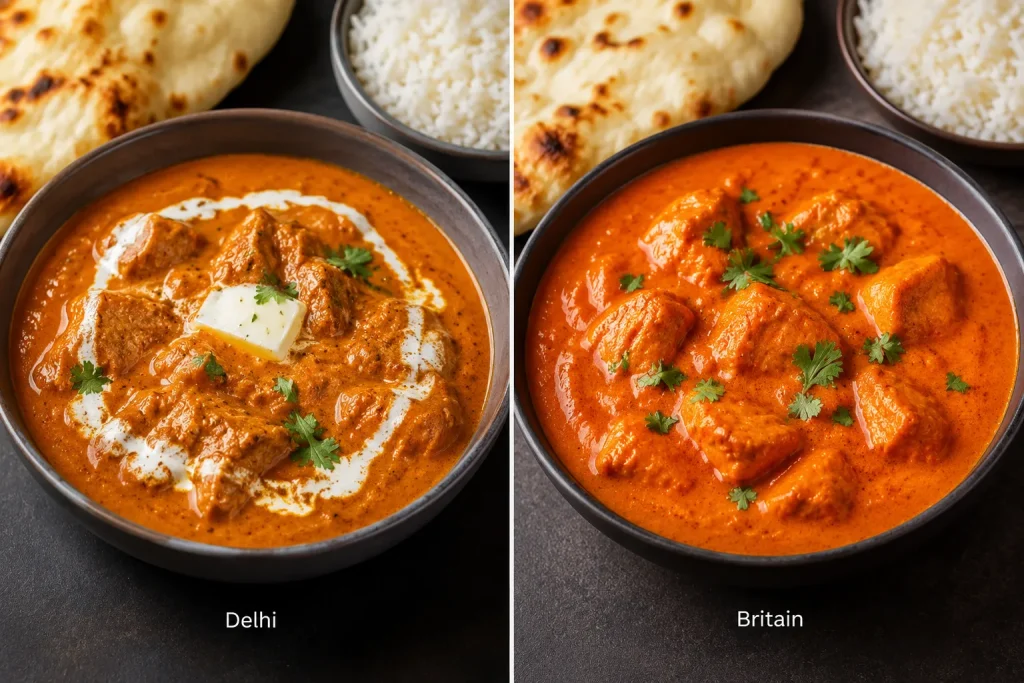
- A competing Indian claim holds that the dish is simply a Westernized version of butter chicken (murgh makhani), which was created in Delhi in the 1950s at the Moti Mahal restaurant.
- The dish was popularized in the 1960s and 1970s by Bangladeshi chefs in London’s Brick Lane curry houses, who developed a range of “inauthentic” Indian dishes for British palates.
- In 2001, British Foreign Secretary Robin Cook famously declared chicken tikka masala “a true British national dish” and a symbol of modern multicultural Britain.
How a Scottish Curry Became a Symbol of Multicultural Britain
Walk into any Indian restaurant in the United Kingdom, and chicken tikka masala will be on the menu. It is the most popular dish ordered in British Indian restaurants, accounting for approximately 16 per cent of all curries sold. Supermarket Sainsbury’s sells 1.6 million chicken tikka masala meals every year and stocks 16 related products, including a chicken tikka masala pasta sauce. In 2001, a survey ranked chicken tikka masala above fish and chips as Britain’s favourite dish.
The dish matters because it has become a political symbol. In a 2001 speech on multiculturalism, Foreign Secretary Robin Cook chose chicken tikka masala to illustrate his vision of modern Britain. He called it “a true British national dish, not only because it is the most popular, but because it is a perfect illustration of the way Britain absorbs and adapts external influences” . A dish invented by a Pakistani immigrant in Glasgow, using Indian cooking techniques and British ingredients, served as the perfect metaphor for a nation struggling to define itself in a post-colonial world.
But the politics cuts both ways. Some South Asian Britons resent the appropriation. The critic Lizzie Collingham writes in her book Curry: A Tale of Cooks and Conquerors that according to some food critics, chicken tikka masala “was not a shining example of British multiculturalism but a demonstration of the British facility for reducing all foreign foods to their most unappetising and inedible forms”. The dish is both celebrated and condemned. It is Britain’s favourite meal and a symbol of culinary dilution. That tension is the point.
The Most Credible Account of How Chicken Tikka Masala Was Created
The dish’s origins are debated, but the evidence points strongly to a British birth. According to The Oxford Companion to Food, chicken tikka masala has become, in Britain, the most popular dish ordered in Indian restaurants, and is now a candidate for “England’s national dish”. The Encyclopedia Britannica notes that its origins are debated but states that it more likely derived from butter chicken, a popular dish in northern India, rather than being invented from scratch . Some observers have called chicken tikka masala the first widely accepted example of fusion cuisine.
The most famous origin story comes from Glasgow. Ali Ahmed Aslam, a Pakistani immigrant who opened the Shish Mahal restaurant in Glasgow’s west end in 1964, claimed he invented the dish one night in the 1970s. A customer complained that his chicken tikka was too dry and asked for some sauce. Aslam went back to the kitchen and improvised. He combined spices, yogurt, cream, and a tin of condensed tomato soup. The customer was satisfied. Chicken tikka masala was born.
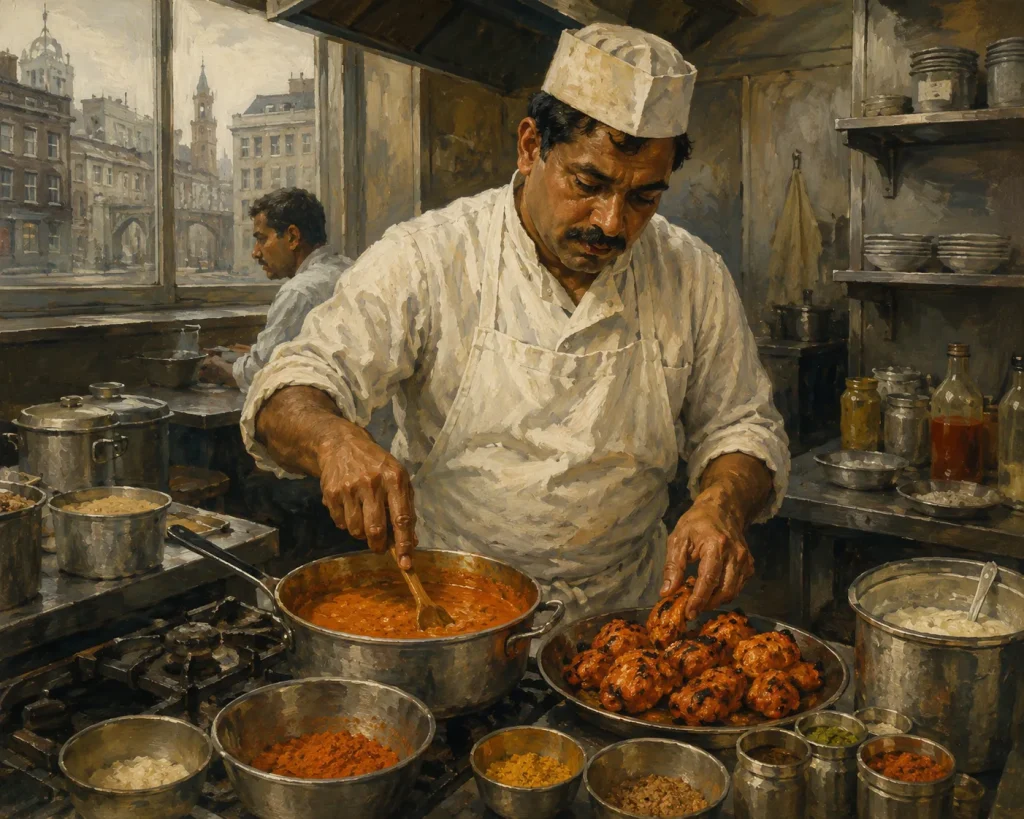
In an interview with AFP news agency, Aslam recalled the moment: “We used to make chicken tikka, and one day a customer said, ‘I’d take some sauce with that, this is a bit dry.’ We thought we’d better cook the chicken with some sauce. So from here we cooked chicken tikka with the sauce that contains yogurt, cream, spices. It’s a dish prepared according to our customer’s taste, usually they don’t take hot curry, that’s why we cook it with yogurt and cream”.
While it cannot be proved with certainty that this is the origin of the dish, chicken tikka masala is widely regarded as a curry that has been adapted to suit Western tastes. The story is plausible, well-documented in media interviews, and has been repeated by credible sources including the BBC, NPR, and CNN. Aslam died in December 2022 at age 77, with tributes pouring in from across the UK.
The Competing Claims That Will Never Be Fully Resolved
The Glasgow claim. This is the most famous and best-documented origin story. Ali Ahmed Aslam’s account is specific, dated to the 1970s, and supported by the continued operation of his restaurant Shish Mahal, which still serves the dish today. However, it cannot be independently verified. There were no cameras in the kitchen that night. Other establishments have also laid claim to the dish. In 2009, a Glasgow politician campaigned for chicken tikka masala to be granted protected heritage status, but the bid was rejected after multiple establishments from around the UK laid claim to the dish.
The Indian claim. Monish Gurjal, the head of the Moti Mahal restaurant chain, says his grandfather was serving chicken tikka masala to Indian heads of state as early as 1947. Moti Mahal, founded in Delhi by Kundan Lal Gujral after the Partition of India, is also credited with inventing butter chicken (murgh makhani) and tandoori chicken. The chain’s claim is that chicken tikka masala is simply a British version of butter chicken, which had existed in India since the 1950s. Gurjal told NPR: “It’s kind of like: who invented chicken noodle soup? It’s a dish that could’ve been invented by any number of people at the same time”.
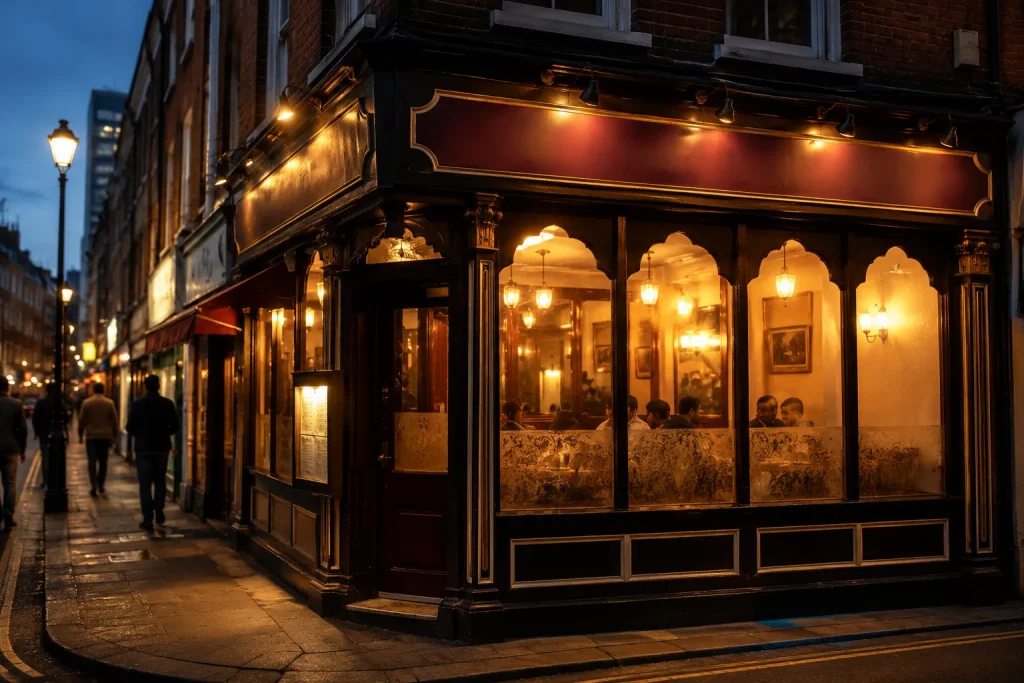
The Brick Lane claim. Some historians credit Bangladeshi migrant chefs in Britain in the 1960s with creating chicken tikka masala. London’s Brick Lane, known as the “Curry Mile,” was the heart of this development. These chefs, most of whom were from the Sylhet region of what is now Bangladesh, adapted traditional South Asian recipes to suit British palates. They developed a number of new “inauthentic” Indian dishes, including chicken tikka masala, which they served alongside more traditional fare. The Multicultural Handbook of Food, Nutrition and Dietetics credits its creation to Bangladeshi migrant chefs in Britain in the 1960s.
The gradual evolution view. This is the position most food historians take today. Chicken tikka masala was not invented by a single person on a single night. It was a gradual evolution. South Asian immigrants in Britain, facing ingredients that differed from those at home and customers with milder palates, experimented. They added cream and yogurt to reduce heat. They used tomato soup as a convenient base. Over time, a standardised dish emerged. The 1998 survey in Britain found that among 48 different recipes for chicken tikka masala, the only common ingredient was chicken. There is no single definitive recipe because there was no single moment of invention.
How Chicken Tikka Masala Spread From Glasgow to the World
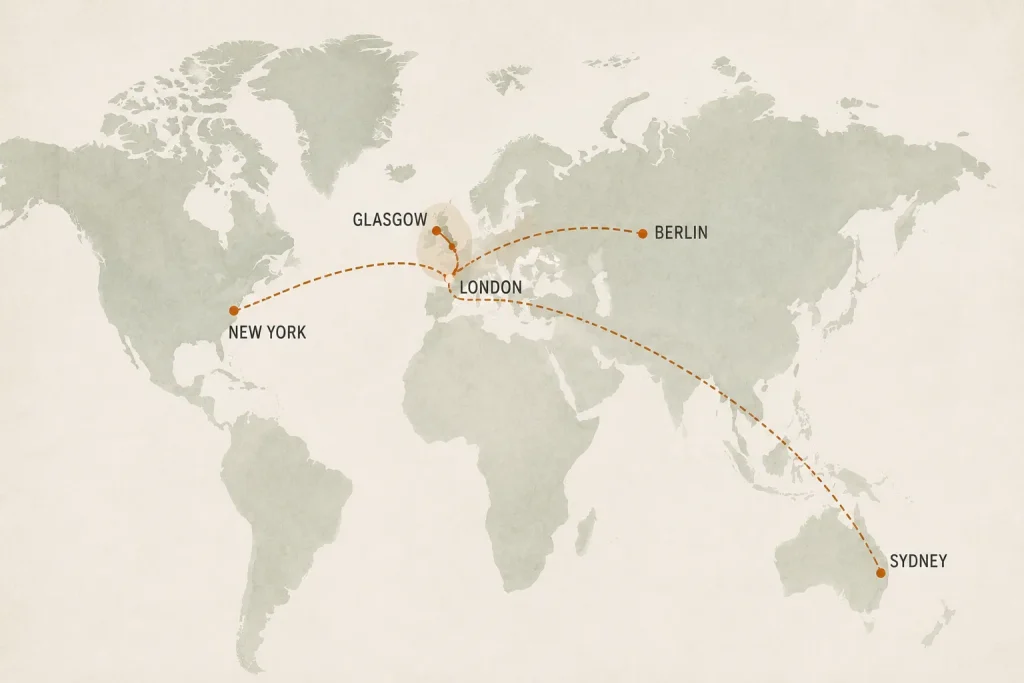
Chicken tikka masala spread through three distinct phases. First came the curry houses of 1960s and 1970s Britain. South Asian immigrants, primarily from Bangladesh and Pakistan, opened restaurants across the UK. These establishments catered to British customers who wanted spicy food but could not handle the heat of traditional curries. The chefs adapted. They created milder, creamier dishes. Chicken tikka masala was one of them. It became a staple of the British curry house menu.
Second came the supermarkets. In 1983, UK supermarkets began producing chicken tikka masala as a chilled ready meal. This was a turning point. The dish moved from restaurants to home dining. It became a weekly convenience food rather than a weekend treat. Supermarket sales exploded. Today, Sainsbury’s alone sells 1.6 million chicken tikka masala meals every year.
Third came the political endorsement. In 2001, Foreign Secretary Robin Cook declared chicken tikka masala “a true British national dish”. The speech was widely covered in British media. It cemented the dish’s status as a cultural icon. It also sparked international curiosity. Americans, Australians, and Europeans began seeking out the dish. Indian restaurants in New York, Sydney, and Berlin added it to their menus. Chicken tikka masala went global.
Origin Timeline Table
| Period | Location | What Existed | Key Development | Significance |
|---|---|---|---|---|
| 1920s-1940s | Peshawar/Delhi | Tandoori chicken and butter chicken | Moti Mahal restaurant develops tandoori cooking techniques and butter chicken (murgh makhani) | Establishes Indian precursor to chicken tikka masala |
| 1947 | Delhi | Moti Mahal opens in Delhi after Partition | Kundan Lal Gujral brings tandoori cooking to Delhi | Butter chicken becomes established North Indian dish |
| 1964 | Glasgow | Shish Mahal restaurant opens | Ali Ahmed Aslam opens his restaurant after immigrating from Pakistan | Location of the most famous origin claim |
| 1960s-1970s | London (Brick Lane) | Bangladeshi chefs adapt curries for British palates | Brick Lane becomes “Curry Mile”; chefs develop milder, creamier dishes | Chicken tikka masala popularised in London |
| 1970s | Glasgow | Ali Ahmed Aslam’s improvisation | Customer complains of dry chicken; Aslam adds tomato soup, yogurt, cream, spices | Most famous origin story for the dish |
| 1983 | United Kingdom | Supermarket ready meals | UK supermarkets begin producing chicken tikka masala as a chilled meal | Dish moves from restaurants to home dining |
| 2001 | United Kingdom | Robin Cook speech | Foreign Secretary declares chicken tikka masala “a true British national dish” | Dish becomes political and cultural symbol of multicultural Britain |
| 2022 | Glasgow | Ali Ahmed Aslam dies | Aslam’s death prompts tributes and revives origin debate | Renewed public interest in the dish’s history |
The Chicken Tikka Masala Myths That Will Not Die
Myth: Chicken tikka masala is an authentic Indian dish. This is the most common belief and the most incorrect. The dish does not exist in Indian cuisine. Indian cookbooks do not list it. You will not find it commonly on menus in India. Some Indian restaurants have added it to cater to tourists, but it is fundamentally a British creation. A chef at a New Delhi restaurant told the BBC that “Indians don’t really eat chicken tikka masala. It’s made for Western palates.”
Myth: Ali Ahmed Aslam definitely invented the dish. Aslam’s story is compelling and well-documented, but it cannot be proven. Other restaurants from around the UK have also claimed to have invented the dish. The Glasgow politician’s 2009 bid for protected status was rejected precisely because multiple establishments laid claim. The most honest assessment is that Aslam was one of several people who helped create and popularise the dish, but not necessarily the sole inventor.
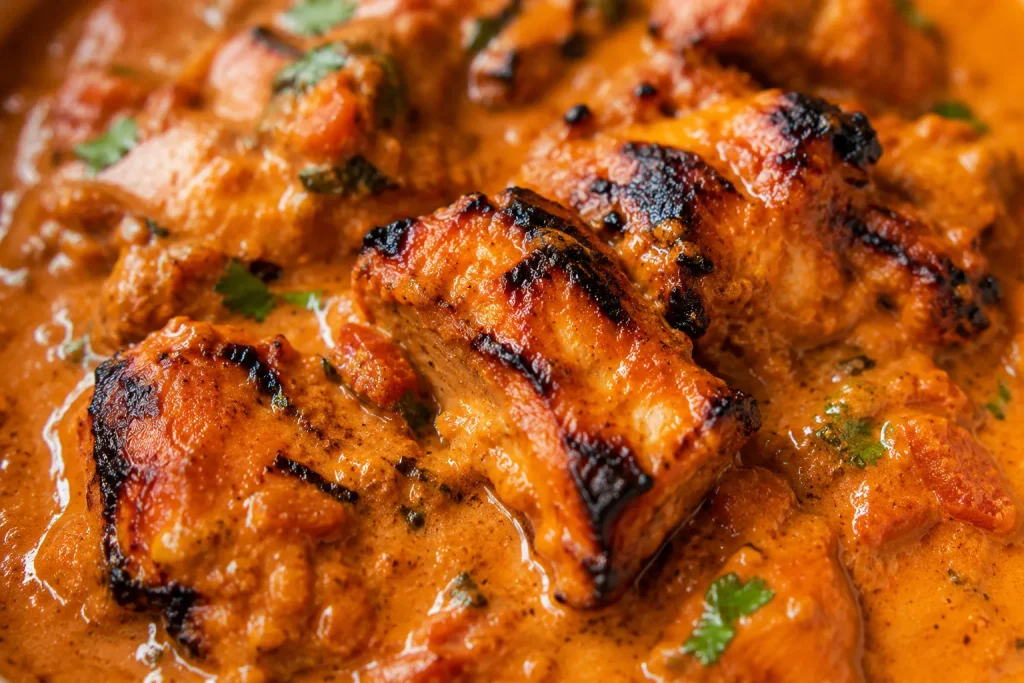
Myth: Chicken tikka masala is just butter chicken with a different name. The dishes are similar but not identical. Butter chicken (murgh makhani) tends to have a more mild sauce enriched with butter and heavy cream. Chicken tikka masala recipes typically have a spicier sauce and the chicken pieces are always boneless and charred from the tandoor. There are also regional variations. But the line between them is blurry, and many restaurants use the terms interchangeably.
Myth: The dish was invented to use up leftovers. This myth appears in several online accounts. The story goes that someone had leftover tandoori chicken and added it to a tomato-based gravy to avoid waste. There is no evidence for this. The more credible accounts, including Aslam’s, describe the dish as a deliberate improvisation to satisfy a customer’s request for sauce, not a thrifty use of leftovers.
Why Britain and India Are Still Debating Who Owns Chicken Tikka Masala
The ownership debate continues because the stakes are real. In 2001, a Glasgow MP tabled a motion in the House of Commons calling for chicken tikka masala to be recognised as a Glaswegian delicacy. The bid failed. In 2009, another politician campaigned for the dish to be granted protected heritage status, but the bid was rejected after multiple establishments from around the UK laid claim to its invention.
For the Moti Mahal restaurant chain in Delhi, the claim is a matter of family legacy. Monish Gurjal, whose grandfather founded the restaurant, told NPR: “It’s kind of like: who invented chicken noodle soup? It’s a dish that could’ve been invented by any number of people at the same time” . He is not wrong. But the lack of a definitive answer does not stop people from wanting one.
For many British South Asians, the dish represents something more complicated than ownership. It is a symbol of their parents’ and grandparents’ ingenuity. They arrived in a cold, unwelcoming country with little money and fewer opportunities. They opened restaurants because they had no other choice. The curries they served were adapted for British tastes. Chicken tikka masala was not a dilution of their heritage. It was a practical response to the market. And it worked.
The debate will not end, because it was never really about food. It was always about who gets to tell the story.
The Bottom Line
What does the evidence most strongly support? Chicken tikka masala was almost certainly created in Britain, not India. The chicken tikka element is South Asian, but the creamy tomato-based masala sauce is a British adaptation. The dish does not exist in Indian cuisine. The most famous and best-documented origin story places its creation in Glasgow in the 1970s, when Pakistani immigrant chef Ali Ahmed Aslam improvised a sauce from tomato soup, yogurt, cream, and spices to please a customer who found his chicken tikka too dry.
What remains genuinely uncertain is whether Aslam was the sole inventor. Other establishments have also claimed to have created the dish. Bangladeshi chefs in London’s Brick Lane developed similar creamy curries around the same time. Moti Mahal in Delhi claims its butter chicken was the direct inspiration. There is no documentary evidence that conclusively settles the question.
TasteHavenDaily’s conclusion: The debate over who invented chicken tikka masala is asking the wrong question. The dish is a product of immigration. It exists because South Asian cooks in Britain adapted their traditional recipes to suit a new environment and new customers. That process of adaptation is not a dilution. It is a culinary tradition as old as cooking itself. Chicken tikka masala is not Indian. It is not entirely British either. It is a dish of the diaspora, a food that could only have been created by people who carried their culture across an ocean and then changed it to survive.
The next time you eat chicken tikka masala, you are not tasting India. You are tasting Glasgow in the 1970s. You are tasting a Pakistani immigrant’s improvisation with a tin of tomato soup. You are tasting the ingenuity of people who made something new from what they had. That is not a lesser origin story. It is a better one.
People Also Ask
Where did chicken tikka masala originate?
Chicken tikka masala originated in Britain, most likely in Glasgow, Scotland. The dish does not exist in Indian cuisine or figure commonly on menus in India. The most famous origin story credits Ali Ahmed Aslam, a Pakistani immigrant chef who improvised a creamy tomato sauce for dry chicken tikka at his Glasgow restaurant Shish Mahal in the 1970s.
Who invented chicken tikka masala?
No single person is definitively credited with inventing chicken tikka masala. The most famous claim comes from Ali Ahmed Aslam, a Pakistani chef in Glasgow who said he invented the dish in the 1970s. However, other establishments from around the UK have also claimed to have created it. Indian restaurant Moti Mahal in Delhi claims its butter chicken served as the inspiration. Bangladeshi chefs in London’s Brick Lane also developed similar dishes in the 1960s and 1970s.
Is chicken tikka masala Indian or British?
Chicken tikka masala is British. The chicken tikka element is Indian, but the creamy tomato-based masala sauce was added in Britain to suit British tastes. Former UK Foreign Secretary Robin Cook called it “a true British national dish” in 2001. The dish does not exist in Indian cuisine and is not commonly eaten in India.
What is the difference between chicken tikka masala and butter chicken?
Butter chicken (murgh makhani) is an Indian dish created in Delhi in the 1950s. It tends to have a milder sauce enriched with butter and heavy cream. Chicken tikka masala is a British creation with a spicier sauce, and the chicken pieces are always boneless and charred from the tandoor. However, the line between them is blurry, and many restaurants use the terms interchangeably.
When was chicken tikka masala invented?
The most famous origin story dates the invention to the 1970s in Glasgow. However, Indian restaurant Moti Mahal claims its grandfather was serving chicken tikka masala as early as 1947. Bangladeshi chefs in London developed similar dishes in the 1960s. The dish almost certainly emerged gradually over the 1960s and 1970s, rather than being invented by a single person on a single night.
Why is chicken tikka masala so popular in the UK?
Chicken tikka masala is popular in the UK because it was specifically adapted for British palates. It is mild, creamy, and not too spicy. South Asian immigrants in the 1960s and 1970s developed the dish to appeal to British customers who wanted curry but could not handle the heat of traditional recipes. It became a staple of British curry houses and later supermarket ready meals. In 2001, Foreign Secretary Robin Cook declared it a “true British national dish”.
What is chicken tikka masala made of?
Chicken tikka masala consists of boneless chicken pieces marinated in spices and yogurt, roasted in an oven (traditionally a tandoor), and then served in a creamy tomato-based sauce. The sauce typically contains tomatoes, cream or yogurt, and spices such as cumin, coriander, and garam masala. There is no standard recipe. A 1998 survey found that among 48 recipes, the only common ingredient was chicken.
Does chicken tikka masala exist in India?
No. Chicken tikka masala does not exist as such in Indian cuisine. It does not figure commonly on menus in India. Indian cookbooks do not list it. Some Indian restaurants have added it to cater to Western tourists, but it is fundamentally a British dish. The chicken tikka element is Indian, but the creamy masala sauce is a British innovation.
Sources and References
- Britannica, T. Editors of Encyclopaedia (2024). “Chicken tikka masala.” Encyclopedia Britannica.
- CNN. (2022). “Inventor of the UK’s ‘true national dish’ dies at 77.”
- NPR. (2022). “Who created chicken tikka masala? The death of a curry king is reviving a debate.”
- BBC News. (2022). “Glaswegian who ‘invented’ chicken tikka masala dies.”
- Collingham, L. (2005). Curry: A Tale of Cooks and Conquerors. Oxford University Press.
- Wikipedia. “Chicken tikka masala.”
- South China Morning Post. (2020). “The history of chicken tikka masala: why Britain’s favourite curry has few fans in India.”
- Oxford Reference. “Chicken tikka masala.” The Oxford Companion to Food.
- Tasting Table. (2017). “What’s The Difference Between Butter Chicken & Tikka Masala?”